

Introduction:
Motorcycles need a cooling system to keep the engine from overheating. Coolant plays an important role in this system. Prestone coolant for motorcycles is a special liquid designed to regulate engine temperature and protect engine parts. It helps keep the engine cool in hot weather and prevents freezing in cold conditions.
Many riders focus on fuel and oil but forget about coolant. However, the right coolant can make a big difference in engine performance. Without proper cooling, a motorcycle engine can overheat and suffer serious damage. Choosing the right coolant helps your bike run smoothly and last longer.
In this guide, we will explain the benefits, uses, and important details of prestone coolant for motorcycles. You will also learn how it protects the engine and why many riders consider it a reliable option for motorcycle maintenance.
What Is Prestone Coolant for Motorcycles?
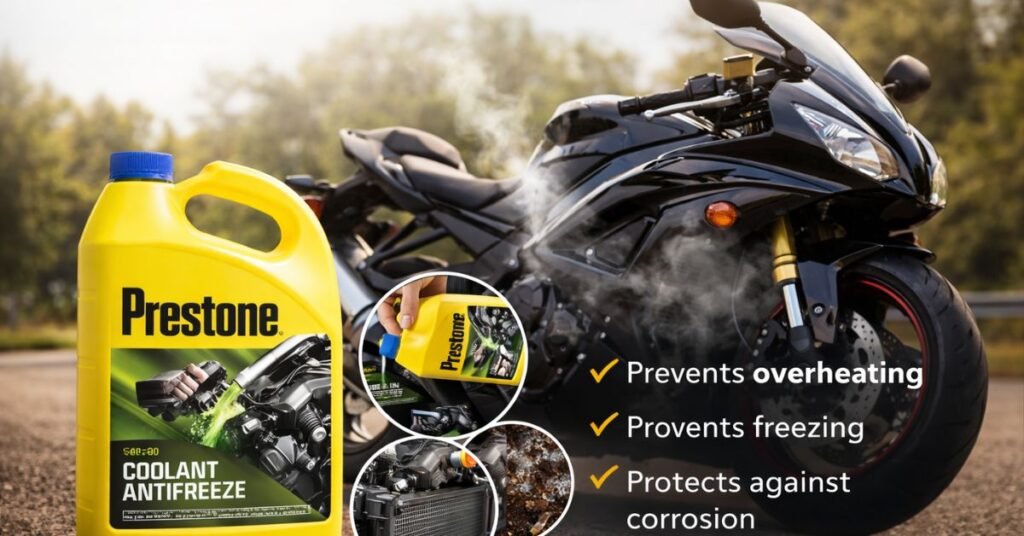
Prestone coolant for motorcycles is a liquid used in the cooling system of a motorcycle engine. It helps control the engine temperature while the bike is running. The coolant flows through the engine and radiator to remove excess heat. This keeps the engine from getting too hot during long rides or heavy traffic.
Additionally, it prevents corrosion and rust on the engine.. Many coolants contain special additives that keep metal parts safe and clean. Using the right coolant helps the motorcycle run smoothly and improves engine life. That is why many riders choose Prestone coolant to keep their motorcycle cooling system working properly.
How Motorcycle Coolant Works in the Engine
- Coolant flows through the engine and radiator.
- It absorbs heat from the engine while the bike is running.
- The hot coolant moves to the radiator.
- The radiator releases the heat into the air.
- Cooled liquid returns to the engine.
- This cycle keeps the engine temperature stable.
- It helps prevent overheating and engine damage.
Why Riders Choose Prestone Coolant
- Provides strong protection against engine overheating.
- Helps prevent rust and corrosion in metal parts.
- Both hot and cold temperatures are no problem for this product.
- Long-lasting formula that reduces frequent changes.
- Compatible with many motorcycle cooling systems.
- Trusted by many riders for reliable engine protection.
Can You Use Prestone Coolant in a Motorcycle?
Yes, you can use Prestone coolant in many motorcycles, but it is important to check your bike’s manual first. Some motorcycles require specific types of coolant for the cooling system. If the coolant meets the manufacturer’s requirements, it can work properly in the engine. Using the correct coolant helps maintain a stable engine temperature during rides.
Many riders use Prestone because it offers strong protection against heat and corrosion. It can help prevent overheating, especially during long rides or hot weather. However, the coolant should be compatible with aluminum and other engine parts. Always make sure the coolant type matches the needs of your motorcycle before using it.
Difference Between Car Coolant and Motorcycle Coolant
| Feature | Car Coolant | Motorcycle Coolant |
| Engine Type | Designed for larger car engines | Designed for smaller, high-revving motorcycle engines |
| Cooling System | Works with car radiators and cooling systems | Made for compact motorcycle cooling systems |
| Additives | May contain additives for car engine metals | Formulated to protect motorcycle engine parts |
| Silicate Content | Some car coolants contain silicates | Many motorcycle coolants are silicate-free |
| Water Pump Protection | Standard protection for car water pumps | Designed to protect smaller motorcycle water pumps |
| Clutch Compatibility | Not designed for wet clutch systems | Safe for motorcycles with wet clutch systems |
| Heat Handling | Handles heat from larger engines | Handles high RPM heat in motorcycles |
| Engine Materials | Suitable for common car engine metals | Safe for aluminum and lightweight bike engines |
| Performance Needs | Focused on long car drives | Designed for fast acceleration and high RPM |
| Maintenance Interval | May last longer in car systems | Often changed based on motorcycle service schedule |
| Risk if Used Incorrectly | Usually safe for cars only | Wrong coolant may affect motorcycle parts |
| Manufacturer Recommendation | Car manuals recommend specific types | Motorcycle manuals recommend bike-safe coolant |
| Typical Use | Cars, trucks, SUVs | Motorcycles, scooters, and sport bikes |
Compatibility With Different Motorcycle Engines
- Prestone coolant works with most liquid-cooled motorcycle engines.
- Safe for single-cylinder, twin-cylinder, and multi-cylinder engines.
- Compatible with aluminum, steel, and mixed-metal engine parts.
- This product is suitable for sport bikes, cruisers, touring bikes, and scooters.
- Can be used in engines with wet clutches without damage.
- Works well in both air-cooled and liquid-cooled systems when recommended.
- Helps protect engine components from rust and corrosion across engine types.
- Maintains stable temperature even in high-performance motorcycle engines.
Key Features of Prestone Coolant for Motorcycle Engines
Prestone coolant for motorcycle engines has many features that make it a popular choice among riders. It helps prevent engine overheating during long rides or hot weather. The coolant also protects the engine from rust, corrosion, and scale buildup. This ensures the engine stays clean and lasts longer.
Another important feature is its compatibility with different metals used in motorcycle engines. It works safely with aluminum, steel, and mixed-metal parts. Prestone coolant also performs well in both hot and cold temperatures. Many riders trust it because it keeps the engine running smoothly and reduces maintenance issues over time.
Temperature Protection and Anti-Freeze Benefits
- Prestone coolant prevents the engine from overheating in hot weather.
- It also stops the engine from freezing in very cold temperatures.
- Helps maintain a stable engine temperature during long rides.
- Reduces the risk of engine damage caused by extreme heat or cold.
- Keeps the coolant flowing smoothly without boiling or freezing.
Corrosion and Rust Protection
- Protects engine metal parts from rust and corrosion.
- Forms a protective layer on aluminum, steel, and mixed-metal surfaces.
- Prevents scale and deposit buildup inside the cooling system.
- Extends the life of radiators, water pumps, and engine components.
- Helps keep the engine clean and running efficiently over time.
How to Use Prestone Coolant in a Motorcycle
Using Prestone coolant in a motorcycle is simple but needs care. First, check your bike’s manual to see the recommended type and amount. Always make sure the engine is cool before opening the radiator or coolant reservoir.
Next, drain the old coolant completely from the system. Mix the Prestone coolant with water if needed, following the instructions on the bottle. Slowly pour the coolant into the reservoir.. After filling, run the engine for a few minutes and check the level again. This ensures the coolant circulates and protects the engine properly.
Step-by-Step Guide to Adding Coolant
- Make sure the motorcycle engine is completely cool before starting.
- Place a container under the radiator to catch old coolant.
- Open the radiator cap and drain the old coolant completely.
- Close the drain plug securely after draining.
- Mix Prestone coolant with water if the instructions require it.
- Slowly pour the coolant into the radiator or reservoir.
- Fill until the coolant reaches the recommended level.
- Start the engine and let it run for a few minutes.
- Turn off the engine and check the coolant level again.
- To reach the correct level, add more coolant if necessary.
This step-by-step process ensures the cooling system works properly and protects your motorcycle engine from damage.
Correct Coolant and Water Ratio
| Coolant Type | Water Ratio | Best Use | Notes |
| Prestone Motorcycle Coolant | 50:50 | Standard riding conditions | Provides balanced freeze and boil protection |
| Prestone Motorcycle Coolant | 60:40 | Very cold climates | Extra antifreeze for freezing protection |
| Prestone Motorcycle Coolant | 40:60 | Very hot climates | Extra water for better cooling |
| Prestone Motorcycle Coolant | 70:30 | Extreme cold + high RPM engines | Maximum freeze protection, ensure system can handle |
| Prestone Motorcycle Coolant | Pre-mixed 100% | Ready-to-use | No mixing needed, safe for most bikes |
| Generic Motorcycle Coolant | 50:50 | Standard use | Check manufacturer guidelines |
| Generic Motorcycle Coolant | 60:40 | Cold weather | Extra antifreeze for freezing |
| Generic Motorcycle Coolant | 40:60 | Hot weather | Extra cooling, monitor engine temperature |
| Generic Motorcycle Coolant | Pre-mixed 100% | Ready-to-use | Convenient, avoids mixing mistakes |
| Hybrid/Universal Coolant | 50:50 | Standard use | Compatible with most motorcycles, confirm bike manual |
Signs Your Motorcycle Coolant Needs Replacement
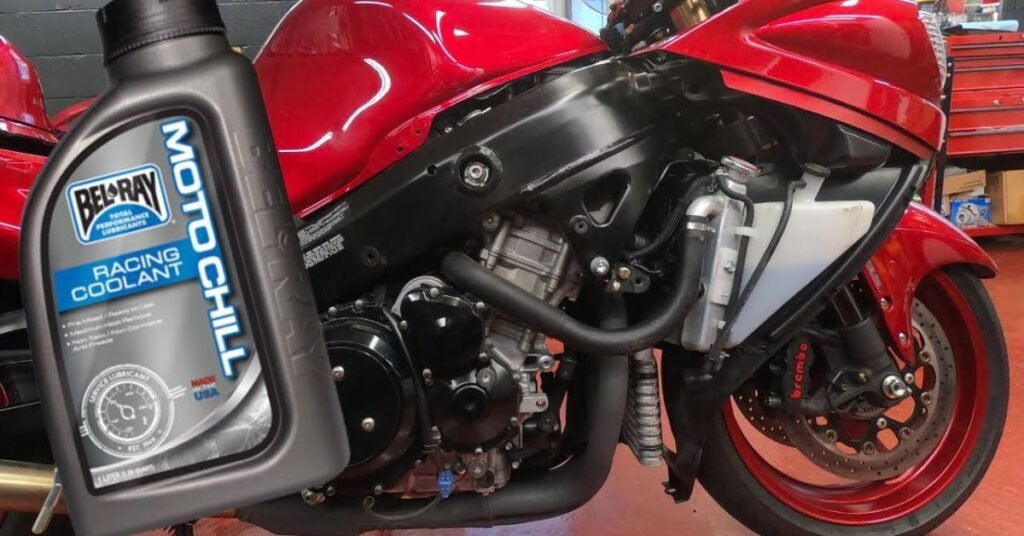
One sign your motorcycle coolant needs replacement is discoloration. If the coolant turns rusty, brown, or cloudy, it may be losing its protective properties.Strange smells coming from the radiator or reservoir are another sign. A sweet or burnt smell can indicate old or contaminated coolant.
You may also notice the engine overheating more often than usual. If the temperature gauge rises quickly or the engine feels hotter than normal, it could be a coolant problem. Leaks around the radiator or hoses are another warning sign. Regularly checking the coolant condition helps prevent engine damage and keeps your motorcycle running smoothly.
Common Symptoms of Low or Old Coolant
- Engine temperature rises quickly during rides.
- The radiator or engine feels unusually hot.
- Coolant appears rusty, cloudy, or discolored.
- Sweet or strange smell from the engine area.
- Poor heater performance in cold weather.
- The engine may overheat even during short rides.
- Leaks around hoses, radiator, or reservoir.
How Often You Should Replace Motorcycle Coolant
- Check your motorcycle manual for recommended intervals.
- Typically, replace coolant every 1-2 years or 12,000-24,000 miles.
- Replace sooner if coolant appears dirty or discolored.
- Change immediately if overheating or leaks occur.
- Use fresh Prestone coolant or manufacturer-approved type each time.
- The engine runs smoothly and safely when it is regularly replaced.
Can You Mix Prestone Coolant With Other Coolants?
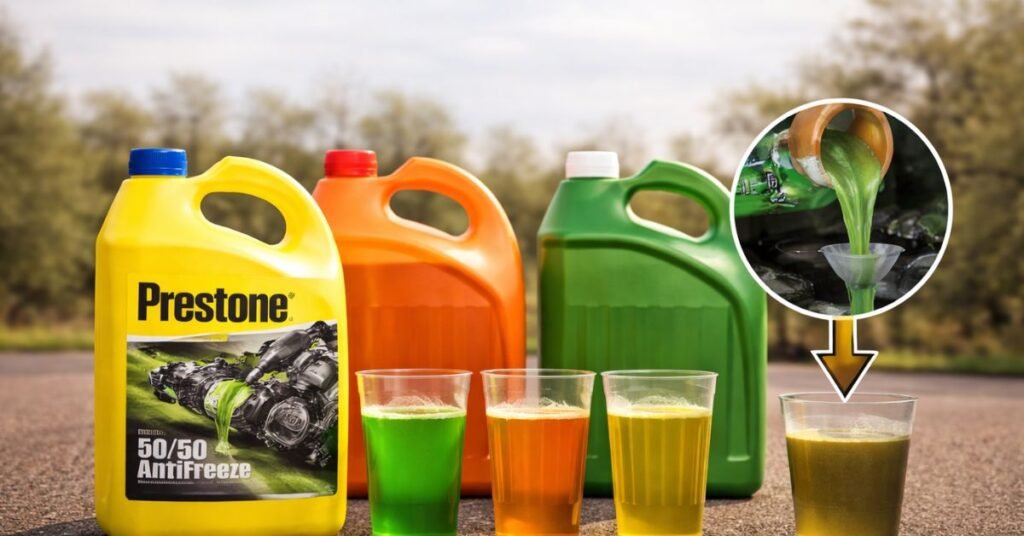
It is generally not recommended to mix Prestone coolant with other coolants. Different brands may use different chemical formulas. Mixing them can reduce the effectiveness of the coolant. It may also cause clogs, corrosion, or damage to the engine over time.
If you need to top up your coolant, always use the same brand and type as what’s already in the system. If you accidentally mix coolants, it’s best to flush the system and refill it with the correct coolant. This ensures your motorcycle engine stays protected and runs smoothly.
When Mixing Coolants Is Safe
- Only mix coolants if they have the same chemical base (e.g., both are ethylene glycol or both are propylene glycol).
- Check the manufacturer’s instructions for compatibility.
- Mixing small amounts for a temporary top-up can be safe if it’s the same type.
- Always ensure the coolant color and additives are compatible.
- After mixing, monitor engine temperature and coolant condition carefully.
Risks of Mixing Different Coolant Types
- Can cause chemical reactions that reduce cooling efficiency.
- May lead to rust, corrosion, or scaling inside the engine.
- Can create clogs in the radiator or hoses.
- Reduces the freeze and boil protection of the coolant.
- May void your motorcycle warranty if not manufacturer-approved.
- Can shorten engine and cooling system lifespan.
Common Mistakes When Using Motorcycle Coolant
One common mistake is not checking the coolant type before adding it. Using the wrong coolant can damage the engine or reduce cooling efficiency. Another mistake is overfilling or underfilling the reservoir. Both can cause overheating or leaks.
Some riders forget to replace old coolant on time, which reduces engine protection. Others mix incompatible coolants, leading to corrosion or clogs. Not flushing the system properly before adding new coolant is also a common error. Avoiding these mistakes keeps your motorcycle engine safe and running smoothly.
Using the Wrong Coolant Type
- Using the wrong coolant can damage engine parts.
- It may cause corrosion or rust inside the cooling system.
- Different coolants have different chemical additives that may not mix well.
- The engine may overheat or lose efficiency if the wrong type is used.
- Always check the manufacturer’s recommended coolant type before adding.
Overfilling the Cooling System
- Overfilling can cause pressure build-up in the radiator.
- It may lead to coolant leaks from hoses or the reservoir.
- Can reduce the effectiveness of the cooling system.
- The engine may overheat if the coolant cannot circulate properly.
- Always fill coolant to the recommended level marked on the reservoir.
Conclusion
Using the right coolant is very important for your motorcycle. Prestone coolant for motorcycles helps keep the engine at a safe temperature. It protects against overheating, freezing, rust, and corrosion. Regular maintenance and using the correct type of coolant can make your bike run smoothly for a long time.
Always check your motorcycle’s manual before adding or replacing coolant. Avoid common mistakes like using the wrong type, overfilling, or mixing incompatible coolants. By following the proper steps and keeping the coolant fresh, you can prevent engine damage and enjoy safer, worry-free rides. Taking care of your coolant is taking care of your motorcycle.
FAQs
1. What is Prestone coolant for motorcycles?
Prestone coolant is a specially formulated liquid used in motorcycle engines to control temperature. It prevents overheating, freezing, and protects engine parts from rust and corrosion.
2. Can I mix Prestone coolant with other brands?
Mixing Prestone with other coolants is generally not recommended. Different brands may have different chemical formulas, which can reduce performance and damage the engine over time.
3. How often should I replace motorcycle coolant?
Most motorcycles need coolant replacement every 1-2 years or 12,000–24,000 miles. However, check the manufacturer’s manual, and replace sooner if the coolant looks dirty or the engine overheats.
4. What happens if I use the wrong coolant type?
Using the wrong coolant can cause corrosion, clogs, and engine overheating. It may also reduce freeze and boil protection and can shorten the life of your cooling system.
5. How do I know if my coolant needs replacement?
Signs include discolored or rusty coolant, strange smells, leaks, or frequent engine overheating. Regular checks and timely replacement keep the engine safe and running efficiently.
