

Introduction:
Coolant gurgling after shutdown happens when your car’s cooling system makes bubbling or boiling noises after you turn off the engine. This usually occurs because air or steam gets trapped in the radiator or hoses. Hearing these strange gurgling sounds can be worrying, and many drivers wonder if it is dangerous or if they need to visit a mechanic immediately. The good news is that in most cases, this problem can be fixed at home with a few simple steps. In this guide, we will explain why coolant gurgles after shutdown, how to check your cooling system, and easy ways to fix the issue while also preventing it in the future.
What Does Coolant Gurgling After Shutdown Really Mean?
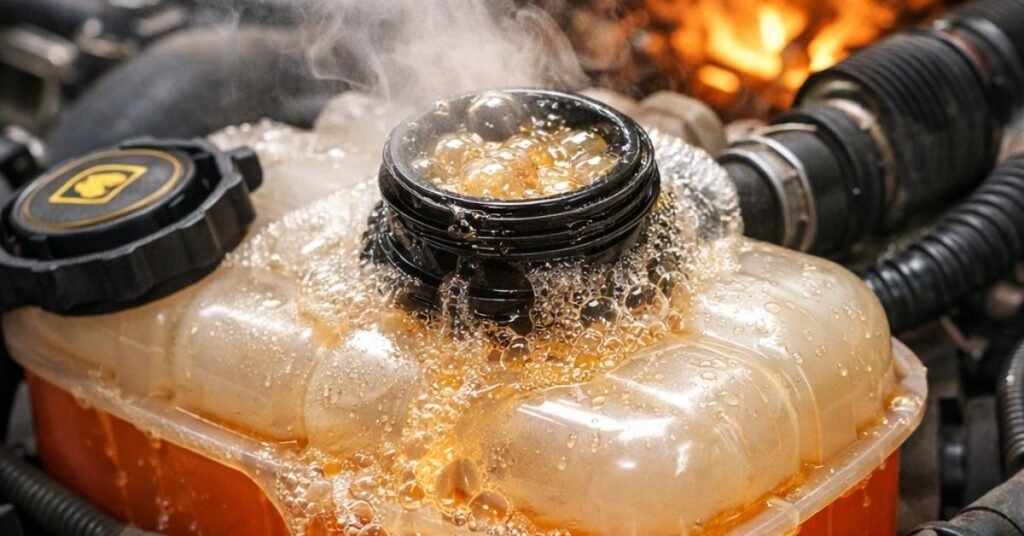
Coolant gurgling after shutdown is the bubbling or boiling sound that comes from your car’s cooling system after you turn off the engine. This usually happens when air or steam gets trapped in the radiator, hoses, or engine. It can be a sign that the coolant is overheating, that there is air in the system, or that some parts like the radiator cap or thermostat are not working properly. While the noise may seem worrying, it does not always mean there is a serious problem. Understanding what causes this gurgling can help you take the right steps to fix it and prevent engine damage.
Common Causes of Coolant Gurgling After You Turn the Engine Off

Coolant gurgling after you turn off the engine usually happens because the cooling system is not balanced properly. When the engine stops, the coolant can continue moving and air pockets or steam can get trapped. This creates a bubbling or gurgling sound. In many cases, it is a warning sign that something in your cooling system needs attention.
Some of the most common causes include:
- Air trapped in the cooling system – small pockets of air can cause bubbling noises.
- Overheating engine – coolant may boil if the engine is too hot.
- Faulty radiator cap – a damaged cap can’t maintain proper pressure.
- Clogged hoses or radiator – blockages can stop coolant from circulating correctly.
- Malfunctioning thermostat – prevents coolant from flowing properly at the right temperature.
By knowing these causes, you can check your car early and prevent bigger problems. Regular maintenance and careful observation help keep your engine safe and running smoothly.
Trapped Air in the Cooling System
Trapped air in the cooling system can cause your coolant to gurgle after the engine is turned off. Even a small air pocket can block coolant flow, making the system noisy and less effective. This problem is common in older cars or after a coolant change.
Here’s how trapped air can affect your car:
💧 Bubbling sounds – air bubbles move through hoses and radiator.
🔥 Overheating risk – blocked coolant flow can raise engine temperature.
🔧 Uneven cooling – some parts of the engine may not get enough coolant.
⏱️ Long-term damage – if ignored, it can harm the engine and radiator.
Fixing air pockets early keeps your cooling system smooth and prevents bigger problems. Bleeding the system or checking for leaks is usually all it takes.
Heat Soak & Localized Coolant Boiling
Heat soak happens when the engine continues to stay hot even after you turn it off. This extra heat can cause small areas of coolant to boil, creating gurgling noises. It is normal in some cars but can be worse if the cooling system has issues. Localized boiling happens in certain parts of the engine or radiator where coolant flow is slow or blocked.
Common signs and causes include:
🔥 Bubbling sounds – coolant boils in hotspots.
💧 Steam from hoses or radiator – air pockets push steam through the system.
🔧 Poor circulation – clogged hoses or low coolant can worsen the problem.
🌡️ Engine overheating – heat soak can make engine temperature stay high for a while.
Understanding heat soaks helps you prevent damage and keep your car running smoothly. Regular checks and coolant maintenance reduce these issues.
Faulty Radiator Cap or Pressure Issues
A faulty radiator cap cannot hold proper pressure in the cooling system. This causes coolant to boil too early and creates gurgling sounds after shutdown.
When pressure drops, air enters the system and coolant flow becomes unstable. Over time, this can lead to overheating and coolant loss.
Key problems linked to pressure issues:
- 🧢 Weak or damaged radiator cap
- 💨 Pressure leaks in the cooling system
- 🔥 Coolant boiling at lower temperatures
- ⚠️ Increased risk of engine overheating
Low Coolant or Incorrect Mixture Ratio
| Issue Type | What It Means | How It Causes Gurgling | Common Signs | Possible Damage | Simple Fix |
| Low Coolant Level | Not enough coolant in system | Air enters and creates bubbles | Gurgling sound, warning light | Engine overheating | Refill coolant |
| Too Much Water | Weak coolant mixture | Low boiling point | Coolant boils early | Rust and corrosion | Correct ratio |
| Too Much Coolant | Thick mixture | Poor heat transfer | Slow cooling | Engine stress | Dilute properly |
| Old Coolant | Lost protective properties | Uneven cooling | Dirty coolant | Blockages | Flush system |
| Leaking Coolant | Coolant escapes system | Air pockets form | Wet spots under car | Engine damage | Fix leak |
| Wrong Coolant Type | Incompatible formula | Chemical imbalance | Sludge buildup | Clogged radiator | Use recommended type |
| Improper Refill | Air not bled out | Trapped air remains | Gurgling after shutdown | Hot spots | Bleed system |
| Seasonal Imbalance | Summer/winter mismatch | Boiling or freezing risk | Temp fluctuation | System failure | Adjust mixture |
Thermostat or Water Pump Problems
A faulty thermostat can stop coolant from flowing at the right time. This causes heat buildup and gurgling sounds after the engine is turned off.
A weak water pump cannot circulate coolant properly through the engine. Poor circulation leads to hot spots and bubbling noises in the system.
Common signs to watch for:
- 🌡️ Engine temperature rising quickly
- 💧 Coolant not moving properly
- 🔊 Gurgling or bubbling sounds
- ⚠️ Sudden overheating issues
Head Gasket & More Serious Issues
A blown head gasket can allow exhaust gases to enter the cooling system. This creates pressure, bubbling coolant, and gurgling sounds after shutdown.
More serious engine issues can also affect coolant flow and temperature control. These problems usually worsen quickly if not repaired on time.
Warning signs you should not ignore:
- 🚨 Continuous coolant bubbling
- 🛢️ Milky oil or coolant
- 🌡️ Rapid engine overheating
- 💨 White smoke from exhaust
Is Coolant Gurgling Normal or a Problem?
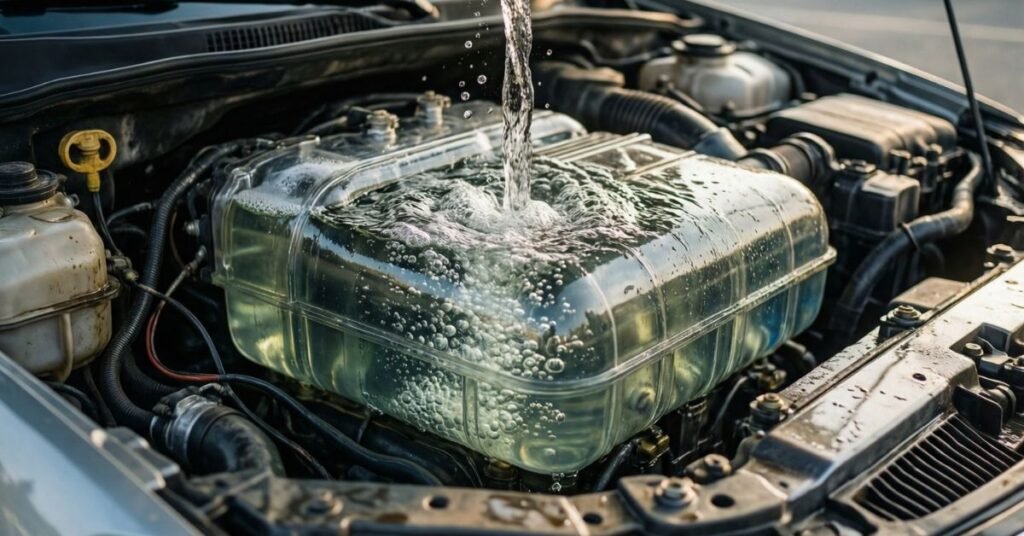
Coolant gurgling can be normal in some situations, especially right after you turn off a hot engine. Heat soaks can cause coolant to move and make light bubbling sounds. This usually goes away quickly and does not cause harm.
However, frequent or loud gurgling is often a sign of a problem. It may point to low coolant, trapped air, or overheating issues. If the sound keeps coming back, the cooling system should be checked to avoid engine damage.
How to Diagnose the Cause of the Gurgling Sound
🔍 Start with basic checks
- 🧊 Check coolant level when engine is cold
- 👀 Look for visible leaks under the car
- 🧢 Inspect radiator cap for cracks or looseness
🛠️ Move to system behavior
- 🌡️ Watch the temperature gauge after shutdown
- 💨 Listen for bubbling near radiator or hoses
- 🔄 Check if radiator fan turns on properly
⚠️ Advanced warning clues
- 🛢️ Inspect oil for milky texture
- 🚗 Smell sweet coolant odor after driving
- ⏱️ Notice if gurgling happens every time
🧪 Final confirmation steps
- 🔧 Bleed air from cooling system
- 🔥 Test thermostat opening
- 🧑🔧 Pressure-test system if needed
This step-by-step diagnosis helps identify the exact issue before it turns serious.
How to Fix Coolant Gurgling After Shutdown
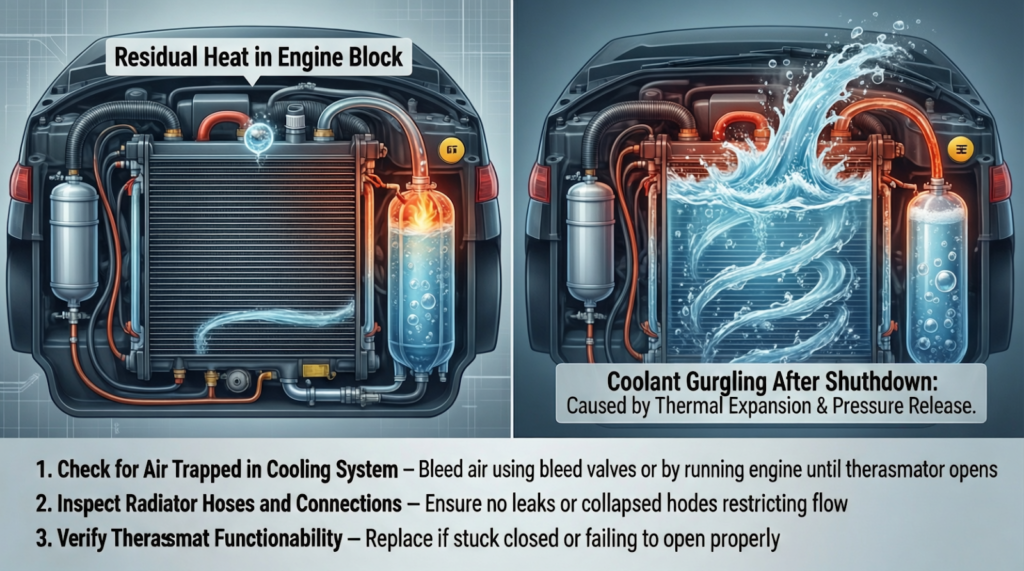
Start by checking the coolant level when the engine is completely cold. Low coolant or trapped air is often the main reason for gurgling sounds. Refill the coolant to the correct level and bleed the system to remove air pockets. Make sure the radiator cap is in good condition and tightly sealed.
If the sound continues, inspect other cooling system parts. A stuck thermostat, weak water pump, or clogged radiator can stop proper coolant flow. Fixing these issues early helps prevent overheating and engine damage.
Simple steps to fix the problem:
- 💧 Top up coolant with the correct mixture
- 🔄 Bleed air from the cooling system
- 🧢 Replace a faulty radiator cap
- 🌡️ Check and replace the thermostat if needed
- 🔧 Inspect hoses, radiator, and water pump
Regular maintenance keeps your cooling system quiet and your engine running smoothly.
When to See a Mechanic vs. When It’s Safe to Ignore
| Situation | Gurgling Sound | Other Signs | Is It Safe? | What to Do |
| Light gurgle once after shutdown | Very mild | No warning lights | ✅ Safe to ignore | Monitor only |
| Gurgle after long hot drive | Short-term | Normal temperature | ✅ Usually safe | Let engine cool |
| Gurgling every time you stop | Loud and frequent | Temp rising | ❌ Not safe | See mechanic |
| Coolant level dropping | Continuous | Coolant smell | ❌ Not safe | Check for leaks |
| Steam from engine bay | Loud bubbling | Steam visible | ❌ Urgent | Stop driving |
| Warning light on dashboard | Any sound | Check-engine / temp light | ❌ Urgent | Immediate inspection |
| Milky oil present | Constant bubbling | Oil contamination | ❌ Critical | Tow vehicle |
| Overheating while driving | Strong gurgle | Temp in red zone | ❌ Critical | Engine repair |
| After recent coolant refill | Mild bubbling | No other issues | ⚠️ Monitor | Bleed air |
| Old vehicle, no other symptoms | Occasional | Stable temperature | ⚠️ Watch closely | Regular checks |
This table helps you quickly decide when coolant gurgling is harmless and when professional help is necessary.
Conclusion
Coolant gurgling after shutdown should never be ignored without understanding the cause. Sometimes it is normal and happens because of heat soaking or minor air movement. But repeated or loud gurgling often points to cooling system problems. Catching these signs early can save you from costly engine damage.
Regular checks make a big difference in keeping your car healthy. Maintaining the correct coolant level and fixing small issues on time helps prevent overheating. When in doubt, it is always safer to consult a mechanic. A quiet cooling system means a safer and smoother drive.
FAQs:
1. Is coolant gurgling after shutdown dangerous?
It can be harmless if it happens once after a hot drive.
Frequent gurgling may signal air, low coolant, or overheating issues.
2. Can low coolant cause gurgling sounds?
Yes, low coolant allows air to enter the system.
This air creates bubbling and gurgling noises after shutdown.
3. Should I drive if I hear coolant gurgling?
Short, mild sounds are usually safe to ignore.
Loud or repeated gurgling means you should check the system.
4. Can trapped air cause coolant gurgling?
Yes, trapped air blocks smooth coolant flow.
Bleeding the cooling system usually fixes the problem.
5. When should I see a mechanic for gurgling coolant?
If gurgling comes with overheating or warning lights.
Also visit a mechanic if coolant levels keep dropping.
