

Introduction:
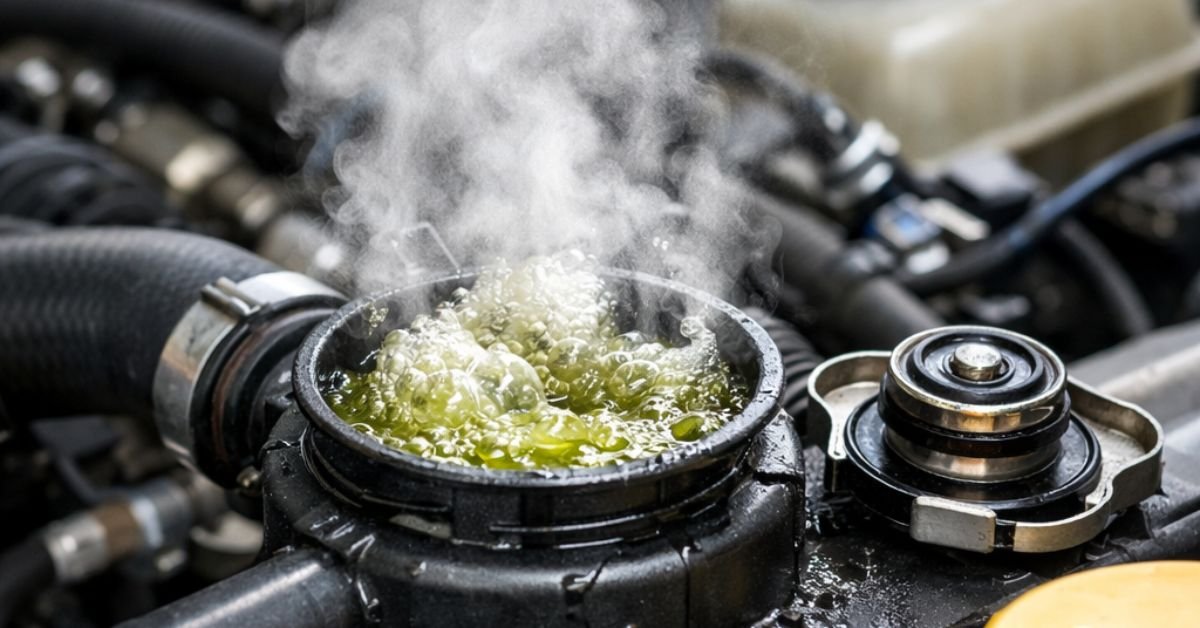
Car coolant is the liquid that keeps your engine at a safe temperature. It moves through the engine and absorbs excess heat. When car coolant is boiling, it means the cooling system is under heavy stress, which is not normal and should never be ignored. Seeing coolant boil can be alarming for any driver because it often happens suddenly and creates panic. Many people think it is a small issue, but it can quickly turn into serious engine damage, which makes this problem more dangerous than it looks. Boiling coolant usually happens because of a low coolant level, a faulty radiator cap, or engine overheating, and in some cases the issue starts in the coolant reservoir, so understanding the cause early can help protect your engine and avoid costly repairs.
What Does It Mean When Car Coolant Is Boiling?
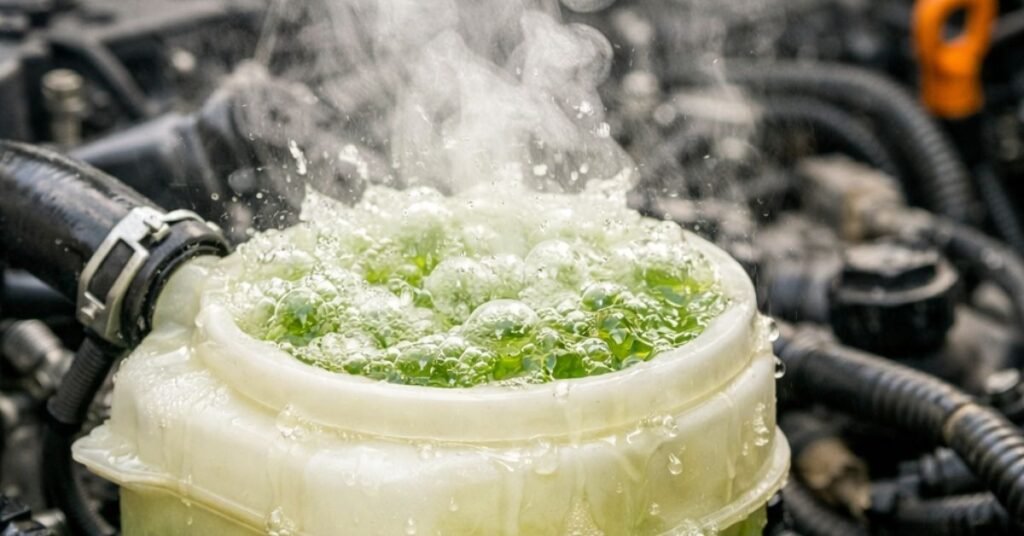
When car coolant is boiling, it means the engine is getting too hot to control the heat properly. The coolant is meant to stay at a stable temperature while moving through the engine. Boiling shows the cooling system is under pressure. It often points to a problem that needs quick attention. This situation usually means heat is not escaping as it should. It can happen due to low coolant or poor circulation. Boiling coolant is a warning sign, not something normal. It tells you the engine may soon overheat if ignored. Parts like the radiator, thermostat, or radiator cap may not be working correctly. If the issue continues, it can damage the engine. Fixing the cause early helps keep the car safe and running smoothly.
Common Reasons Why Car Coolant Is Boiling
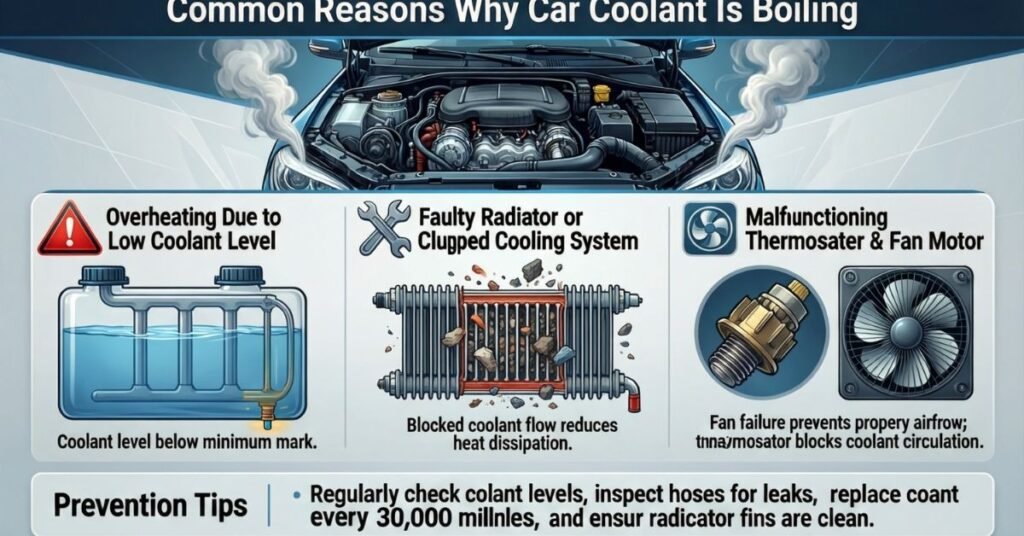
Car coolant can boil for several reasons, and each one shows a problem in the cooling system. One common cause is low coolant level, which happens when there is a leak or it was not filled properly. Another reason is a faulty radiator cap, which can’t maintain pressure in the system. If the thermostat is stuck, the coolant cannot flow correctly, causing it to overheat. Blocked hoses or a dirty radiator can also prevent proper cooling and lead to boiling. Sometimes the problem is less obvious, like a malfunctioning water pump that cannot circulate coolant fast enough. Overloading the engine by driving too fast or uphill for long periods can also make coolant boil. Even using the wrong type of coolant can affect the system. Recognizing these causes early can save the engine from serious damage and keep the car running safely.
Low Coolant Level or Coolant Loss
A low coolant level or coolant loss is one of the main reasons for boiling. It happens when there is a leak in the system or the coolant is not topped up regularly. Without enough coolant, the engine cannot stay cool and heat builds up fast. Even small leaks can cause big problems over time. Checking the coolant level often and fixing leaks immediately can prevent overheating and protect the engine from serious damage.
Faulty Radiator Cap Not Holding Pressure
A faulty radiator cap can cause car coolant to boil because it cannot hold the system pressure. The pressure helps raise the boiling point of the coolant and keeps the engine cool. If the cap is weak or damaged, coolant can escape or boil too early. This puts extra stress on the engine and may lead to overheating. Replacing a bad radiator cap is a simple fix that can prevent bigger cooling problems.
Bad Thermostat Stuck Closed
A bad thermostat stuck closed can make car coolant boil because it stops coolant from flowing through the engine. When coolant cannot circulate, heat builds up quickly and the engine overheats. This problem can happen suddenly and may damage engine parts if not fixed. Replacing a stuck thermostat restores proper coolant flow and keeps the engine at a safe temperature.
Cooling Fan or Water Pump Failure
- Engine temperature rises quickly even during short drives
- Strange noises or grinding sounds from the fan or pump
- Coolant leaks or puddles near the water pump area
- Reduced or no airflow from the vents inside the car
- Engine overheats even at low speeds or idle
- Boiling coolant in the reservoir or radiator
- Warning lights on the dashboard like the temperature or check engine light
- Decreased engine performance or unusual vibrations
Air Trapped in the Cooling System
Air trapped in the cooling system can cause car coolant to boil because it blocks proper coolant flow. When air pockets form, the coolant cannot reach hot engine parts, so heat builds up quickly. This can lead to overheating even if the coolant level is full. Bleeding the system to remove trapped air restores proper circulation and prevents boiling.
Blown or Leaking Head Gasket
A blown or leaking head gasket can make car coolant boil because it allows hot gases to enter the cooling system. This increases pressure and temperature quickly, causing the coolant to overheat. It can also mix coolant with engine oil, leading to serious engine damage. Fixing a blown head gasket immediately is crucial to protect the engine and keep it running safely.
What Is the Boiling Point of Engine Coolant?
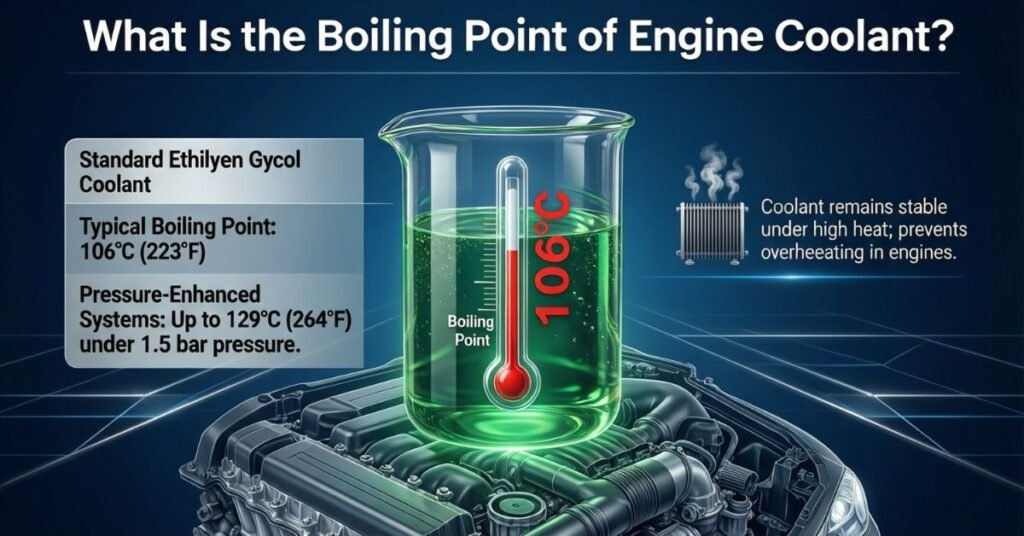
The boiling point of engine coolant is the temperature at which it starts to turn into steam. Most car coolants are designed to boil around 223°F to 265°F (106°C to 129°C) under pressure. The pressure inside the cooling system raises the boiling point, allowing the engine to run hotter safely. Knowing the boiling point helps drivers understand when the engine is at risk of overheating. Coolant with a lower boiling point can boil faster, especially in hot weather or heavy traffic. Using the correct type of coolant for your car ensures it stays within safe limits. Regular checks of coolant level and condition also help prevent boiling and protect the engine from damage.
Coolant vs Water Boiling Point
| Feature | Engine Coolant | Water | Notes / Importance |
| Boiling Point at 1 atm | 223°F – 265°F (106°C – 129°C) | 212°F (100°C) | Coolant boils higher due to additives and pressure |
| Boiling Point under Pressure | Up to 275°F (135°C) | ~250°F (121°C) | Pressure raises boiling point for safe engine operation |
| Freezing Point | -34°F (-37°C) to -12°F (-24°C) | 32°F (0°C) | Coolant protects engine in cold weather |
| Corrosion Protection | Yes | No | Coolant contains inhibitors to protect metal parts |
| Heat Transfer Efficiency | High | Moderate | Coolant circulates heat efficiently and prevents hot spots |
| Longevity | 2-5 years | Not applicable | Coolant lasts longer than plain water in the system |
| Safety | Non-toxic variants available | Can cause rust | Coolant is designed for engine safety and durability |
| Suitable for Modern Engines | Yes | No | Water alone can damage engine and cause overheating |
How Pressure Raises Coolant Boiling Temperature
Pressure inside the cooling system helps engine coolant stay in liquid form at higher temperatures. When pressure increases, the coolant does not turn into steam quickly. This allows the engine to run hot without overheating. The radiator cap plays a key role by sealing the system and maintaining pressure. If pressure drops, the coolant boils at a lower temperature and loses its cooling ability. A weak radiator cap or leaks can reduce pressure fast. This leads to bubbling coolant and rising engine heat. Keeping the system sealed ensures the coolant works effectively and protects the engine.
Coolant Boiling in Reservoir but Engine Not Overheating
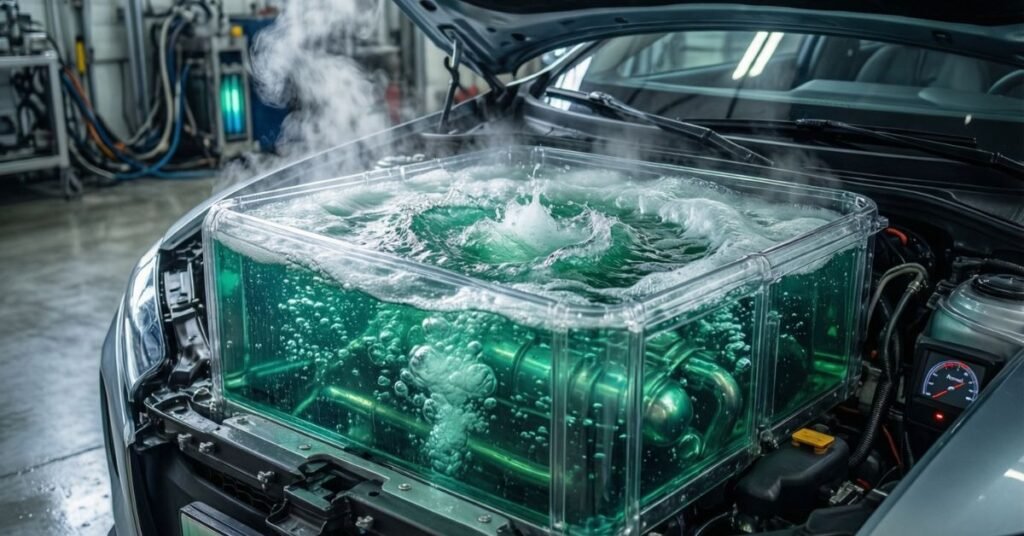
When coolant is boiling in the reservoir but the engine is not overheating, it usually points to a pressure or flow issue. The engine temperature may look normal, but the coolant is reacting to trapped air or weak pressure control. This often happens when the radiator cap is faulty or the system is not sealed properly. The coolant boils early even though the engine itself is still within safe limits. This situation should not be ignored because it can turn serious over time. Air pockets, low coolant level, or a blocked hose can cause uneven coolant movement. The reservoir shows boiling while the engine gauge stays normal. Fixing the root cause early helps maintain proper cooling and prevents sudden overheating later.
Why the Temperature Gauge Looks Normal
The temperature gauge can look normal even when there is a cooling problem. It only measures the temperature at one sensor point, not the whole engine. If coolant is not flowing evenly, the sensor may not detect rising heat. This can give a false sense of safety to the driver. In some cases, air pockets or low pressure keep heat away from the sensor. The engine may still have hot spots that the gauge cannot show. This is why coolant can boil while the gauge stays steady. Checking the full cooling system helps reveal hidden issues early.
Expansion Tank vs Radiator Boiling Explained
- Expansion tank boiling usually happens due to pressure loss or trapped air
- Radiator boiling often points to restricted flow or severe overheating
- A weak radiator cap can cause boiling in the expansion tank first
- Air pockets tend to collect in the expansion tank more easily
- Radiator boiling is more dangerous and needs immediate attention
- Expansion tank bubbling can occur even when the engine feels normal
- Radiator boiling usually means coolant is not circulating properly
- Both conditions signal cooling system issues and should not be ignored
Signs Your Car Coolant Is Boiling
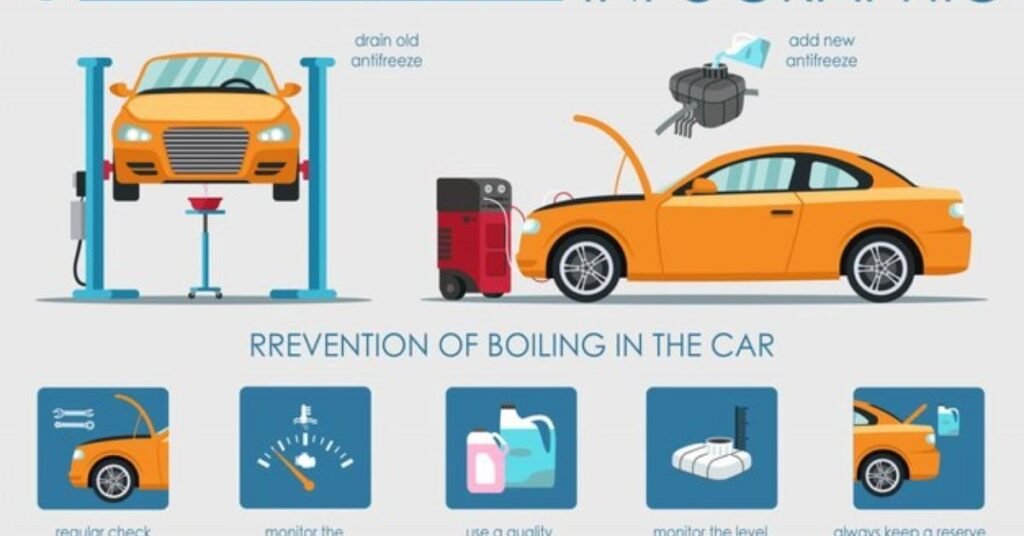
- Steam coming from the hood or near the reservoir
- Bubbling or gurgling sounds after turning off the engine
- Coolant spilling or overflowing from the reservoir tank
- Sweet or burning smell around the engine area
- Rising temperature warning light on the dashboard
- Coolant level dropping faster than usual
- Hissing sounds caused by escaping pressure
- Visible bubbles inside the coolant reservoir
Bubbling or Gurgling Sounds
- Strange bubbling noise after engine shutdown
- Gurgling sound from radiator or hoses
- Air moving through coolant lines
- Noise increases after long drives
- Sound comes from trapped air or low pressure
Steam from Coolant Reservoir
- White steam rising from reservoir cap
- Steam visible after stopping the car
- Strong sweet smell near engine bay
- Reservoir feels extremely hot to touch
- Steam appears even when gauge is normal
Coolant Overflow After Driving
- Coolant spilling out after parking
- Wet marks around reservoir tank
- Coolant level drops suddenly
- Overflow happens after long or fast drives
- Pressure buildup forces coolant out
How to Fix Car Coolant Boiling Issues
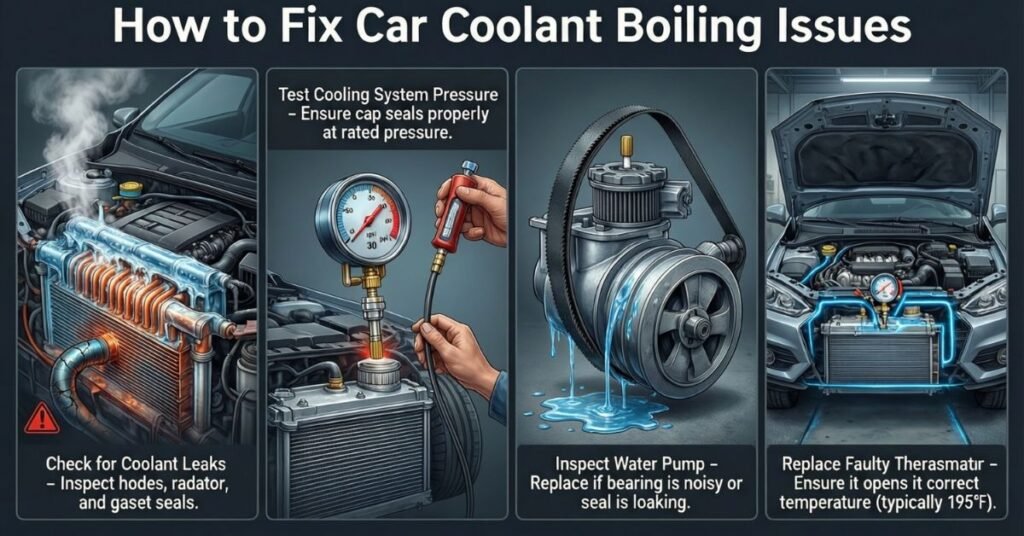
To fix car coolant boiling issues, start by checking the coolant level when the engine is cool. Add the correct type of coolant if it is low. Inspect the radiator cap and replace it if it feels loose or damaged. Make sure there are no visible leaks in hoses or around the radiator. These small checks can solve the problem early. If the issue continues, the cooling system may need bleeding to remove trapped air. A bad thermostat, weak water pump, or faulty cooling fan should be repaired or replaced. Regular maintenance keeps the cooling system working properly. Fixing the cause on time helps prevent engine damage and costly repairs.
Check and Refill Coolant Properly
- Always check coolant when the engine is cool to avoid burns
- Use the correct type of coolant for your car model
- Keep the coolant level between the minimum and maximum marks
- Top up slowly to prevent air bubbles in the system
- Inspect the reservoir and radiator for leaks before refilling
- Mixing coolants unless specified by the manufacturer is not recommended
- Regularly check coolant levels to prevent overheating
- Replace old or dirty coolant according to the service schedule
Replace Radiator Cap or Thermostat
Replacing a faulty radiator cap or thermostat can stop coolant from boiling. A weak cap cannot hold pressure, causing early boiling, while a stuck thermostat blocks coolant flow. Both issues make the engine overheat quickly. Swapping them with new, high-quality parts restores proper pressure and circulation. Regular checks ensure the cooling system works efficiently and protects the engine from damage.
Bleed Air from the Cooling System
- Turn off the engine and let it cool before starting
- Open the bleed valve or radiator cap carefully
- Use a funnel to slowly add coolant while air escapes
- Look for continuous bubbles in the system indicating trapped air
- Close the bleed valve once no more bubbles appear
- Run the engine briefly to check coolant circulation
- Repeat if necessary until air is fully removed
- Proper bleeding prevents boiling and keeps the engine cool
When Head Gasket Repair Is Needed
A head gasket repair is needed when coolant mixes with engine oil or exhaust gases enter the cooling system. Signs include white smoke from the exhaust, overheating, and bubbling in the coolant. Driving with a blown head gasket can cause severe engine damage. Fixing it promptly restores engine performance and prevents costly repairs.
Is It Safe to Drive When Car Coolant Is Boiling?
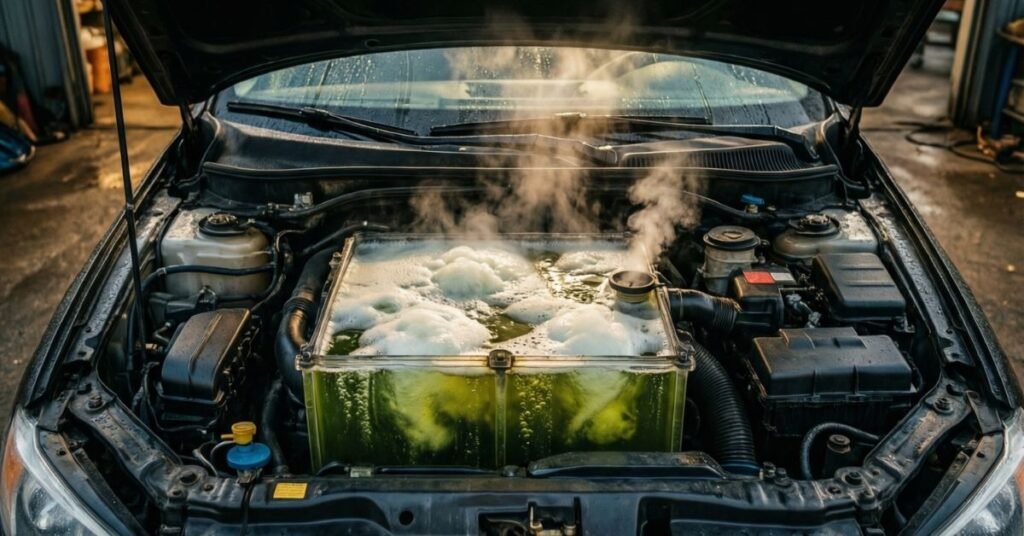
It is not safe to drive when car coolant is boiling. Boiling coolant means the engine is overheating and under stress. Driving in this condition can cause serious damage like warped engine parts or a blown head gasket. The car may stall or fail completely if ignored. If coolant starts boiling, stop the car immediately and turn off the engine. Let it cool down before checking the coolant level or adding more. Call for roadside assistance if needed. Addressing the problem early keeps the engine safe and avoids expensive repairs.
How to Prevent Coolant from Boiling in the Future
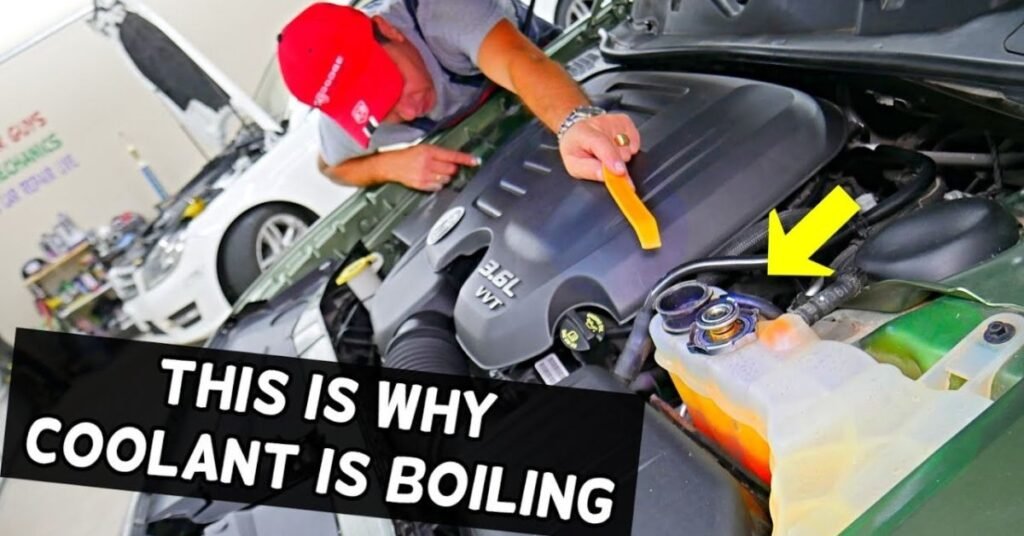
To prevent coolant from boiling, check the coolant level regularly and top it up with the correct type. Inspect hoses, radiator, and the reservoir for leaks or damage. Replace old or worn-out parts like the radiator cap, thermostat, or water pump. Keep the cooling system clean and free from debris. Avoid overloading the engine or driving aggressively for long periods. Bleed the cooling system properly to remove trapped air. Use the right coolant mixture for your car and maintain it according to the service schedule. Regular maintenance helps keep the engine cool and prevents future overheating problems.
Regular Cooling System Maintenance
- Check coolant level and top up as needed every month
- Check hoses, radiators, and reservoirs for leaks and cracks
- Replace old coolant according to the manufacturer’s schedule
- Test radiator cap and thermostat for proper function
- Clean the radiator and remove debris that can block airflow
- Flush the cooling system periodically to remove buildup
- Ensure the water pump and cooling fan work correctly
- Look for unusual noises, steam, or overheating signs during drives
Using the Correct Coolant Type and Mix
Using the correct coolant type and mix is important to prevent boiling and engine damage. The right coolant protects against corrosion, freezes in winter, and boils at a higher temperature. Mixing different types or using plain water can reduce cooling efficiency. Always follow the manufacturer’s instructions and maintain the proper coolant-to-water ratio to keep the engine safe and running smoothly.
Conclusion
Car coolant boiling is a serious issue that should not be ignored. It can happen due to low coolant, faulty parts, trapped air, or a blown head gasket. Recognizing the signs early helps prevent engine damage and costly repairs. Regular checks and maintenance keep the cooling system working properly. Using the correct coolant, topping it up on time, and fixing problems quickly can stop boiling. Simple steps like checking hoses, radiator caps, and thermostats make a big difference. Taking care of your cooling system keeps the engine safe and your car running smoothly for years.
FAQs
1. Why is my car coolant boiling?
Car coolant boils when the engine overheats or the cooling system has low pressure. It can be caused by low coolant, a faulty radiator cap, or trapped air.
2. Can I drive if my coolant is boiling?
It is not safe to drive when coolant is boiling. Doing so can cause severe engine damage like a blown head gasket.
3. How do I stop coolant from boiling?
Check and refill the coolant properly and fix leaks immediately. Replace faulty parts like the radiator cap, thermostat, or water pump.
4. Why does my coolant boil in the reservoir but not the engine?
This happens due to trapped air or weak system pressure. The engine may be fine, but the coolant in the reservoir overheats first.
5. How can I prevent coolant from boiling in the future?
Regularly check coolant levels, use the correct type, and maintain the cooling system. Proper bleeding, flushing, and part replacements keep the engine safe.
