

Introduction:
Low coolant in winter means your car does not have enough coolant or antifreeze to control engine temperature in cold weather. Coolant is a liquid that keeps the engine from freezing in winter and overheating at the same time. When the level drops, your engine cannot stay at the right temperature.
Many drivers think winter is safe for their engine because the weather is cold. But low coolant can still cause serious problems. Your engine can freeze, your heater may stop working, or hidden damage can start without warning. This is why ignoring coolant levels in winter is a big mistake.
In this guide, you will learn the main causes of low coolant in winter, the warning signs to watch for, and simple fixes you can do. You will also get expert tips to keep your cooling system working properly in cold weather.
Does Cold Weather Cause Low Coolant Levels?
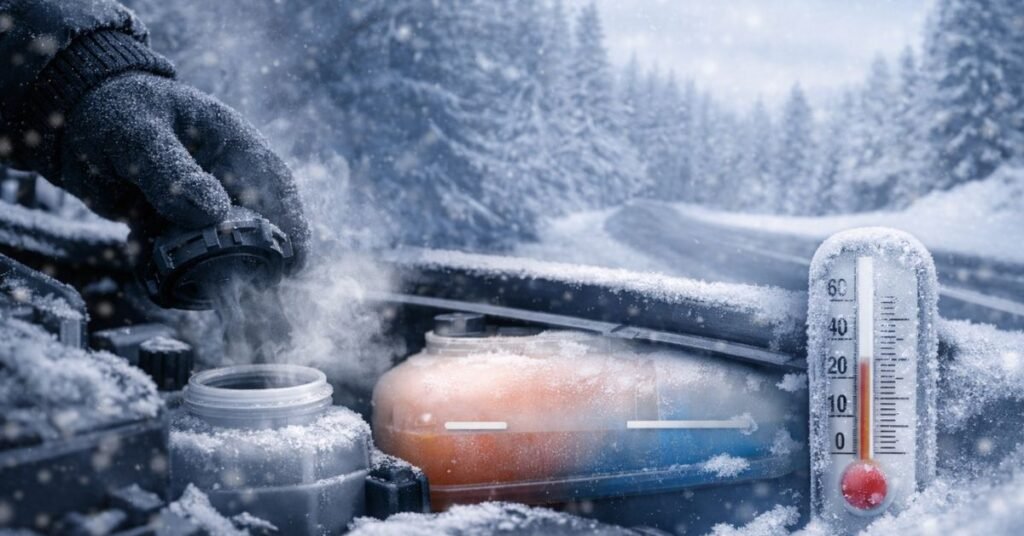
Cold weather can affect coolant levels, but it does not always mean there is a problem. When the temperature drops, coolant can contract slightly, which may make the level look lower in the reservoir. This is normal in many cars during winter.
However, a big drop in coolant is not normal. Cold weather can make weak hoses, seals, or the radiator crack or leak. This can lead to real coolant loss. So, if your coolant keeps dropping, you should check your car to avoid engine problems.
How Temperature Drops Affect Coolant Volume
When the temperature drops, coolant becomes slightly thicker and takes up less space. This means the level in the reservoir can go down a little. It does not mean the coolant is gone. It is just reacting to the cold weather.
In very cold conditions, this change can be more noticeable. That is why your coolant level may look different in winter compared to summer. It is a normal physical reaction to temperature changes.
Is It Normal for Coolant to Drop in Cold Weather?
A small drop in coolant level during winter is normal. Cold air causes the liquid to shrink, so the level may look lower than usual. This is usually not a reason to worry if the drop is very minor.
However, if the level keeps going down again and again, it is not normal. This could be a sign of a leak or another issue in the cooling system. In that case, your car needs to be checked.
Why Coolant Contracts in Winter
Coolant contracts in winter because liquids respond to cold temperatures by becoming denser. As the temperature falls, the molecules move closer together. This reduces the overall volume of the coolant.
This is a natural process and happens with most liquids, not just coolant. That is why your coolant level may appear lower in cold weather without any real loss.
Common Causes of Low Coolant in Winter
Low coolant in winter can happen for many reasons. Cold weather can make small problems worse.Low temperatures can cause hoses and seals to shrink or crack. This can lead to slow leaks that are hard to notice at first. Over time, the coolant level keeps dropping.
Sometimes, the issue is inside the engine and not easy to see. Problems like a weak radiator cap or a damaged head gasket can also cause coolant loss. That is why it is important to check your car regularly during winter.
Common causes include:
- Hidden leaks in hoses or radiator
- Cracked or brittle rubber parts due to cold
- Faulty coolant reservoir or loose cap
- Blown head gasket causing internal leaks
- Evaporation from an old or weak cooling system
Hidden Leaks That Worsen in Cold Weather
Hidden leaks are very common in winter. Small cracks or weak points in the cooling system can start leaking slowly. Cold weather makes these leaks worse because parts shrink and become less flexible. This can cause coolant to escape without any clear sign.
Sometimes you will not see any puddles under the car. But the coolant level will still go down. This is why hidden leaks are hard to detect in winter. Regular checking is very important to avoid engine damage.
Cracked Hoses or Radiator Issues
Hoses and the radiator can get damaged in cold weather. Rubber becomes hard and may crack easily. The radiator can also develop small leaks due to temperature changes. These problems allow coolant to slowly leak out.
At first, the leak may be very small. But over time, it can become serious. If not fixed, it can lead to overheating and engine damage. That is why cracked parts should never be ignored.
Faulty Coolant Reservoir or Cap
The coolant reservoir and its cap help keep the system sealed. If the cap is loose or damaged, coolant can escape as vapor. Cold weather can make this problem worse by reducing pressure stability.
A cracked reservoir can also leak coolant slowly. This type of issue is often missed during quick checks. Replacing a bad cap or reservoir can solve the problem easily.
Blown Head Gasket in Cold Conditions
A blown head gasket is one of the most serious causes of coolant loss. In winter, engine stress can increase due to temperature changes. This can make an already weak gasket fail.
When this happens, coolant may enter the engine or mix with oil. You may also see white smoke from the exhaust. This issue needs immediate repair to prevent major engine damage.
Signs of Low Coolant During Winter
Low coolant in winter shows clear warning signs in your car. These signs should never be ignored because they can lead to engine damage. When coolant drops, the engine cannot stay at the right temperature. This affects both performance and safety.
You may notice different symptoms while driving or even when the car is idle. Others are hidden, while others are easy to see. If you spot these signs early, you can prevent bigger problems.
Common signs include:
- Engine temperature rising quickly
- Heater not working properly
- Coolant warning light on dashboard
- Steam coming from the engine
- Sweet smell near the hood
These signs mean your cooling system needs attention. If ignored, the problem can become serious and costly to fix.
Engine Overheating Even in Cold Weather
Engine overheating can still happen even when the weather is cold. This usually means your coolant level is too low. Without enough coolant, the engine cannot control heat properly. This can lead to serious engine damage if ignored.
Low coolant reduces the cooling power of the system. The engine temperature starts rising quickly, even in winter. You may notice the temperature gauge going high. This is a clear warning sign that should not be ignored.
Heater Blowing Cold Air
When coolant is low, the car heater does not work properly. Engine coolant heats the heater.. If coolant is missing, there is no heat to warm the air.
This makes the heater blow cold air inside the car. It often happens during winter when you need heat the most. It is a common early sign of coolant problems.
- Not enough hot coolant reaching heater core
- Heat flow gets blocked by air in system
- Heater becomes weak or completely cold
Coolant Warning Light on Dashboard
Most modern cars show a warning light when coolant is low. This light is a direct signal from the system. It means the coolant level is below the safe limit.
Drivers should never ignore this warning. It can help prevent serious engine damage if acted on quickly.When this light appears, always check the coolant tank.
- Sensor detects low coolant level
- Dashboard warning light turns on
- Immediate check is required
Steam or Sweet Smell from Engine
Steam from the engine usually means coolant is leaking on hot parts. This creates visible vapor coming from under the hood.This is a sign of a serious problem.
A sweet smell often comes from leaking antifreeze. It is another strong warning that coolant is escaping. This should be fixed as soon as possible.
- Coolant leaks onto hot engine parts
- Steam forms due to high heat
- Sweet smell indicates antifreeze leakage
What Happens If Coolant Is Low in Winter?
Low coolant in winter can cause serious problems for your car. The engine needs coolant to control temperature. Without enough coolant, the engine can overheat even in cold weather. The result can be poor performance and long-term damage.
It also affects how your car works in daily driving. You may notice unusual sounds, weak heating, or warning lights. If ignored, the issue can become expensive to repair.
Possible problems include:
- Engine overheating even in cold weather
- Poor heater performance inside the car
- Increased engine wear and damage
- Risk of engine freezing in extreme cold
- Sudden breakdown while driving
Taking quick action can help you avoid these problems and keep your car safe in winter.
Risk of Engine Freezing
Low coolant in winter increases the risk of engine freezing. Coolant is made to stop the liquid inside the engine from freezing in cold weather. When the level is low, this protection becomes weak. In very low temperatures, engine parts can start freezing and stop working properly.
This can cause serious engine damage. Frozen coolant can block pipes and harm internal parts. It may also lead to cracks in the engine system.
- Coolant loses freezing protection when low
- Engine parts can freeze in extreme cold
- Blocked pipes and possible engine cracks
Increased Engine Wear and Damage
When coolant is low, the engine does not stay at a stable temperature. This makes the engine work harder than normal. Over time, this extra stress increases wear on engine parts.
Metal components heat up and cool down unevenly. This can shorten engine life and cause expensive repairs. If ignored, small issues can turn into major damage.
- Engine runs under extra heat stress
- Parts wear out faster than normal
- Long-term damage becomes more likely
Poor Heater Performance Inside the Car
Low coolant directly affects your car’s heating system. Warm coolant from the engine heats the heater.. When coolant is low, there is not enough heat available.
This results in weak or cold airflow inside the car. It becomes uncomfortable, especially during winter. It is often one of the first signs of coolant problems.
- Not enough warm coolant for heater system
- Heater blows weak or cold air
- Reduced comfort during winter driving
Why Coolant Is More Important in Winter Than You Think
Coolant is very important in winter because it protects your engine from freezing. Many drivers think coolant is only needed in hot weather, but that is not true. In cold weather, the engine still needs temperature control to run smoothly. Without enough coolant, the engine can face serious problems.
Coolant also helps keep the engine warm at the right level. It prevents sudden temperature changes that can damage engine parts. In winter, this balance becomes even more important for safe driving and better performance.
Coolant Functions in Winter
| Coolant Function | What It Does | Why It Matters in Winter |
| Prevents freezing | Stops engine fluid from turning into ice | Protects engine from damage in cold weather |
| Controls temperature | Keeps engine heat balanced | Prevents overheating even in winter |
| Protects engine parts | Reduces wear and corrosion | Increases engine life and durability |
| Supports heater system | Transfers heat to cabin heater | Keeps car interior warm in winter |
| Maintains pressure | Keeps cooling system stable | Avoids leaks and system failure |
| Prevents rust | Stops internal corrosion | Protects radiator and metal parts |
| Improves performance | Helps engine run smoothly | Better fuel efficiency in cold conditions |
Low Coolant But No Leak? Here’s Why
Sometimes your coolant level goes down, but you do not see any visible leak.Many drivers find this confusing. It does not always mean there is a big problem on the ground. In many cases, the coolant is escaping in ways that are not easy to notice.
This situation can still affect your engine if ignored. Even without visible leaks, the system may be losing coolant slowly. It is important to understand the hidden reasons behind it.
One common reason is coolant evaporation over time, especially in an old system. Small internal leaks can also burn coolant inside the engine. Another issue is air trapped in the cooling system, which can affect readings and levels.
Coolant Evaporation Explained
- Old coolant slowly evaporates over time
- High engine heat turns coolant into vapor
- No visible leak is seen under the car
Internal Engine Leaks You Can’t See
- Coolant burns inside the engine
- Coolant may mix with engine oil
- Caused by internal engine damage like head gasket failure
Air Pockets in the Cooling System
- Air blocks proper coolant flow
- Coolant level readings become incorrect
- Causes uneven engine cooling performance
How to Check and Fix Low Coolant in Winter
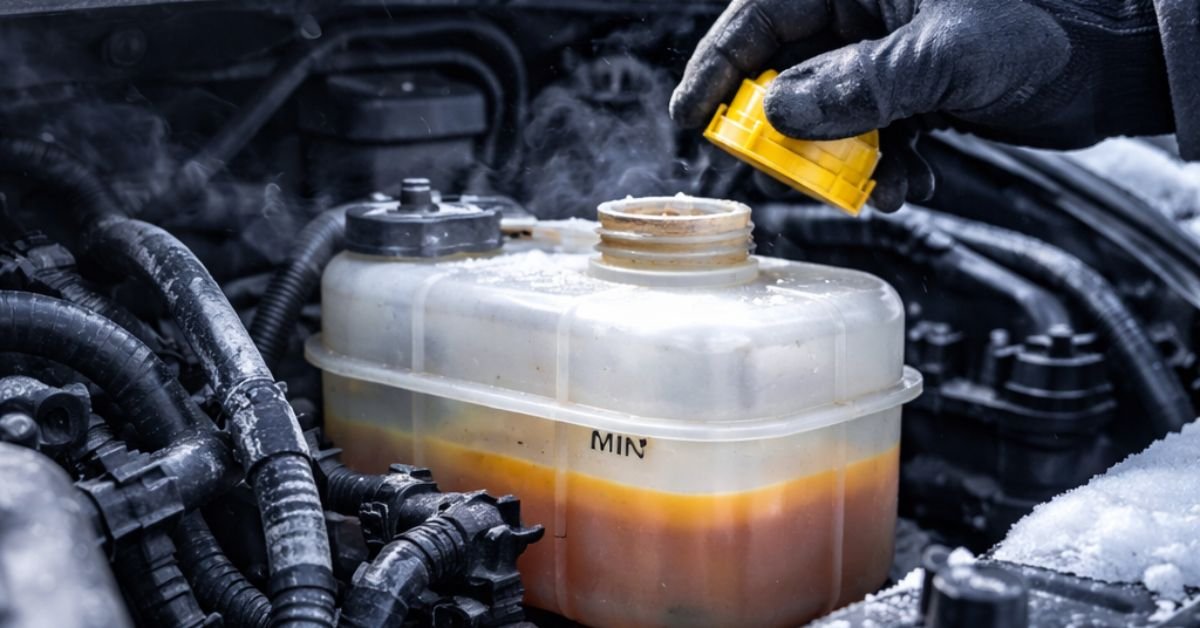
Checking coolant in winter is very important for your car’s safety. First, make sure the engine is completely cool before opening the coolant tank. When the engine is hot, never open it. Look at the coolant level and see if it is below the marked line.
If the level is low, you need to refill it with the correct coolant type. Do not use plain water for long-term use. Always use the recommended mixture for your car. After refilling, check again after a few days to make sure the level is stable.
Steps to check and fix:
- Turn off the engine and let it cool
- Open the coolant reservoir carefully
- Check the level marks (MIN and MAX)
- Add correct coolant if level is low
- Close the cap tightly after filling
- Recheck after driving a few days
This simple check can help you avoid serious engine problems in winter.
Tips to Prevent Low Coolant Issues in Winter
- Check coolant level regularly, especially before long trips and during cold mornings when levels can drop without warning
- Use the correct coolant mixture recommended for your vehicle to ensure proper freezing and overheating protection in winter
- Inspect all hoses carefully for cracks, leaks, or softness, because cold weather can make rubber parts weak and brittle
- Make sure the coolant reservoir cap is tightly closed and in good condition to prevent pressure loss and evaporation
- Get your cooling system serviced before winter starts to detect hidden problems early and avoid sudden breakdowns
- Avoid using plain water for long periods because it can freeze in winter and damage the engine cooling system
Conclusion
Low coolant in winter is a problem that should never be ignored. Cold weather can make small issues worse and affect your engine performance. Even if your car seems fine, low coolant can slowly damage important engine parts. It can also reduce heating inside the car, making winter driving uncomfortable.
Regular checking and simple maintenance can save you from big repairs. Always keep an eye on coolant levels and fix small issues early. Use the right coolant and follow proper care steps in winter. This helps your engine stay safe, strong, and reliable in cold weather.
FAQs
1. Why does my coolant level drop in winter?
Coolant can drop in winter due to temperature changes and system pressure shifts.
Cold weather can also expose weak seals or small leaks in the system.
Sometimes it looks low even without a visible leak.
2. Is it normal to lose coolant in cold weather?
A small drop can be normal because coolant contracts in low temperatures.
However, a constant or large drop is not normal.
It may indicate a hidden leak or internal engine issue.
3. Can I drive with low coolant in winter?
Driving with low coolant is not safe, especially in winter conditions.
It can cause engine overheating or freezing damage.
Always refill coolant before driving long distances.
4. What are the signs of low coolant in winter?
Common signs include engine overheating and poor heater performance.
You may also see warning lights or smell a sweet odor.
Steam from the engine can also be a serious warning sign.
5. How often should I check coolant in winter?
It is best to check coolant at least once every 2–3 weeks in winter.
You should also check it before long trips or cold mornings.
Regular checks help prevent sudden engine problems.
