

Introduction
Antifreeze is a liquid used in cars to stop engine coolant from freezing. It works by lowering the freezing point of water, which helps engines run safely in very cold weather.
Because antifreeze prevents freezing inside engines, many people wonder if it can also melt ice outside. This question often comes up in winter when windshields, locks, and driveways freeze.
The idea sounds simple, but the answer is not straightforward. Antifreeze can melt ice in limited situations. However, it works slowly and comes with serious safety risks. Understanding how antifreeze works will help you choose safer options.
Will Antifreeze Melt Ice?
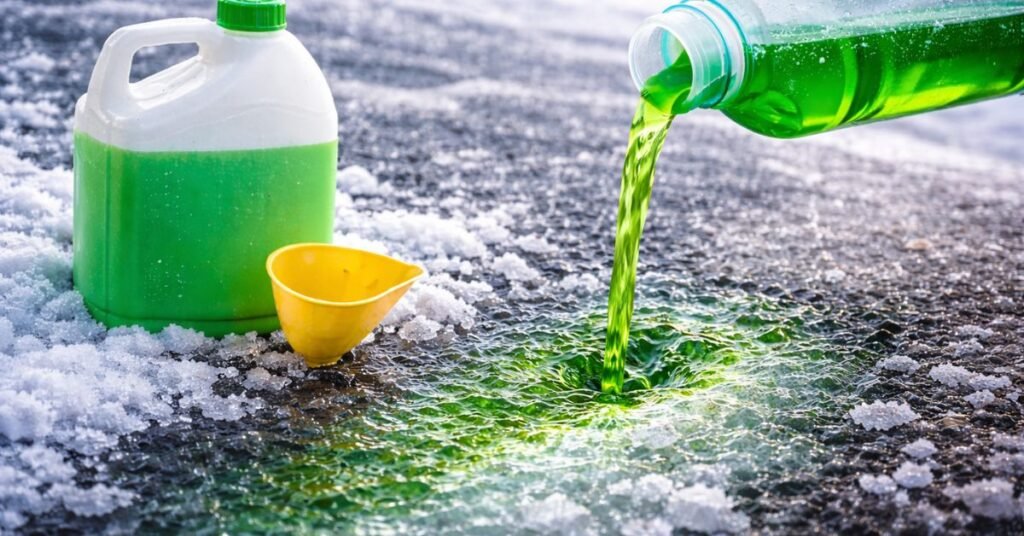
Yes, antifreeze can melt ice to a small extent. It lowers the freezing point of water, which is why it keeps engine coolant from freezing.
However, antifreeze is not designed for outdoor ice. On roads, driveways, or windshields, it works very slowly. More importantly, it can be dangerous for people, pets, and the environment.
Does Antifreeze Melt Ice or Just Prevent Freezing?
Antifreeze is mainly designed to prevent freezing, not to melt existing ice. Inside an engine, it works extremely well. On solid ice, its effect is limited.
Key points to remember:
- Works best before freezing starts
- Melts ice very slowly
- Not meant for outdoor use
- Unsafe for pets and the environment
How Antifreeze Works in Cold Temperatures
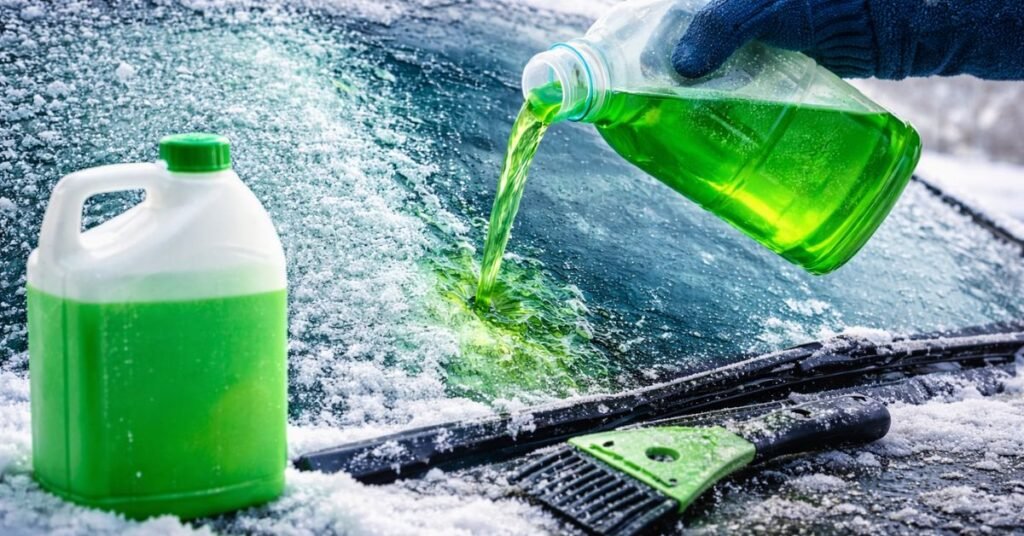
Antifreeze lowers the freezing point of water in your car’s cooling system. This prevents coolant from turning into ice and protects the engine from cracking or overheating.
It also helps transfer heat efficiently, keeping the engine running smoothly. While this works well inside a vehicle, antifreeze is not powerful enough to melt outdoor ice effectively.
Freezing Point Depression
Freezing point depression means lowering the temperature at which water freezes. When antifreeze is mixed with water, the water stays liquid at much colder temperatures.
This process protects engines in winter, but it does not make antifreeze a strong ice‑melting solution for outdoor use.
Main takeaways:
- Antifreeze lowers water’s freezing point
- Higher concentration = lower freezing temperature
- Effective inside engines only
- Weak for melting ice outside
Melting Ice vs Preventing Ice Formation
Melting ice and preventing freezing are two different things. Antifreeze focuses on prevention, not removal.
Comparison Table
| Aspect | Melting Ice | Preventing Freezing |
| Purpose | Remove existing ice | Stop water from freezing |
| Example | Driveways, windshields | Engine coolant |
| Speed | Slow, weather‑dependent | Continuous protection |
| Safety | Risky outdoors | Safe inside engine |
| Best Tools | Salt, de‑icers, heat | Antifreeze |
Can Antifreeze Be Used as a De‑Icer?
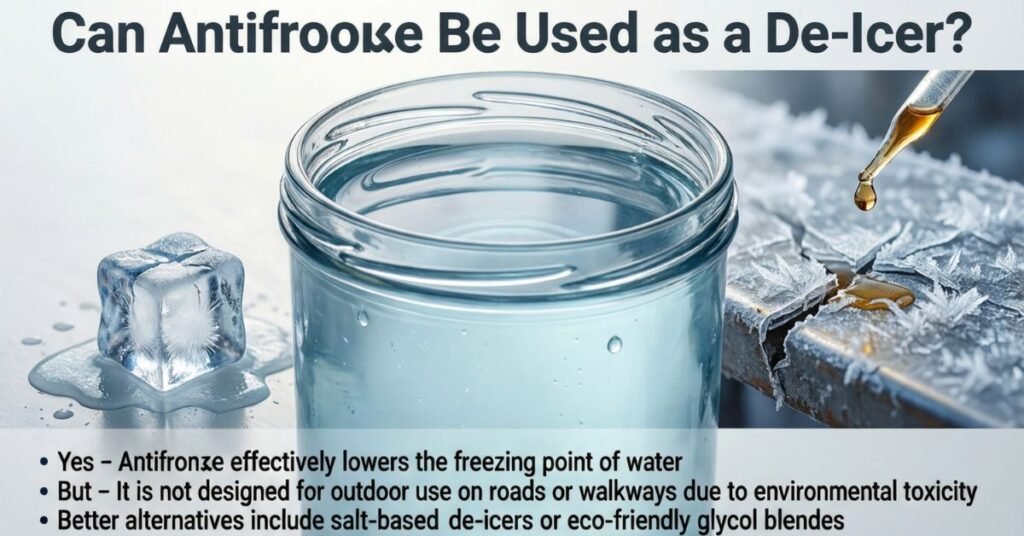
Antifreeze is not made to be a de‑icer. Although it can melt a small amount of ice, it works too slowly to be practical.
More importantly, antifreeze is toxic. Using it on driveways or sidewalks can put pets, children, and wildlife at risk.
Why Antifreeze Is Unsafe for Outdoor Ice
Avoid using antifreeze outside for these reasons:
- Toxic if swallowed
- Dangerous for pets and children
- Can damage concrete and asphalt
- Harms soil and water
Is Antifreeze Safe to Use on Ice?
No, antifreeze is not safe for melting ice. It contains chemicals that can cause serious harm if touched or ingested.
Safer alternatives include:
- Rock salt
- Sand or kitty litter
- Commercial pet‑safe de‑icers
Toxicity Risks for Humans and Pets
Antifreeze often contains ethylene glycol, which is extremely toxic.
Possible symptoms of poisoning:
- Vomiting or nausea
- Trouble breathing
- Weakness or confusion
- Seizures in severe cases
Always store antifreeze securely and avoid spills.
Environmental Risks of Antifreeze on Ice
Pouring antifreeze on ice can contaminate soil and water. It does not break down quickly and can harm plants and animals.
Safer options include:
- Rock salt
- Sand for traction
- Non‑toxic ice melt products
Antifreeze vs Salt: Which Melts Ice Better?
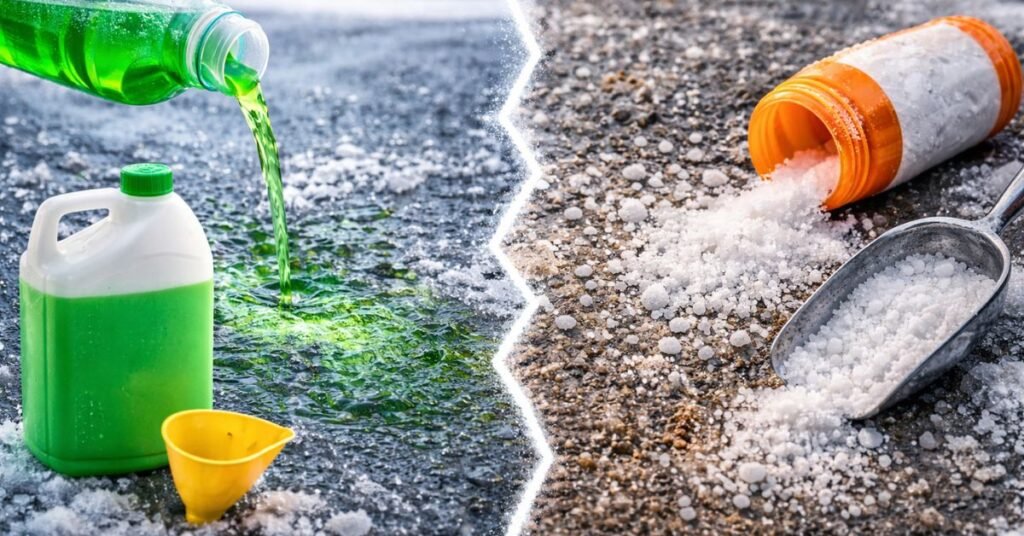
Antifreeze melts ice slowly and is dangerous. Salt melts ice faster and is much safer when used correctly.
While salt can damage plants if overused, it is still a far better option than antifreeze for winter ice removal.
Why Salt Works Better
Salt lowers the freezing point of water and works quickly in most winter conditions.
Benefits of salt:
- Fast ice melting
- Easy to apply
- Affordable and available
- Safer than antifreeze
Temperature Limits of Ice‑Melting Products
| Product | Works Best Above | Works Down To | Notes |
| Rock Salt | 32°F (0°C) | 15°F (‑9°C) | Cheap, common |
| Calcium Chloride | 32°F (0°C) | ‑25°F (‑32°C) | Fast, very effective |
| Magnesium Chloride | 32°F (0°C) | 5°F (‑15°C) | Pet‑friendlier |
| Potassium Chloride | 32°F (0°C) | 12°F (‑11°C) | Mild ice |
Common Types of Antifreeze
Ethylene glycol and propylene glycol are the most common antifreeze types. Both lower freezing points but are not safe for ice removal.
Comparison Table
| Feature | Ethylene Glycol | Propylene Glycol |
| Toxicity | Very high | Lower but still harmful |
| Use | Car engines | Engines, some food uses |
| Ice Melting | Slow | Slow |
| Outdoor Safety | Unsafe | Unsafe |
Will RV Antifreeze Melt Ice?
RV antifreeze is designed for plumbing systems, not ice removal. It works slowly and can still be harmful.
Better choices include salt or pet‑safe de‑icers.
Safer Alternatives to Antifreeze
Safe options include:
- Rock salt
- Calcium chloride
- Magnesium chloride
- Commercial non‑toxic de‑icers
These products work faster and are much safer.
When Antifreeze Helps and When It Doesn’t
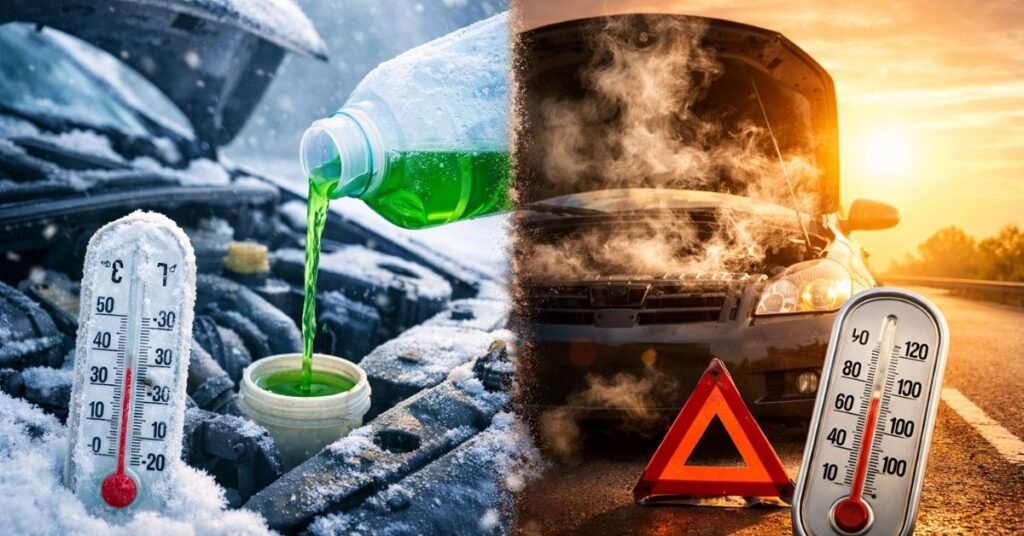
Antifreeze helps inside vehicles by preventing freezing and overheating.
It does not help with outdoor ice and should never be used for that purpose.
Best Practices for Winter Ice Problems
- Remove snow early
- Use the right de‑icer for the temperature
- Apply small amounts
- Choose pet‑safe products
Conclusion
Antifreeze can melt ice slowly, but it is unsafe and not recommended. The risks to pets, people, and the environment are too high.
For winter safety, use salt or commercial ice‑melting products. They work faster and are far safer when used properly.
FAQs:
1. Will antifreeze melt ice?
Yes, antifreeze can melt ice a little because it lowers the freezing point of water.
However, it works very slowly and is not safe for outdoor ice removal.
2. Will antifreeze melt ice faster than salt?
No, antifreeze does not melt ice faster than salt.
Salt and commercial de-icers work much quicker and are made for icy surfaces.
3. Is antifreeze safe for melting ice outside?
No, antifreeze is toxic and unsafe for people, pets, and plants.
Using it on driveways or sidewalks can cause serious health and environmental risks.
4. Will antifreeze melt ice in very cold weather?
Antifreeze may work slightly, but its effect is very limited on solid ice.
Special de-icers like calcium chloride perform much better in extreme cold.
5. What should I use instead to melt ice safely?
