

Introduction
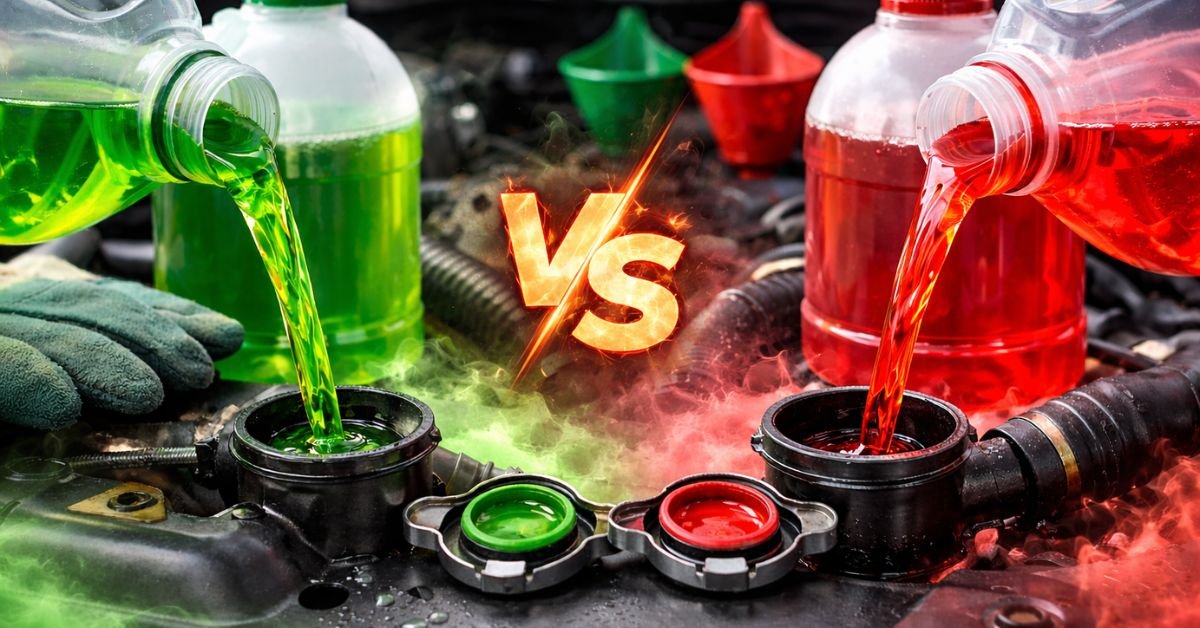
Antifreeze is an important liquid that keeps your engine at a safe temperature. In hot weather, it prevents overheating. In cold weather, it stops the engine from freezing. In addition, it protects metal parts from rust and corrosion. The most common colors you’ll see are green and red.
However, choosing the right antifreeze can feel confusing. Using the wrong type may damage your engine or reduce the life of your cooling system. Therefore, understanding the difference between green and red antifreeze is very important.
In this guide, you’ll learn how both types work, what makes them different, and which one is best for your vehicle. By the end, you’ll be able to choose the right coolant with confidence.
Green Antifreeze vs Red What’s the Difference?
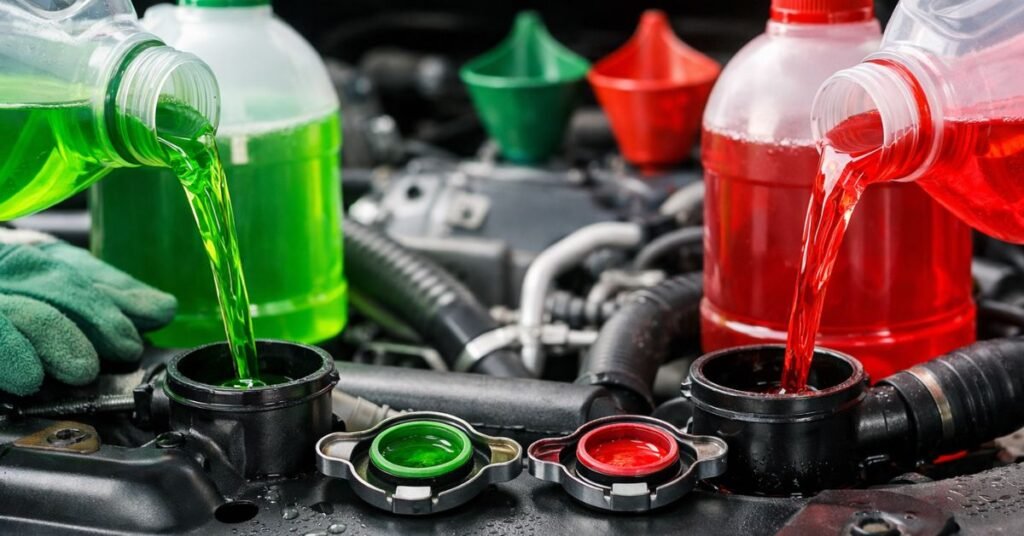
Although both types control engine temperature, they work in slightly different ways.
Green antifreeze uses Inorganic Acid Technology (IAT). It is an older formula designed mainly for older vehicles. While it provides strong protection, it needs to be replaced more often.
On the other hand, red antifreeze uses Organic Acid Technology (OAT). This formula lasts longer and works better in modern engines. Most importantly, you should never mix green and red coolant because it can create sludge and reduce engine performance.
What Is Green Antifreeze?
Green antifreeze is a traditional coolant used in many older cars. It contains silicates and phosphates that protect engine parts from rust.
Typically, it needs to be replaced every 2 years or around 30,000 miles. Although it works well in older engines, it is not ideal for most modern vehicles. Because its chemicals break down faster, regular maintenance is necessary.
What Is Red Antifreeze?
Red antifreeze is a newer type of coolant made with OAT technology. Unlike green coolant, it does not rely on silicates.
Instead, it uses organic acids to provide long-lasting protection. As a result, it can last up to 5 years or 150,000 miles. For this reason, it is commonly used in modern vehicles with aluminum engines.
Why Do They Have Different Colors?
The color of antifreeze helps drivers quickly identify the formula inside. Manufacturers use color coding to prevent mixing the wrong types.
For example:
- Green usually represents older IAT technology.
- Red typically indicates modern OAT technology.
- Different colors often signal different lifespans.
- Mixing colors may lead to sludge formation.
- Always check your owner’s manual before choosing.
Therefore, the color is not just for appearance. It plays an important role in safe maintenance.
Chemical Composition of Green Antifreeze vs Red

Green antifreeze contains silicates and phosphates. These chemicals protect engine metals quickly but break down faster.
In contrast, red antifreeze contains organic acids. These ingredients last longer and keep the cooling system cleaner. Because of this, red coolant requires fewer replacements.
Which Lasts Longer?
When it comes to lifespan, red antifreeze clearly lasts longer.
Green coolant typically works for 2–3 years. After that, its protection weakens, so replacement becomes necessary.
Red coolant, however, can protect the engine for up to 5 years. Thanks to its stable formula, it resists breakdown and sludge formation. As a result, modern engines benefit from longer service intervals.
Can You Mix Green and Red Antifreeze?
No, mixing green and red antifreeze is not recommended.
When combined, their chemicals can react and form thick sludge. Consequently, this sludge may block coolant passages and reduce cooling efficiency. In severe cases, it can even cause overheating.
If mixing happens accidentally:
- Drain the cooling system completely.
- Flush it with clean water or a flush solution.
- Refill with the correct coolant type.
Taking quick action helps prevent long-term damage.
Which Vehicles Use Green or Red Antifreeze?
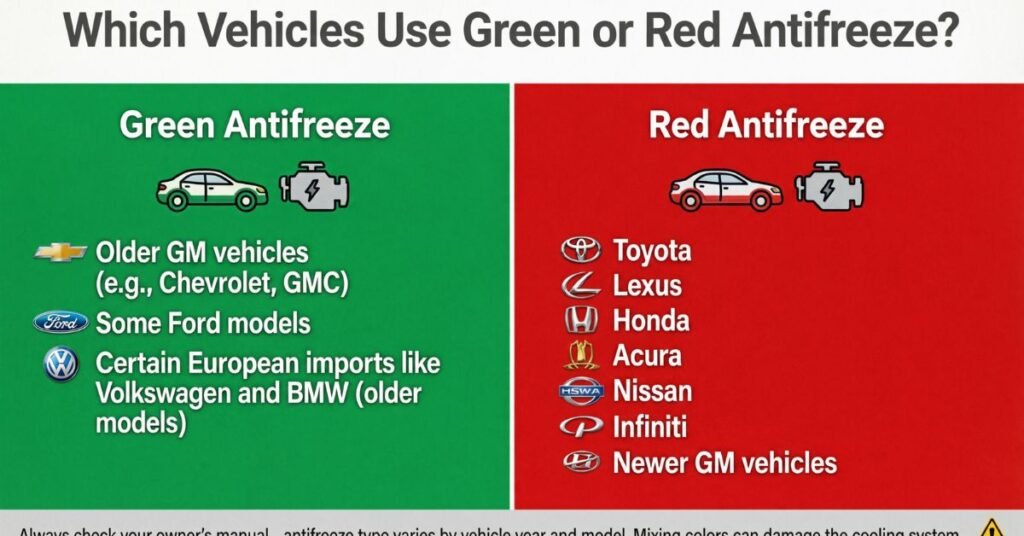
Generally, older vehicles (especially those made before the mid-2000s) use green coolant.
Meanwhile, most modern cars use red antifreeze because it protects advanced engine materials better. However, the safest way to know is by checking your owner’s manual.
Always follow the manufacturer’s instructions to avoid problems.
Performance Comparison
Corrosion Protection
Green provides short-term protection. However, its effectiveness decreases faster.
Red offers long-lasting corrosion resistance and reduces sludge buildup.
Cooling Efficiency
Both coolants manage temperature well. Still, red maintains stable performance for a longer period.
Aluminum Engine Compatibility
Green can be used, but protection fades sooner.
Red works better in modern aluminum engines and provides extended safety.
Cost Comparison: Green vs Red Antifreeze
At first, green antifreeze appears cheaper. However, because it needs frequent replacement, the long-term cost increases.
Red antifreeze costs more upfront. Nevertheless, its longer lifespan means fewer changes and lower maintenance expenses over time. Therefore, it may actually save money in the long run.
How to Choose the Right Antifreeze
To make the best decision:
- First, check your owner’s manual.
- Consider your vehicle’s age.
- Think about how often you want to change coolant.
- Never mix different types.
Choosing the correct antifreeze protects your engine and prevents costly repairs.
Conclusion
Selecting the right antifreeze is essential for engine health. Green and red coolants are designed for different types of vehicles. While green suits older cars, red is better for modern engines.
Most importantly, avoid mixing them. Always follow your manufacturer’s recommendations and replace coolant on time. Proper maintenance not only prevents overheating but also saves money and extends engine life.
FAQs
1. Can I use green antifreeze in a modern car?
Although it may work temporarily, green antifreeze is not ideal for modern engines. Over time, it may reduce long-term protection. Therefore, always follow your vehicle manufacturer’s advice.
2. How long does red antifreeze last?
Red antifreeze usually lasts 4–5 years or up to 150,000 miles. Because of its OAT formula, it provides long-term protection and requires fewer replacements.
3. What happens if I mix green and red antifreeze?
When mixed, they can form thick sludge. As a result, coolant flow may be blocked, which can lead to overheating and engine damage.
4. Which coolant is better for preventing rust?
Red antifreeze offers longer-lasting rust protection. However, green coolant also protects metal parts but needs more frequent changes.
5. How do I know which antifreeze my car needs?
The easiest way is to check your owner’s manual. If you are unsure, you can also consult a trusted mechanic for guidance.
