


Introduction
Coolant Bubbling in Reservoir: Causes, Symptoms, and Fixes
Coolant bubbling in the reservoir means air or gas is moving through the coolant system. You may see bubbles in the overflow tank while the engine is running or after driving. This usually shows the cooling system is not working as it should.
This problem should not be ignored. Bubbling coolant can be an early warning sign of overheating or pressure issues. If left untreated, it may lead to serious engine damage and costly repairs.
Several issues can cause coolant bubbling in the reservoir. Common reasons include trapped air, a bad radiator cap, or a failing head gasket. Understanding the causes and symptoms helps you fix the problem early and protect your engine.
Coolant Bubbling in Reservoir – What Does It Mean?
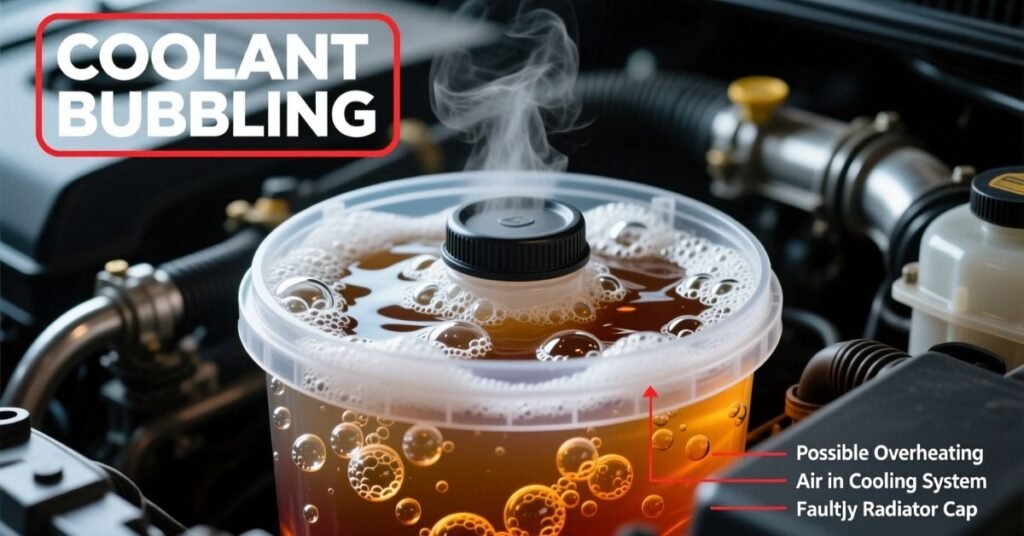
Coolant bubbling in the reservoir usually means something is wrong in the cooling system. It often happens when air enters the system or pressure builds up where it should not. This bubbling can be a sign that the engine is running hotter than normal or the coolant is not flowing properly.
Is Coolant Bubbling Normal or a Warning Sign?
In most cases, coolant bubbling is a warning sign, not normal behavior. While a few small bubbles right after turning off the engine can be normal, constant bubbling while driving is a problem. It may point to trapped air, a weak radiator cap, or even a head gasket issue.
Difference Between Bubbling and Boiling Coolant
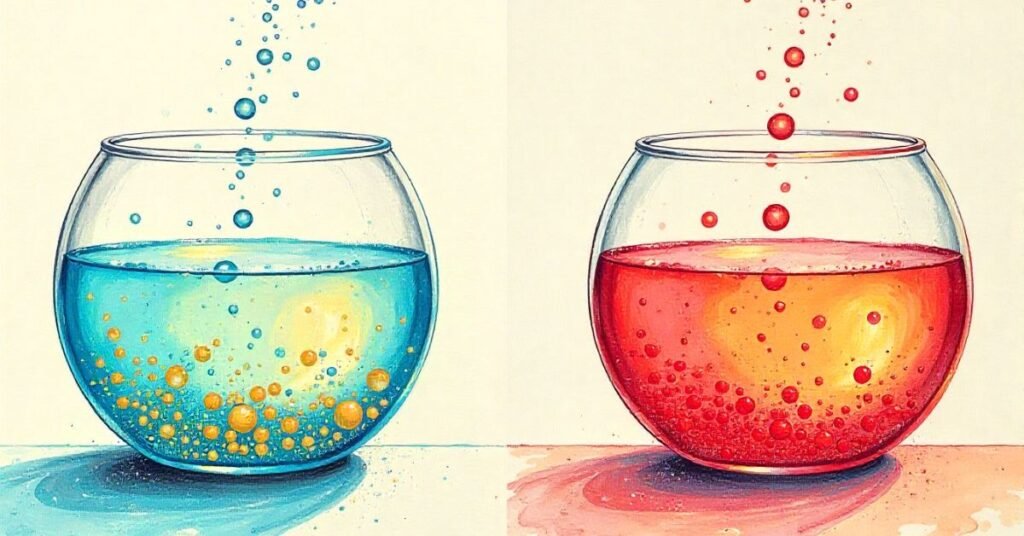
Bubbling coolant is usually caused by air or gas moving through the system. Boiling coolant happens when the engine overheats and the coolant reaches its boiling point. Boiling is more serious and often comes with steam, coolant loss, and a strong smell.
What Causes Coolant Bubbling in the Reservoir?
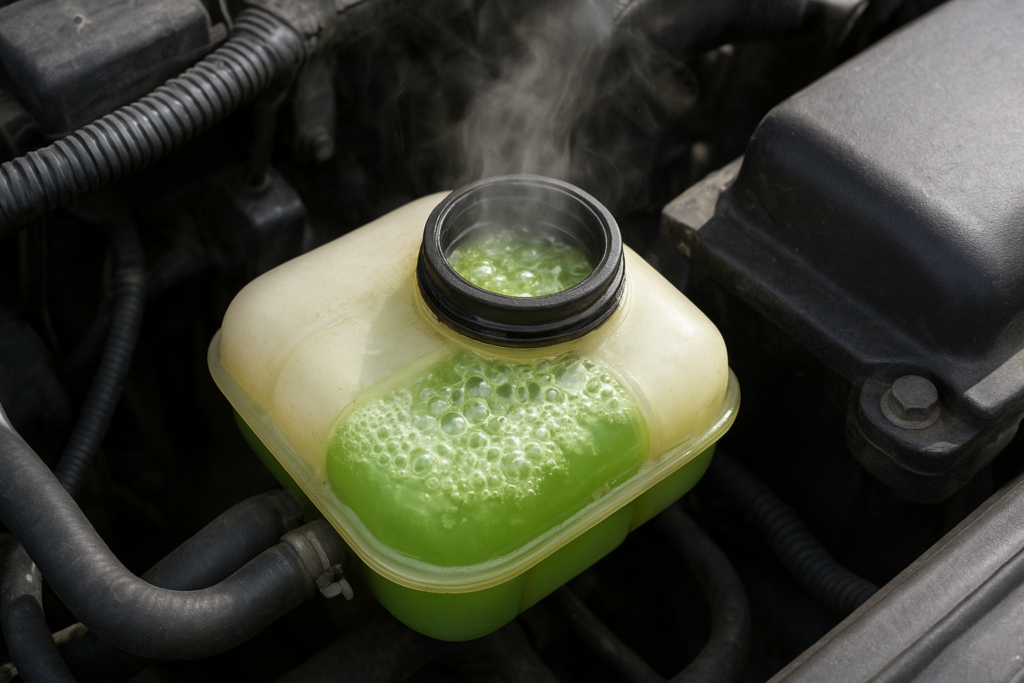
Coolant bubbling in the reservoir can happen for several reasons. One common cause is air trapped in the cooling system, which creates bubbles as the coolant flows. A faulty or loose radiator cap can also fail to hold pressure. This allows air to enter and coolant to bubble. A malfunctioning thermostat may block proper coolant flow and cause overheating.
More serious causes include a leaking or blown head gasket, which lets engine gases enter the coolant. A bad water pump can reduce circulation and create hot spots. Leaking coolant hoses or a damaged reservoir may pull air into the system. Rust, corrosion, or contaminated coolant can also disrupt flow and lead to bubbling. Fixing these issues early helps protect your engine.
How Air Enters the Cooling System
Air can enter the cooling system after a coolant replacement. If the system is not filled correctly, air pockets can remain trapped inside. This trapped air moves through the coolant and causes bubbling in the reservoir.
Coolant leaks can also allow air to get inside the system. Small cracks in hoses or loose connections are common sources. Improper bleeding of the system after repairs is another cause. When air is not fully removed, it leads to poor cooling and bubbling issues.
Why Does Air in the Cooling System Cause Overheating?
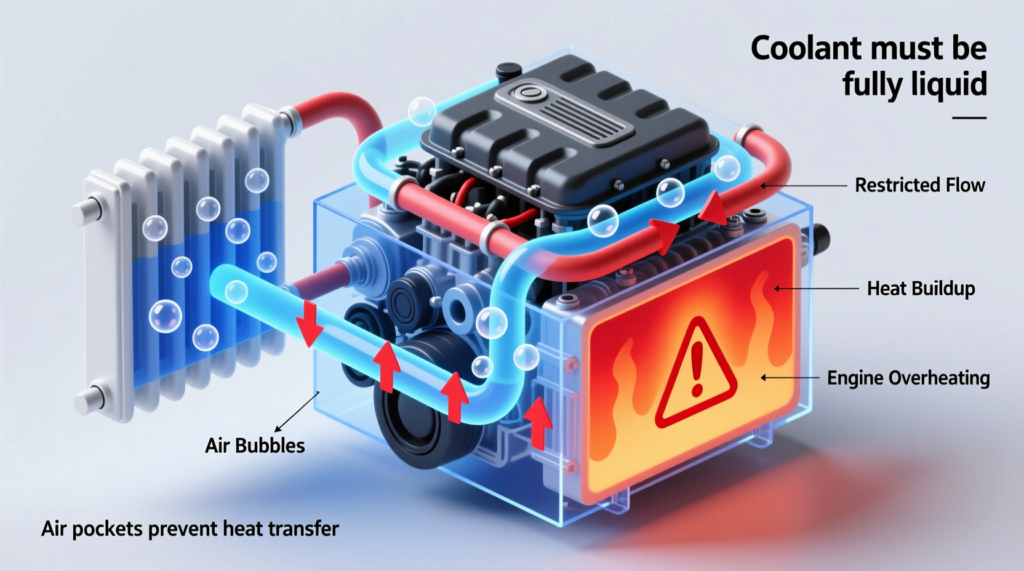
Air in the cooling system blocks smooth coolant flow. This causes restricted coolant circulation, so heat is not carried away properly. When coolant cannot move freely, the engine temperature rises quickly.
Air pockets also create hot spots inside the engine. These areas heat up faster than others and can damage engine parts. At the same time, air causes a pressure imbalance in the system. Overheating is more likely as a result of reduced cooling efficiency.
Bubbling Coolant Without Engine Overheating
Sometimes, coolant may bubble even if the engine is not overheating. A bad radiator or faulty pressure cap can let air enter the system, causing bubbles. The system may lose pressure, but the engine temperature stays normal.
Early-stage head gasket issues can also cause bubbling without immediate overheating. Small leaks let gases escape into the coolant slowly. Cooling system pressure problems from weak hoses or minor leaks can create bubbles too. These issues should be checked early to prevent bigger engine damage.
Symptoms Associated With Coolant Bubbling
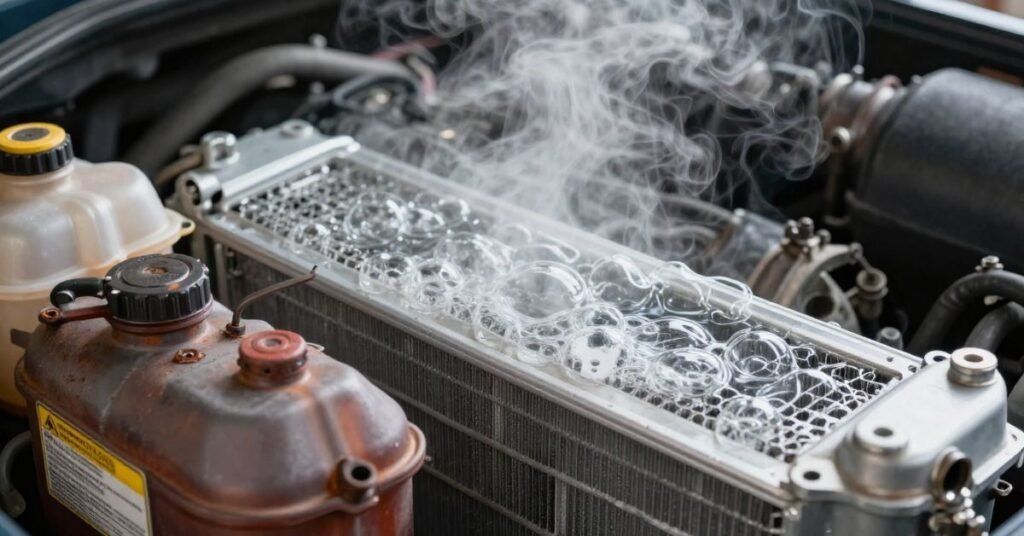
Coolant bubbling often comes with coolant loss or leaks. You may notice low coolant levels in the reservoir or puddles under the car. A sweet smell from the engine bay is another sign, caused by leaking antifreeze.
You might also see the engine overheating warning on the dashboard. Sometimes, the system shows back-pressure, making it hard for the coolant to flow properly. Noticing these symptoms early helps prevent serious engine problems.
How to Diagnose Coolant Bubbling in Reservoir
To diagnose coolant bubbling, start with a visual inspection. Check the coolant level and look for leaks in hoses and connections. Inspect the radiator and reservoir for cracks or damage.
Next, check the radiator and reservoir caps to ensure they hold pressure. You can also perform a pressure test on the cooling system to find leaks or weak spots.Check for signs of head gasket failure, such as::
- White smoke from the exhaust
- Milky oil on the dipstick
- Coolant loss without visible leaks
These steps help identify the cause of bubbling and prevent bigger engine problems.
How to Fix Coolant Bubbling in Reservoir
Fixing coolant bubbling starts with burping or bleeding the cooling system to remove trapped air. This helps the coolant flow properly and stops bubbles. If the radiator cap is faulty, replacing it can restore pressure and prevent air from entering. A bad thermostat may also block coolant flow, so changing it can solve overheating and bubbling issues.
Leaks in hoses or the reservoir must be repaired or replaced to keep the system sealed. In serious cases, a blown head gasket may be the cause, requiring professional repair. Here’s a simple guide in table form:
| Problem | Fix | Notes |
| Trapped air | Burp/Bleed the system | Remove air pockets carefully |
| Faulty radiator cap | Replace cap | Ensure proper pressure rating |
| Bad thermostat | Change thermostat | Choose compatible model |
| Leaking hoses/reservoir | Repair or replace | Inspect all connections |
| Blown head gasket | Professional repair | May require engine disassembly |
Following these steps helps prevent further engine damage and keeps your cooling system healthy.
Can You Drive With Coolant Bubbling in the Reservoir
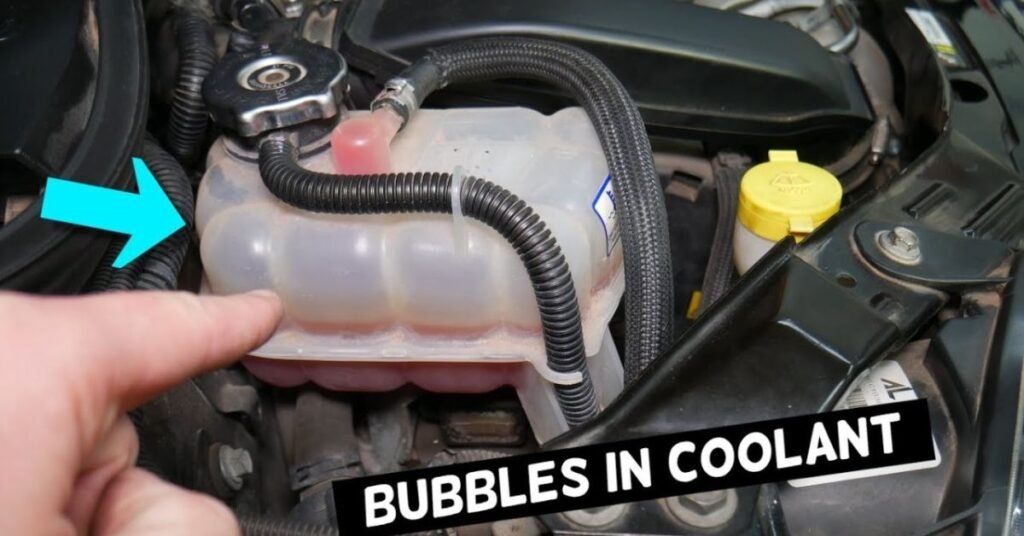
In some cases, it is safe to drive short distances with bubbling coolant. For example, if the engine is not overheating and you need to reach a nearby repair shop, you can drive carefully. Keep an eye on the temperature gauge and avoid heavy traffic or long trips.
You should stop driving immediately if the engine overheats, steam appears, or coolant levels drop fast. The engine can be seriously damaged if you continue to drive.. Early repair of the cooling system prevents bigger problems, saves money, and keeps your engine running safely.
Conclusion
Coolant bubbling in the reservoir is a warning sign you should not ignore. It often means air, pressure issues, or leaks in the cooling system. Checking the coolant, hoses, and radiator cap early can prevent serious engine problems.
Fixing the cause quickly is important. Simple steps like bleeding the system, replacing a bad cap, or repairing leaks can stop bubbling. Always pay attention to your engine and coolant. Acting early keeps your car safe and running smoothly.
FAQs
- What does coolant bubbling in a reservoir mean?
It usually means air or gas is trapped in the cooling system, or there is a pressure problem. - Is coolant bubbling in the reservoir dangerous?
Yes, if ignored, it can lead to engine overheating and serious damage. - Can I drive with coolant bubbling in the reservoir?
Short distances may be safe, but stop immediately if the engine overheats. - What causes coolant bubbling in the reservoir?
Common causes include trapped air, a faulty radiator cap, leaks, or a bad head gasket. - How can I fix coolant bubbling in the reservoir?
You can bleed the system, replace a bad cap or thermostat, repair leaks, or fix head gasket issues.
