

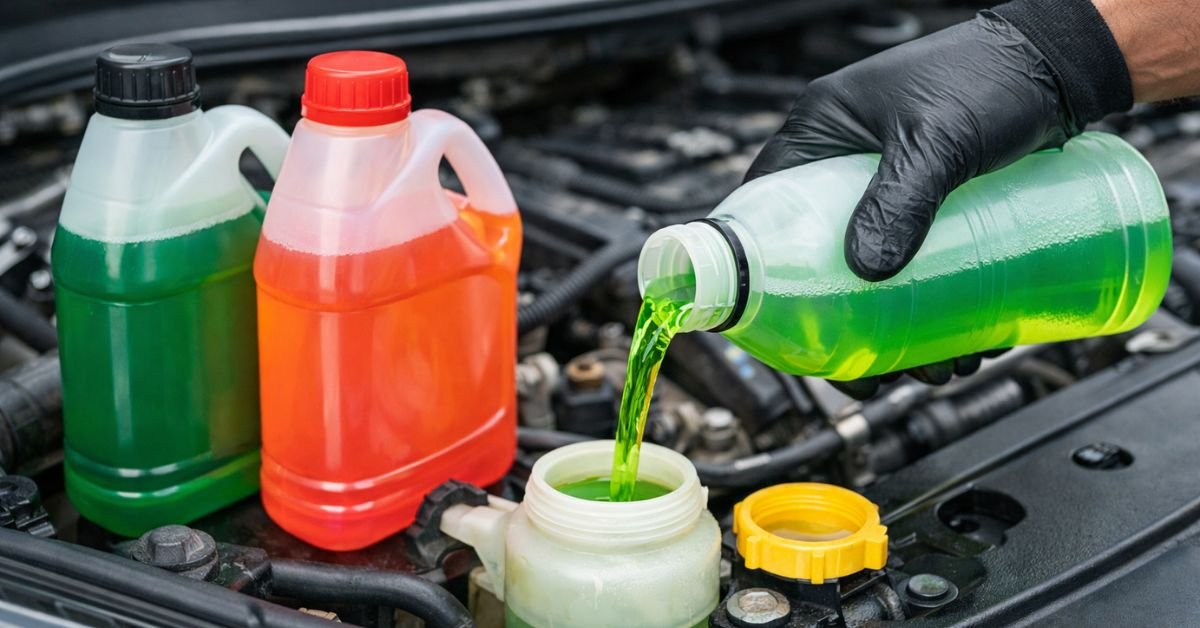
Introduction:
Antifreeze is a liquid that helps control your engine temperature.Cold weather prevents the engine from freezing. It also prevents overheating in hot conditions. Antifreeze flows through the radiator and engine to keep everything running smoothly.
Many drivers ask this question when the coolant level is low. They may only have a different color or brand available. Mixing antifreeze seems like a quick and easy fix. But doing it the wrong way can cause serious engine problems.
Mixing antifreeze is not always safe. Some types are made with different chemical formulas. When mixed, they can react badly and reduce protection. This can lead to clogged passages, corrosion, or engine damage. Knowing what antifreeze your car needs is very important.
Can You Mix Antifreeze? What Every Car Owner Should Know
Mixing antifreeze is not always a good idea. Different antifreeze types use different chemical formulas. When mixed, they may not protect the engine properly. This can cause overheating or cooling system damage. Always check your owner’s manual before adding any antifreeze.
In some emergencies, mixing antifreeze may seem necessary. It can help you reach a repair shop safely. However, this should only be a temporary solution. The cooling system should be flushed and refilled with the correct antifreeze as soon as possible. This helps keep your engine safe and long-lasting.
Why Mixing Different Types or Colors of Antifreeze Is Risky
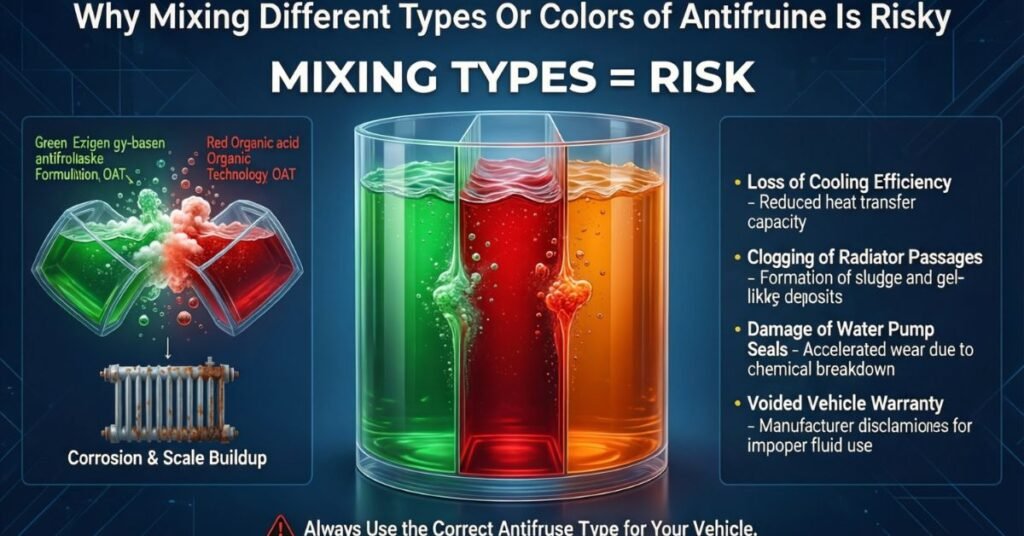
Mixing antifreeze can cause serious engine problems.
Different antifreeze types are made with different chemicals. When mixed, they may react with each other. This reaction can reduce cooling performance. It can also damage engine parts over time.
Here are some risks of mixing antifreeze types or colors:
- It can cause sludge or gel to form
- Cooling passages may get clogged
- Engine may overheat
- Corrosion protection can fail
- Water pump and radiator damage may occur
Using the correct antifreeze keeps your engine safe and reliable.
What Happens Chemically When You Mix Coolants
Coolants are made with different chemical formulas. Some use organic acids, while others use silicates or phosphates. When these chemicals mix, they may not work well together. This can weaken the coolant’s ability to protect the engine.
In some cases, the mixed chemicals react with each other. This reaction can create thick sludge or deposits. The sludge can block coolant flow inside the engine. Over time, this leads to overheating and metal corrosion. That is why mixing coolants is chemically risky.
Antifreeze Types: Understanding Coolant Formulations (IAT, OAT, HOAT)
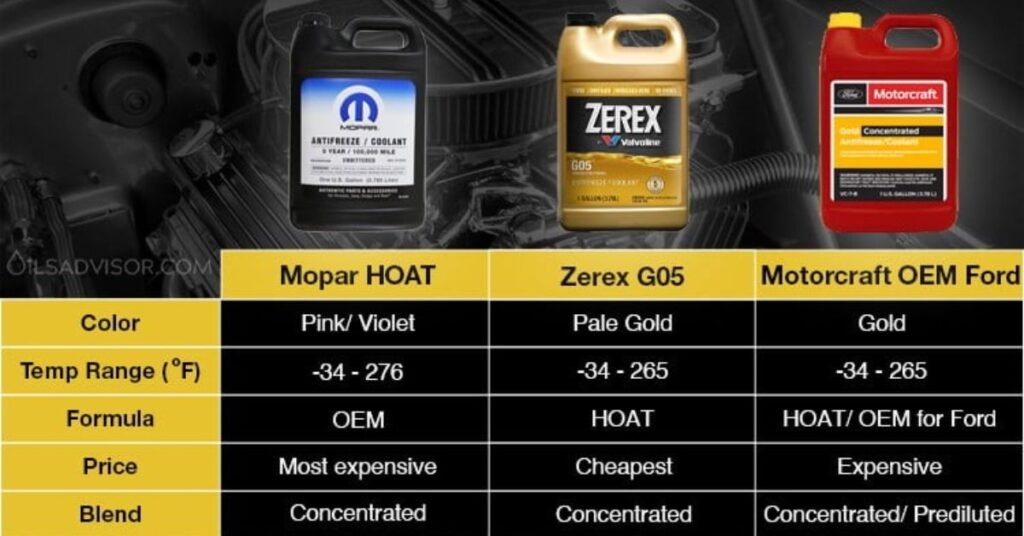
Antifreeze is not the same for every car. Different engines need different coolant formulas. There are differences between each of them.
Knowing the right antifreeze type is very important.If you understand these types of coolants, you will be able to make safer choices for your vehicle.
Antifreeze Types Comparison Table
| Antifreeze Type | Full Name | Common Color | Main Technology Used | Best For Vehicles | Typical Lifespan | Key Advantage | Main Risk if Mixed |
| IAT | Inorganic Acid Technology | Green | Silicates & phosphates | Older cars (pre-2000) | 2 years / 30,000 miles | Strong protection for older metals | Forms sludge quickly |
| OAT | Organic Acid Technology | Orange, Red, Pink | Organic corrosion inhibitors | Modern cars | 5 years / 150,000 miles | Long-lasting protection | Poor with older engines |
| HOAT | Hybrid Organic Acid Technology | Yellow, Blue | Organic acids + silicates | European & Asian cars | 5 years / 100,000 miles | Balanced protection | Chemical reaction risk |
| IAT | Inorganic Formula | Green | Fast-acting inhibitors | Classic vehicles | Short service interval | Quick corrosion defense | Clogs when mixed |
| OAT | Organic Formula | Red / Orange | Slow-acting acids | Aluminum engines | Long service life | Less maintenance | Weak if contaminated |
| HOAT | Hybrid Formula | Pink / Yellow | Mixed technology | Mixed-metal engines | Medium to long | Stable performance | Reduced efficiency |
| IAT | Traditional Coolant | Green | Mineral-based | Copper radiators | Short | Affordable option | High deposit risk |
| OAT | Extended-Life Coolant | Pink / Purple | Carbon-based acids | Newer vehicles | Very long | Clean system | Not backward compatible |
| HOAT | Advanced Coolant | Blue / Teal | Dual protection | Performance cars | Long | Engine-safe blend | Sensitive to mixing |
Depending on the engine and conditions, each one is designed differently.
Do Antifreeze Colors Matter for Compatibility?
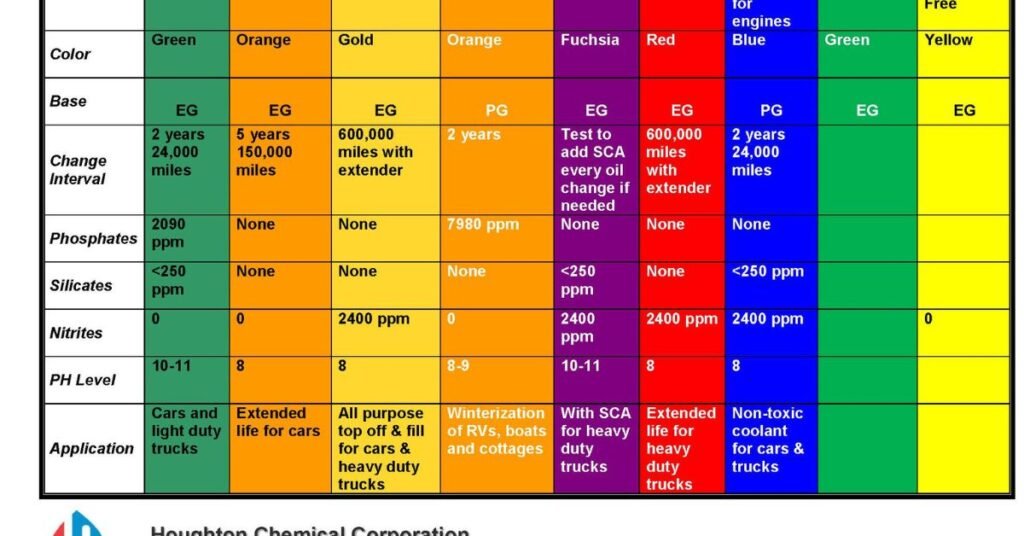
Yes, antifreeze colors can matter, but not always in the way people think. The color mostly helps identify the type of coolant, not its performance. Using the wrong type can cause problems in your engine. Some coolants are made for specific car brands or materials, so matching the type is more important than matching the color.
Here are some quick points to remember:
- Green, orange, pink, and blue are common colors.
- Each color usually represents a different chemical formula.
- Mixing incompatible types can cause clogs or corrosion.
- Always check your car manual before adding new antifreeze.
Safe to Mix Antifreeze? Compatibility Guidelines
Mixing antifreeze can be risky. Not all coolants are made to work together. Some chemicals react and can harm your engine. But in emergencies, a small mix is sometimes okay. The safest way is to match the type exactly. Always check the label and your car’s manual before adding new coolant.
Here are some simple guidelines:
- Stick to the same type (e.g., IAT with IAT, OAT with OAT).
- Avoid mixing old and new coolant if unsure of types.
- Flush the system if you must switch coolant types.
- When in doubt, buy fresh coolant recommended for your car.
Mixing Different Brands: Good or Bad Idea?
Mixing different antifreeze brands can be tricky. Even if the color looks the same, formulas can be very different. Some brands use chemicals that don’t work well together. This can cause sludge, rust, or damage inside the engine. In general, it’s safer to stick with one trusted brand.
However, small emergency top-ups are usually okay. If you mix brands, try to use the same type (like OAT with OAT). Always flush the system when switching brands completely. Remember, engine protection matters more than brand loyalty.
How to Properly Mix Antifreeze With Water
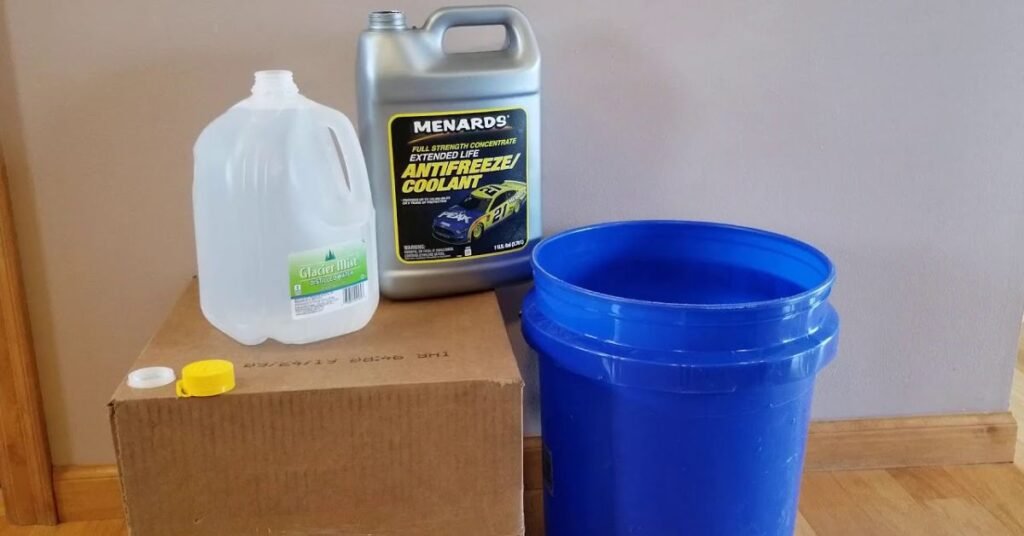
Mixing antifreeze with water seems simple, but doing it wrong can harm your engine. The right ratio keeps your car cool in summer and protects it in winter. Following best practices ensures your engine stays safe and lasts longer.
Here’s how to do it properly:
- Use distilled water instead of tap water to avoid minerals and deposits.
- Follow the recommended ratio (usually 50:50 antifreeze to water).
- Pour slowly to avoid spills and bubbles.
- Mix in a clean container before adding to the radiator if possible.
- Check the level after filling and run the engine briefly to circulate.
- Top off carefully after the engine cools down.
.What to Do If You Accidentally Mix the Wrong Antifreeze
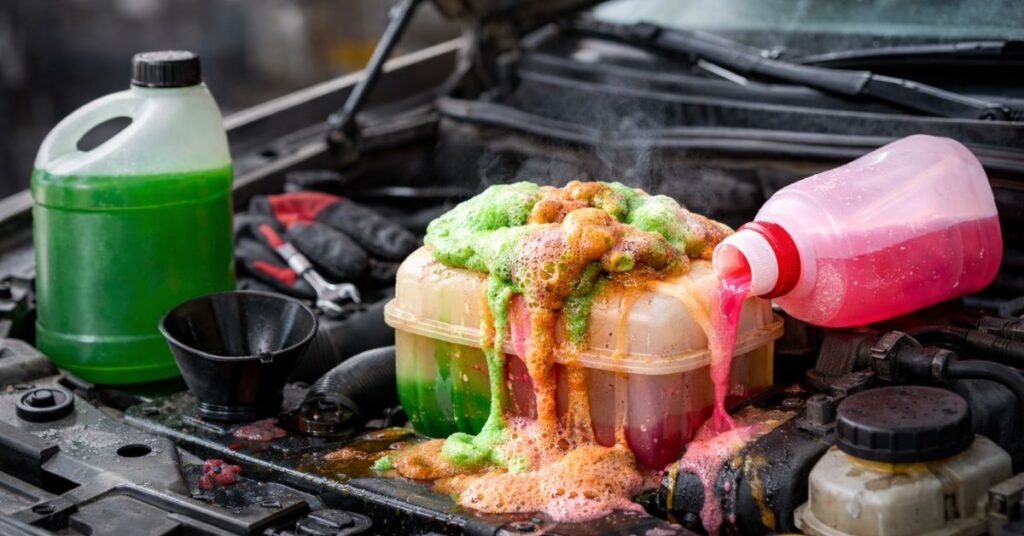
Accidentally mixing the wrong antifreeze can be stressful, but staying calm helps prevent damage. Acting quickly can save your engine from serious problems. Knowing the right steps makes recovery easier and safer for your car.
Here’s what you should do immediately:
- Do not start the engine if you haven’t already; this limits circulation of the wrong mix.
- Drain the radiator completely to remove contaminated coolant.
- Flush the system with distilled water several times to clear residues.
- Refill with the correct antifreeze type recommended for your car.
- Check for leaks or unusual engine behavior after refilling.
- Dispose of old coolant safely according to local regulations.
Taking these steps quickly reduces the risk of corrosion, clogs, and engine overheating. Acting fast and carefully keeps your engine safe even after a mistake.
Conclusion
In short, can you mix antifreeze? Sometimes yes, but only if the types are compatible. Color alone doesn’t tell the full story. Mixing the wrong types can cause rust, clogs, or engine damage. Always check your car manual and labels before adding coolant.
The safest approach is to match the type and follow proper ratios. When in doubt, flush the system and use fresh antifreeze recommended for your vehicle. Careful steps keep your engine safe, cool, and running smoothly for years.
FAQs:
Q1: Can you mix different antifreeze colors?
A: Only if they are the same type (like OAT with OAT). Color alone doesn’t guarantee compatibility.
Q2: Can I mix antifreeze brands?
A: Yes, but only if the chemical types match. Otherwise, it can cause engine damage.
Q3: Is mixing old and new coolant safe?
A: Not always. Mixing different types can lead to clogs or corrosion; flushing is safer.
Q4: What happens if I mix the wrong antifreeze?
A: It can cause sludge, rust, or overheating. The system should be flushed and the correct type refilled..
Q5: Can I top up the antifreeze with water only?
A: Yes, in emergencies. Use distilled water and refill with proper antifreeze soon after.
