

Introduction:
Antifreeze is a special liquid used in your car’s cooling system. It helps control engine temperature in hot and cold weather. For Range Rover vehicles, antifreeze also protects the engine from rust, corrosion, and freezing. Using the right antifreeze keeps the engine running smoothly and safely.
Choosing the wrong antifreeze for a Range Rover can cause serious problems. It may damage the radiator, clog coolant passages, or reduce engine life. Many owners feel confused by different colors and types. This guide will make wise and cost-effective decisions with the help of this guide.l help you avoid costly mistakes and choose wisely.
In this buyer’s guide, we will explain the best antifreeze for Range Rover models. You will learn about the correct types, colors, and key features to look for. This information will help you protect your engine and maintain peak performance.
What Is Antifreeze for Range Rover and Why It Matters
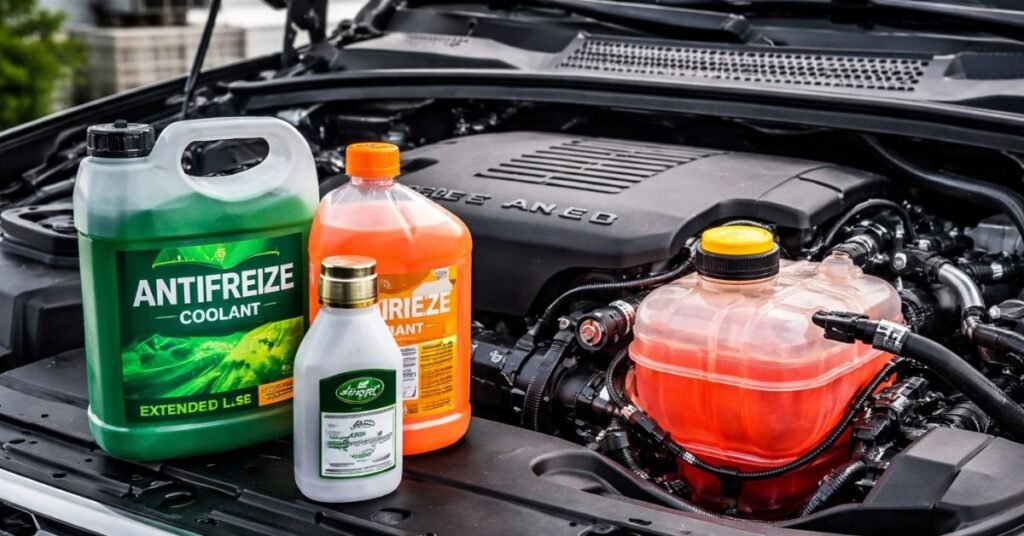
Antifreeze for Range Rover is a special liquid that helps control engine temperature. In hot weather, it prevents the engine from overheating.. It also prevents freezing in cold conditions. Antifreeze protects important engine parts from rust and corrosion. Using the right antifreeze helps your Range Rover run smoothly and efficiently.
This fluid also helps extend the life of the engine. Wrong or low-quality antifreeze can cause serious damage. It may lead to leaks, overheating, or engine failure. That is why using the correct antifreeze for Range Rover is very important. Regular checks and timely replacement keep your vehicle safe and reliable.
Role of Coolant in Range Rover Engine Protection
Coolant plays a key role in protecting a Range Rover engine. It keeps the engine Rust and corrosion are also prevented by it.at the right temperature during driving. Coolant absorbs heat and prevents overheating.Rust and corrosion are also prevented by it.. Clean coolant helps the engine work smoothly and last longer.
Difference Between Antifreeze and Coolant
Antifreeze is a concentrated liquid. It is mixed with water before use. Water and antifreeze are combined to form coolant.. Antifreeze prevents freezing and boiling. Coolant does the same but is already diluted for easy use.
Recommended Antifreeze Types for Range Rover
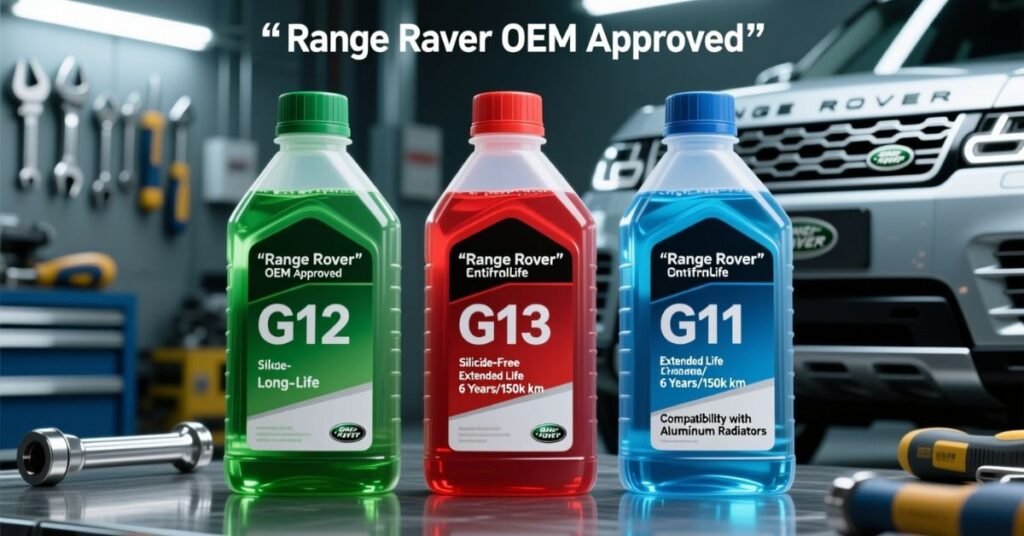
Range Rover engines need high-quality antifreeze to work smoothly. Always use antifreeze that meets Land Rover specifications. OAT (Organic Acid Technology) antifreeze is the most common choice. It protects the engine from rust and overheating. It also lasts longer than standard coolants.
Many Range Rover models use pink, orange, or purple OAT antifreeze. Depending on the model and year, the exact type will vary.. Always check the owner’s manual before buying. Using the wrong antifreeze can damage seals and the cooling system. When in doubt, choose a trusted brand made for European vehicles.
OEM vs Universal Antifreeze
OEM antifreeze is made for a specific car brand. It matches the engine design and metal parts. This helps protect seals and hoses. It also reduces rust and scale. Universal antifreeze works in many cars. It can be safe, but it may not be perfect for a Range Rover. Using OEM coolant gives better peace of mind. It helps the engine last longer.
G11, G12, G12+, G13 Explained for Range Rover
G11 is an older coolant type. It is usually blue or green. G12 and G12+ are newer and last longer. They are often pink or red. G13 is the latest version. It is more eco-friendly and offers strong protection. Many modern Range Rover models use G12+ or G13. Always check the owner’s manual before choosing.
Best Antifreeze Colors for Range Rover Models
Range Rover cars often use pink or red coolant. These colors usually mean G12 or G13 antifreeze. Pink and red coolants protect the engine well. They stop rust and heat damage. They also help the car run for a long time.
Some older Range Rovers might use blue or green antifreeze. But these are older types and may not be best now. Always check the owner’s manual first. Using the right color helps the engine stay healthy. If unsure, ask a mechanic for advice.
Pink, Blue, Yellow Which One Is Correct?
Different antifreeze colors mean different formulas. Pink is common in modern Range Rovers. Blue is older and found in some older models. Yellow is less common but still used in some cars. Always check your car manual. Using the right color keeps the engine safe.
Can You Mix Different Coolant Colors?
Mixing coolant colors is not recommended. Different colors can react and cause damage. It may reduce protection against rust and overheating. If you must top up, use the same color. Always flush the system before changing to a new type. This keeps your Range Rover’s engine healthy.
Top Antifreeze Brands for Range Rover
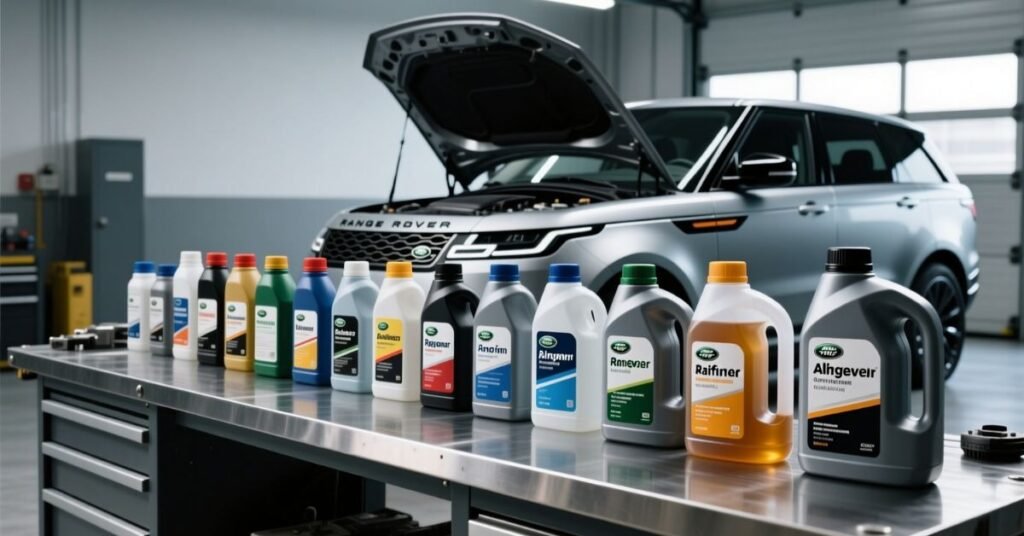
Many good antifreeze brands work well in Range Rover cooling systems. Castrol makes quality long‑life engine coolants that protect against rust and freezing. These coolants are ready to use and help keep the engine cool in hot weather and safe in cold weather. RAVENOL is another trusted brand. Its coolants meet many car maker standards and protect engines from corrosion and heat damage.
Other reliable options include Prestone and Fleetguard. Prestone coolants offer strong protection and long service life, helping the cooling system stay clean and safe. Fleetguard antifreeze also delivers reliable freeze and rust protection with a simple 50/50 mix.People often opt for products that meet the specifications of Range Rover models (such as the G12+ or G13). Always check your owner’s manual before buying to match the correct type.
Prestone Antifreeze for Range Rover
Prestone antifreeze is a popular coolant you can use in many cars, including Range Rovers. It is made to protect your engine from rust, freezing, and overheating. Some Prestone formulas are “all‑vehicles” types that work with many car brands and coolant colors. They have long life protection and can be mixed safely with many existing antifreeze types when topping up.
But always check your Range Rover’s manual first. Not every Prestone product matches every engine spec. Using the right type that meets your car’s requirements helps keep the cooling system healthy and avoids parts damage.
PEAK, Zerex, Pentosin Are They Safe?
PEAK coolant products include versions made for European vehicles like Range Rovers. These are designed to match OEM specs and protect against rust and corrosion. They come in different colors and formulas, so pick the right one for your car model.
Zerex is another well‑known brand with OEM‑quality formulations that protect engine parts and cooling systems. Pentosin coolants are also made to protect engines and prevent corrosion and lime buildup. All three brands are safe when you match the coolant type to your Range Rover’s requirements. Always follow the vehicle manual or ask a mechanic before changing coolant brands.
How Much Antifreeze Does a Range Rover Need?
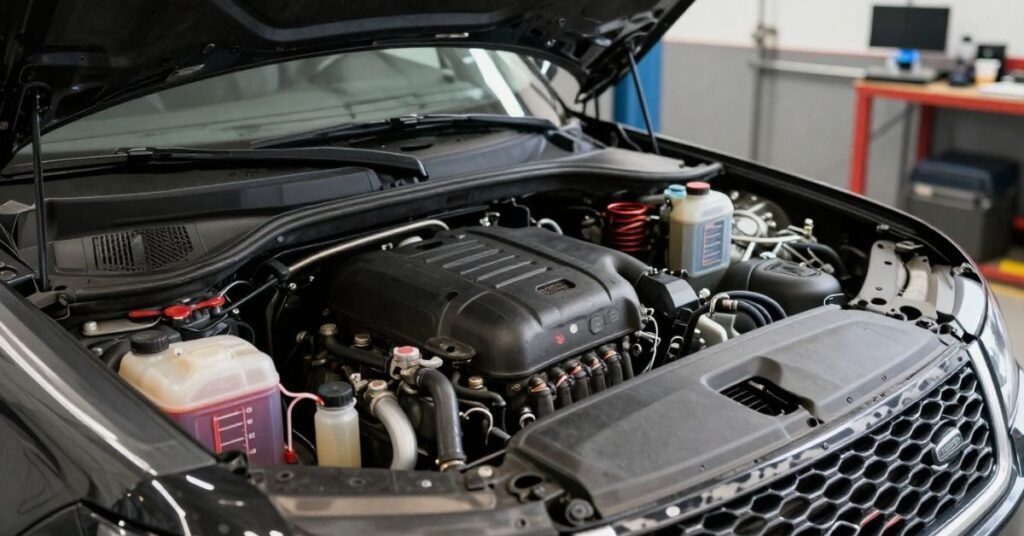
The amount of antifreeze a Range Rover needs depends on the model and engine size. Most modern Range Rovers use about 7 to 12 liters of coolant in total. This includes the radiator and the expansion tank.For exact capacity, consult your owner’s manual. Using the right amount keeps the engine from overheating or freezing.
Here are some tips to follow:
- Always mix coolant with water if needed (usually 50/50).
- Never overfill the radiator or reservoir.
- Top up only when the engine is cool.
- Avoid engine damage by regularly checking the coolant level.
- Use the correct type specified in your manual (G12+, G13, etc.).
This helps your Range Rover run smoothly and protects the engine for a long time.
H3: Coolant Capacity by Year and Engine Type
Range Rover cooling system size changes with the year and engine type. Older big V8 engines often hold more coolant than smaller engines. For example, some 2012–2021 Range Rover V8 models need around 14.7 quarts (about 14 L) of coolant, while smaller 3.0 L engines use less (around 10.2 quarts / ~10 L). These numbers are for the entire cooling system, so topping up uses less than this total capacity. Always check the exact spec in your owner’s manual or service guide for your model year and engine.
Here are simple pointers:
- Bigger engines usually need more coolant.
- Hybrid or four‑zone heating options can increase the total system size.
- Dry fill (empty system) numbers are higher than topping‑up amounts.
These points help you know roughly how much antifreeze your Range Rover may need before a full flush or service.
H3: Range Rover Sport vs Standard Models
Range Rover Sport models can have different capacities from standard Range Rovers. Sport versions often have larger radiators and more complex cooling circuits in some trims. For example, a 2022 Range Rover Sport with a six‑cylinder or diesel engine may have around 15‑16 L total coolant capacity, depending on rear heater options. Meanwhile, the standard Range Rover with a similar engine size may use slightly less coolant overall.
Quick comparison tips:
- Sport models can hold more coolant in certain versions.
- Standard Range Rovers may use less if the engine and heater setup is simpler.
- Always refer to your exact model’s guide because capacity changes by year and equipment.
These bullet points can help you estimate how much antifreeze to buy or prepare before maintenance.
How to Check Antifreeze Level in Range Rover
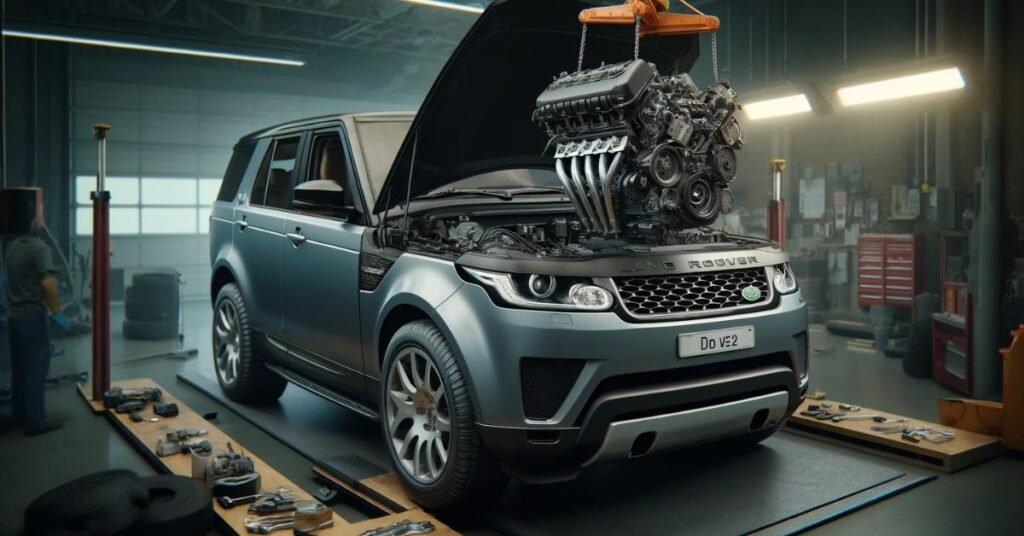
Checking antifreeze in your Range Rover is easy and important. First, make sure the engine is cool. Open the hood carefully. Find the coolant reservoir. It is usually a clear plastic tank near the radiator.There should be a distance between “MIN” and “MAX” on the fluid line.
If the level is low, add the correct antifreeze type. Use a 50/50 mix of coolant and water if required. Do not overfill the tank. Check for leaks if the level keeps dropping. Always wear gloves and avoid touching hot parts. Regular checks keep your engine safe and running well.
Warning Signs of Low Coolant
Low coolant in your Range Rover can cause serious problems. The engine may overheat quickly.Steam might be coming from under the hood.. The heater may stop blowing warm air. Strange noises from the engine can also happen. These signs mean you should check the coolant level immediately.
Dashboard Coolant Warning Light Meaning
The coolant warning light shows if the system has low fluid or high temperature. It usually looks like a thermometer in a liquid icon. If it comes on while driving, stop safely and check the coolant. Do not ignore this light. Adding the correct coolant can prevent engine damage. Always follow the owner’s manual instructions when topping up.
How to Add Antifreeze to a Range Rover
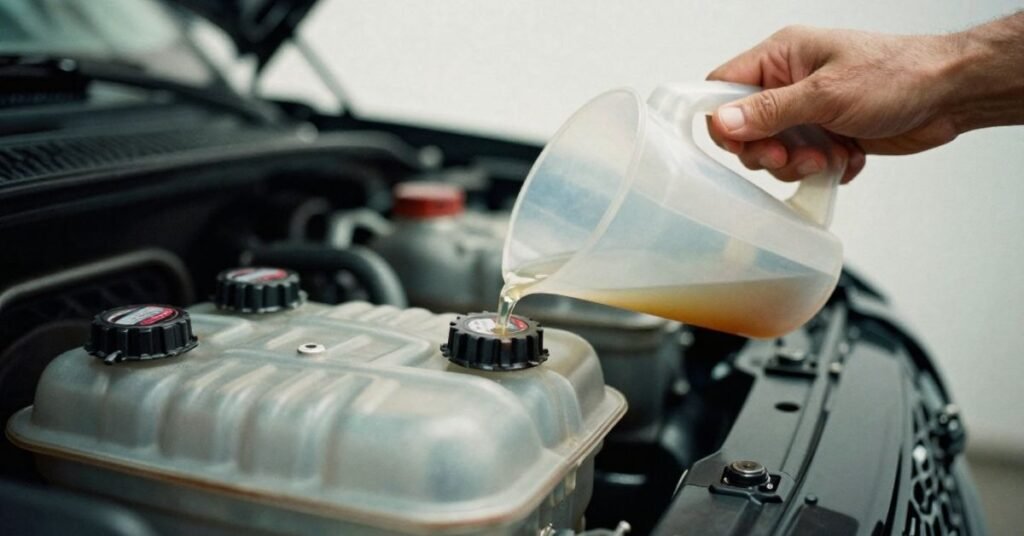
Adding antifreeze to a Range Rover is simple but needs care. First, make sure the engine is cool.Make sure the cap is removed slowly so that any pressure can be released.
Pour the correct type of antifreeze into the reservoir. Do not fill it past the “MAX” line.. If needed, mix coolant with water as recommended (usually 50/50). Close the cap securely. Start the engine and let it run a few minutes, then check the level again. This keeps your engine safe and running smoothly.
Step-by-Step Coolant Filling Guide
Filling coolant in your Range Rover is easy if you follow steps.Place your hand on the coolant reservoir when you open the hood.. Slowly remove the cap to release pressure. Pour the correct coolant type slowly into the tank. Fill it up to the “MAX” line. Start the engine and let it run for a few minutes. Then check the level again and top up if needed.Once the level has been checked again, top up if necessary.
Safety Tips Before Adding Coolant
Always take safety precautions when handling coolant. Wear gloves to protect your skin.When the engine is hot, do not open the reservoir. Avoid spilling coolant on the engine or paint. Keep coolant away from children and pets. Always use the correct type recommended in your Range Rover manual. Following these tips keeps you and your car safe.
When Should You Change Antifreeze in Range Rover
Antifreeze in a Range Rover should be changed regularly to keep the engine safe. Most modern Range Rovers use long-life coolants that last 5 years or 60,000 miles. Older models may need changes every 2–3 years. Changing antifreeze prevents rust, overheating, and engine damage. Always check your owner’s manual foFor an exact schedule, refer to your owner’s manual.r the exact schedule.
Here is a simple guide by model and engine type:
| Range Rover Model | Engine Type | Recommended Coolant Change Interval | Notes |
| Range Rover 3.0L | Petrol/Diesel | Every 5 years / 60,000 miles | Use G12+ or G13 |
| Range Rover 5.0L | V8 Petrol | Every 5 years / 60,000 miles | Check manual for specific trim |
| Range Rover 4.4L | Diesel | Every 4 years / 50,000 miles | Some diesel engines require earlier change |
| Range Rover Sport | 3.0L/5.0L Petrol | Every 5 years / 60,000 miles | Follow manual, especially for hybrid trims |
| Range Rover Sport | Diesel | Every 4 years / 50,000 miles | High-load engines may need earlier replacement |
| Older Models | All Engines | Every 2–3 years | Use coolant recommended at that time |
Regularly changing antifreeze keeps your Range Rover engine healthy and prevents costly repairs.Ensure your engine is using the correct type.
Coolant Change Interval
The coolant change interval depends on your Range Rover model and engine type. Most modern models use long-life coolants that last 5 years or 60,000 miles. Older models may need changes every 2–3 years. Following the recommended interval helps prevent rust, overheating, and engine damage. Check your owner’s manual for the exact schedule.
Signs You Need a Coolant Flush
There are clear signs you may need a coolant flush. The coolant may look dirty or rusty. You might notice overheating or a sweet smell from the engine. The heater may not work properly. If the coolant level drops quickly, it can mean leaks or old fluid. Flushing the system with fresh coolant keeps your engine safe and running smoothly.
Range Rover Coolant Compatibility by Model Year
Range Rover coolant compatibility changes with the model year. Older models often use G11 or blue/green coolant. Newer models usually need G12+, G13, or pink/red coolant. Using the correct type protects the engine, hoses, and radiator. Always check the owner’s manual before adding or changing coolant.
Older vs Newer Range Rover Models
Older Range Rovers may allow a wider range of coolant types. Newer models have stricter requirements for modern engines and electronics.Corrosion or overheating can result from using the wrong type. Stick to the recommended coolant to keep the system healthy.
Petrol vs Diesel Engine Compatibility
Petrol and diesel engines sometimes need different coolants. Diesel engines often have higher heat and pressure, so they need specific antifreeze formulations. Petrol engines usually use standard long-life coolants like G12+ or G13. Always use the coolant type specified for your engine to avoid damage.
Conclusion
Choosing the right antifreeze for Range Rover is very important. It protects the engine from overheating, freezing, and rust. Using the correct type and color keeps your car running smoothly. Always check the owner’s manual before adding or changing coolant.
Regularly checking and topping up antifreeze helps avoid costly repairs. Following the correct schedule and using trusted brands ensures long engine life. Remember, the right antifreeze for Range Rover keeps your car safe, efficient, and reliable on the road.
FAQs
Q1: What type of antifreeze is best for a Range Rover?
A: Use the type recommended in your owner’s manual, usually G12+ or G13 for modern models.
Q2: Can I mix different antifreeze colors in my Range Rover?
A: It’s not recommended. Mixing colors can reduce protection and cause engine damage.
Q3: How often should I change antifreeze in a Range Rover?
A: Most modern Range Rovers need a coolant change every 5 years or 60,000 miles.
Q4: Can I use universal antifreeze in a Range Rover?
A: Some universal antifreeze is safe, but OEM-approved types are always better.
Q5: What happens if my Range Rover runs low on antifreeze?
A: Low antifreeze can cause overheating, engine damage, and poor heater performance.
