

Introduction:
Bubbles in Radiator Coolant: What They Mean and How to Fix Them
Bubbles in radiator coolant happen when air or gases get trapped in the cooling system. This stops the coolant from flowing smoothly and can affect engine temperature. It is one of the first signs that something in the system is not working right.
You might not notice the problem at first, but the bubbles can grow over time. They can cause overheating, poor performance, and even engine damage if ignored. That’s why it’s important to understand what these bubbles mean before they lead to bigger repairs.
In this guide, you will learn what causes bubbles in radiator coolant, how to spot the symptoms, and simple steps you can take to fix the issue. This information helps you protect your engine and avoid costly breakdowns.
What Do Bubbles in Radiator Coolant Mean?

When you see bubbles in radiator coolant, it means air or gases are entering the cooling system. This shows that the engine is not cooling the way it should. Coolant bubbling often points to problems like air leaks, a weak radiator cap, or even early head gasket trouble. It is a warning sign that the engine’s health may be at risk and needs attention.
You should never ignore bubbling coolant because it can quickly lead to overheating. Driving too long with this issue can damage engine parts and cause costly repairs. In most cases, you can drive for a short time, but it is not safe to continue for long. The sooner you check the cause, the better you can protect your engine.
Common Causes of Bubbles in Radiator Coolant
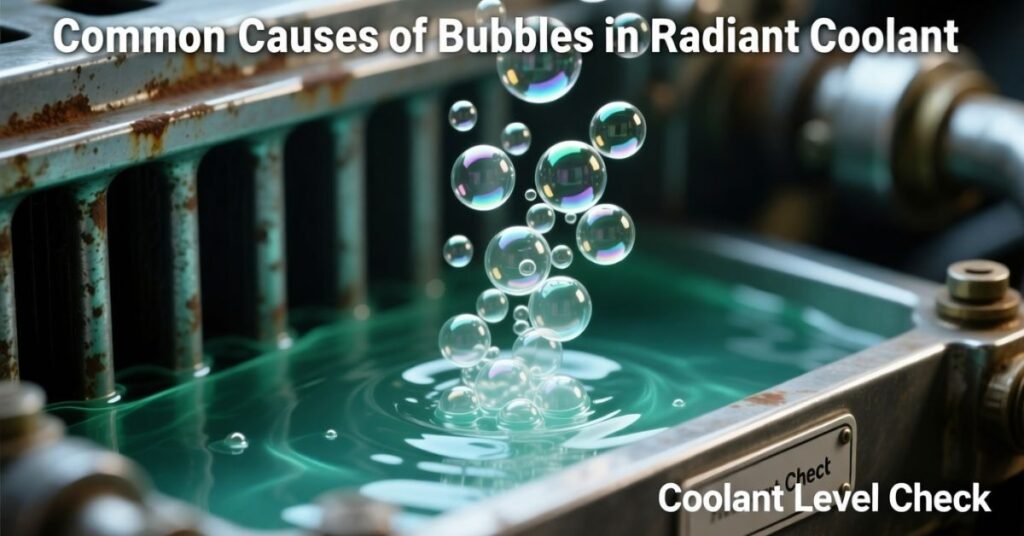
Air pockets trapped inside the cooling system are one of the most common reasons for bubbling. They usually form after a coolant change or when the system is not bled properly. A faulty radiator cap can also cause pressure loss, letting air enter the system. A bad thermostat may block proper coolant flow, leading to overheating and bubbles. In many cases, these issues appear slowly but quickly affect engine performance.
More serious problems include a leaking or blown head gasket, which allows exhaust gases to mix with the coolant. A faulty water pump can also create bubbles because it fails to circulate coolant smoothly. Leaking hoses or a damaged heater control valve may let air sneak into the system. Rust, corrosion, or contaminated coolant can block passages and create bubbling as well. All these causes show that the system needs urgent inspection to avoid bigger engine damage.
How Air Gets Into the Cooling System
Air can enter the cooling system when coolant levels are low. When the fluid drops, empty space forms and pulls air inside. Loose or damaged coolant hoses can also let air slip in through small gaps. A faulty reservoir hose may cause air leaks as well, especially when the engine warms up and pressure changes. Even a radiator cap that does not seal properly can allow air to enter the system during normal engine operation.
Improper coolant refill is another common cause of trapped air. If the system is not filled correctly or not bled after a refill, air pockets can form and stay inside. These air pockets prevent the coolant from moving smoothly and lead to bubbles. Over time, this trapped air can cause overheating and reduce engine performance. Checking these points early can help keep your cooling system running safely.
Why Air in the Cooling System Causes Overheating
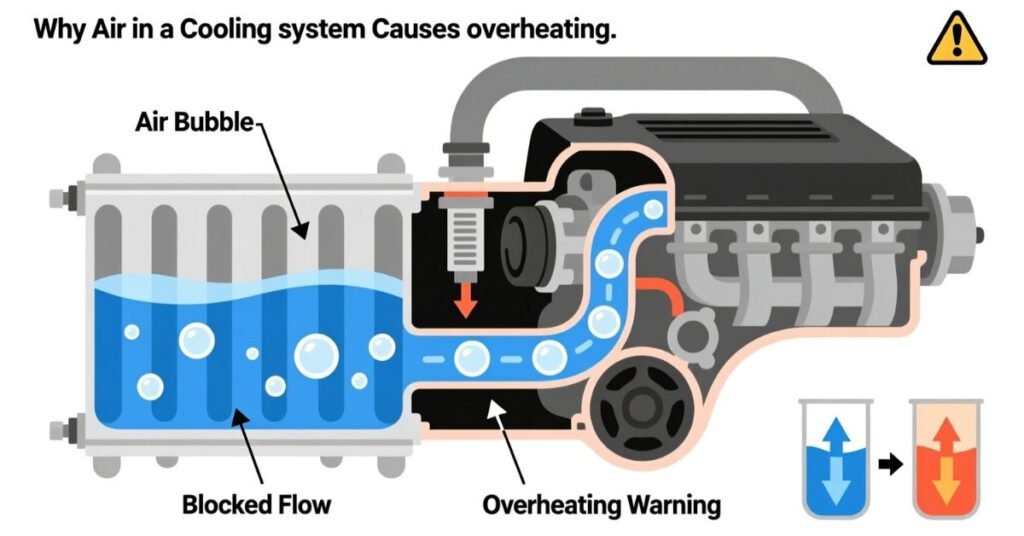
Air in the cooling system reduces how much coolant can touch the engine metal. When coolant cannot reach the hot areas, heat builds up quickly. Air pockets also block the flow of coolant, stopping it from moving smoothly through the radiator and engine. This makes the engine work harder and causes the temperature to rise fast.
Air can also create pressure imbalance inside the radiator, which prevents the system from staying sealed and stable. When pressure drops, coolant may boil sooner than it should. Air changes the boiling point of coolant, making it heat up faster and evaporate. This leads to overheating, engine stress, and possible long-term damage if not fixed in time.
Symptoms of Air Bubbles or Bubbling Coolant
An overheating engine is one of the first signs of air bubbles in the cooling system. You may also hear boiling or gurgling sounds coming from the radiator or reservoir. The coolant level may drop often because air is taking up space and pushing fluid out. White smoke from the exhaust can appear if a blown head gasket is letting gases enter the coolant.
You might also notice back-pressure when opening the radiator, showing trapped air or exhaust gases inside. Coolant leaks can happen because pressure becomes unbalanced, and this can lead to loss of compression in the engine. All these symptoms point to trouble in the cooling system that needs quick attention to prevent engine damage.
How a Blown Head Gasket Causes Coolant Bubbles
A blown head gasket allows exhaust gases to enter the coolant lines. This creates bubbles and air pockets in the radiator and engine. Back-pressure forms because gases push against the coolant, making it harder for the system to circulate fluid. You may notice warning signs like white smoke from the exhaust, overheating, or coolant loss.
It is very dangerous to drive with a blown head gasket.. It can cause severe engine damage, including warped heads or cracked blocks. The coolant cannot cool the engine properly, and bubbles make the problem worse. Fixing a blown gasket quickly is essential to prevent expensive repairs and keep your car safe.
Diagnosing the Cause of Coolant Bubbles
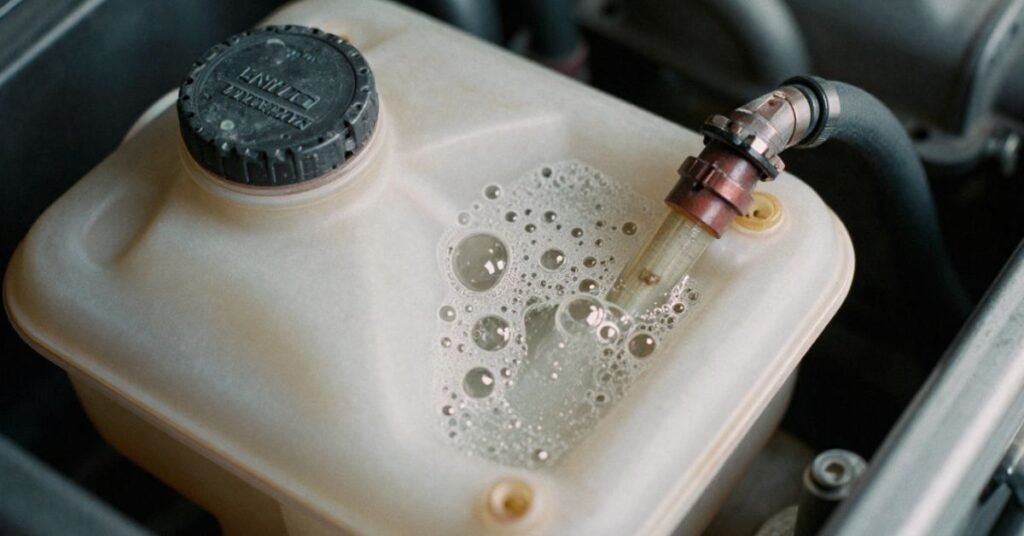
To find out why coolant is bubbling, start with a visual inspection. Look at the radiator, hoses, and connections for cracks, leaks, or loose clamps. Check the radiator cap to see if it seals tightly.
Next, perform some tests to pinpoint the problem:
- Pressure test the cooling system to find leaks.
- Inspect the thermostat and water pump to ensure proper coolant flow.
- Test the coolant for combustion gases, which can indicate a blown head gasket.
These steps help identify the exact cause of bubbles. Early diagnosis can prevent overheating and costly engine damage.
How to Fix Bubbles in Radiator Coolant
Fixing bubbles in radiator coolant depends on the cause. Small air pockets can be removed by properly bleeding the cooling system. A faulty radiator cap should be replaced to maintain proper pressure. Leaking hoses or a damaged reservoir must be fixed or replaced to stop air from entering.
Other fixes may include:
- Thermostat replacement – ensures coolant flows correctly.
- Water pump replacement – keeps coolant circulating smoothly.
- Repairing or replacing a blown head gasket – stops exhaust gases from entering the coolant.
Here’s a simple table showing causes and fixes:
| Cause | Fix |
| Air pockets in system | Bleed the cooling system |
| Faulty radiator cap | Replace cap |
| Leaking hoses or reservoir | Repair or replace hoses/reservoir |
| Bad thermostat | Replace thermostat |
| Faulty water pump | Replace water pump |
| Blown head gasket | Repair or replace gasket |
Following these steps helps remove bubbles, prevent overheating, and protect your engine.
How to Burp (Bleed) the Cooling System
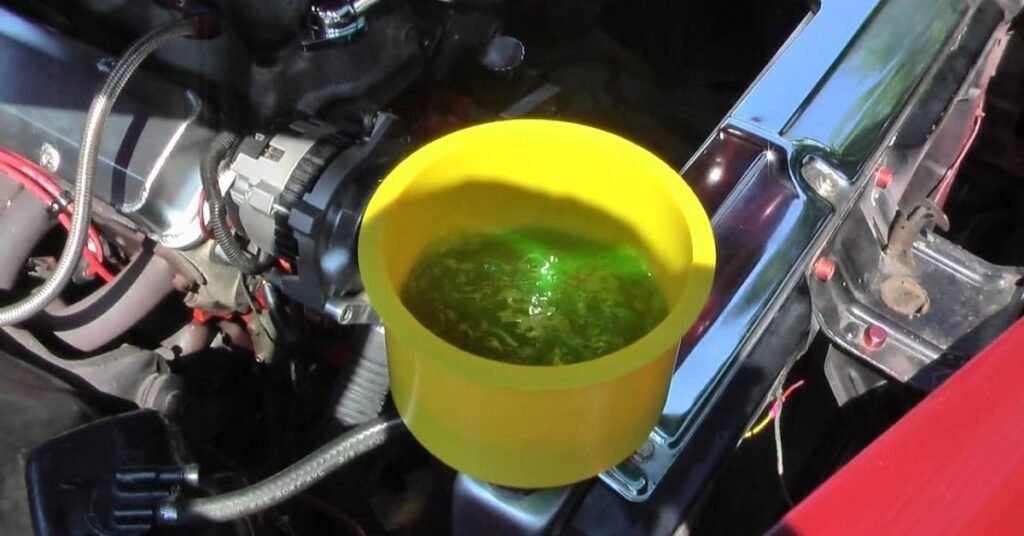
Burping the cooling system is needed when you see bubbles in the coolant or after a coolant refill. Trapped air can prevent proper flow and cause overheating. The process removes air pockets so the coolant can circulate correctly.
To burp the system, follow these steps carefully:
- Before opening the radiator, make sure the engine is cool.
- Slowly open the radiator cap or bleed valve to release trapped air.
- Make sure the coolant flows continuously without bubbles.
- Close the cap securely once done.
Always use caution and wear gloves to avoid burns. Proper burping stops overheating and prevents future air bubble issues in the radiator.
Conclusion
Bubbles in radiator coolant are a warning sign of trouble in your cooling system. They can be caused by air pockets, leaks, a faulty radiator cap, or even a blown head gasket. They can cause engine overheating and serious damage if ignored.
Checking for bubbles early and fixing the cause quickly keeps your engine safe. Simple steps like bleeding the system, replacing faulty parts, or repairing leaks can solve the problem. Paying attention to bubbles in radiator coolant helps your car run smoothly and prevents costly repairs.
FAQs
- What do bubbles in radiator coolant mean?
Bubbles in radiator coolant usually indicate trapped air, leaks, or a more serious engine problem like a blown head gasket. - Can I drive with bubbles in radiator coolant?
It’s not recommended. Driving with bubbles can cause overheating and damage your engine. - How do I stop bubbles in radiator coolant?
Changing the radiator cap, bleeding the cooling system, and fixing leaks can stop the bubbles. - Are bubbles in radiator coolant normal?
Small bubbles after a coolant refill can be normal, but continuous bubbling usually signals a problem. - Can a blown head gasket cause bubbles in radiator coolant?
Yes, a blown head gasket lets exhaust gases enter the coolant, creating persistent bubbles.
