

Introduction
A coolant temperature sensor is a small device in your car. It measures the engine’s temperature. This helps your car run efficiently and prevents overheating. Without it, the engine can face serious problems.
If your car starts acting strange, the temperature sensor could be the reason. It affects fuel efficiency, engine performance, and even the check engine light. You can save time and money by understanding how it works
In this guide, we will explain how coolant temperature sensor systems work.The course will also cover common problems and how to fix them. By the end, you’ll understand everything you need about this important car part.
Understanding and Replacing a Coolant Temperature Sensor
A coolant temperature sensor is a small but essential part of your car. It measures the engine’s temperature and tells the car’s computer how hot or cold the engine is. This helps control fuel delivery, engine performance, and prevents overheating. Knowing how it works is important for every car owner. If it fails, your engine can run poorly or even get damaged.
Spotting a faulty sensor is easier than you think. Signs include the check engine light, poor fuel efficiency, or engine overheating. Replacing it is straightforward. First, locate the sensor, then remove the connector cable. Next, loosen and remove the old sensor, install the new one, and reconnect the cable. Following these steps keeps your engine running smoothly and avoids costly repairs.
9 Key Signs of a Faulty Temperature Sensor and How to Fix Them
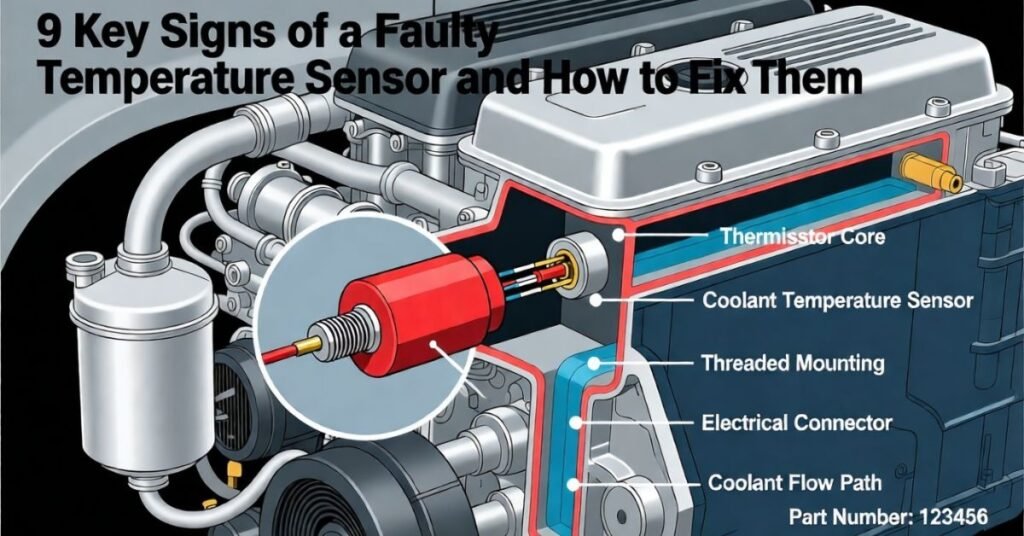
A temperature sensor is a small but very important part of your car. It constantly monitors the engine’s temperature and sends this information to the car’s computer. This helps control fuel delivery, engine timing, and cooling systems. When the sensor fails, the engine can face serious problems, from poor performance to overheating.Faulty sensors may exhibit the following symptoms::
- Check engine light turning on unexpectedly
- Poor fuel efficiency, even after refueling
- Engine overheating or running unusually cold
- Black smoke coming from the exhaust
- Difficulty starting the engine
- Cooling fan not working properly
- Erratic or fluctuating temperature readings
- Rough idling and engine misfires
- Thermostat-related issues
Temperature sensor failures can happen due to wear and tear, corrosion, dirt, or damaged wiring. Diagnosing the problem early is important to avoid bigger issues. Fixing it usually involves testing the sensor, identifying the faulty part, and replacing it if needed. Following proper steps ensures your engine runs smoothly, improves fuel efficiency, and prevents costly repairs. With regular checks, you can catch issues before they become serious, keeping your car safe and reliable
5 Key Signs of a Bad Coolant Temperature Sensor and How to Spot Them

A coolant temperature sensor is a small but very important part of your car. It measures the engine’s temperature and sends this information to the car’s computer. When it fails, your engine can face serious problems.Bad coolant temperature sensors are often characterized by the following symptoms:
- Engine overheating or running hotter than normal
- Poor fuel economy despite regular driving
- Check engine light turning on unexpectedly
- Black smoke coming from the exhaust
- Rough or poor idling
- Electrical cooling fans not working properly
Knowing where the sensor is located helps in diagnosing issues. It is usually near the thermostat or attached to the engine block. A malfunctioning sensor can be tested with simple tools or by a professional mechanic. Fixing it early can prevent engine damage, improve fuel efficiency, and keep your car running smoothly. Regular checks ensure your engine stays healthy and avoid costly repairs in the future.
Symptoms of a Bad Coolant Temperature Sensor and How to Spot Them
A coolant temperature sensor is a small device in your car that measures engine temperature.A computer in the car receives this information. This helps control fuel delivery, engine performance, and cooling fans. If it fails, your engine can overheat, consume more fuel, or show warning lights. Recognizing the signs early can save time and costly repairs.
Here are the common signs of a failing coolant temperature sensor:
| Symptom | What It Means | Possible Effects |
| Poor Fuel Economy | Sensor gives wrong temperature readings | Engine uses more fuel than normal |
| Irregular Temperature Readings | Fluctuating gauge on dashboard | Hard to know true engine temperature |
| Black Smoke from Exhaust | Too much fuel being burned | Pollution, potential engine damage |
| Engine Overheating | Cooling system not triggered properly | Risk of serious engine damage |
| Check Engine Light On | Sensor detected fault | Engine may go into limp mode |
By checking for these symptoms and addressing them quickly, you can maintain your car’s performance and prevent bigger problems. Trusting a professional, like AAMCO Colorado, ensures your cooling system and sensor are repaired correctly. Regular checks help your engine run efficiently and safely.
Conclusion
Coolant temperature sensor systems are small but very important for your car. They keep track of engine temperature and help the engine run smoothly. When these systems fail, your car can overheat, use more fuel, or show warning lights. Understanding how they work and spotting problems early can save you time and money.
Regular maintenance and timely replacement of faulty sensors keep coolant temperature sensor systems working properly. This protects your engine, improves performance, and prevents costly repairs. Paying attention to warning signs and taking quick action ensures your car stays safe and reliable on the road.
FAQs
1. What is a coolant temperature sensor system?
It is a device that measures the engine’s temperature and sends the information to the car’s computer for efficient engine performance.
2.If my coolant temperature sensor is faulty, what should I do?
Signs include the check engine light, poor fuel economy, engine overheating, or irregular temperature readings.
3. Is it possible to drive with a bad coolant temperature sensor?
It’s not recommended, as it can cause engine damage, overheating, and higher fuel consumption.
4. How is a coolant temperature sensor replaced?
The old sensor is removed from the engine, and a new one is installed, usually near the thermostat or engine block.
5. How often should I check my coolant temperature sensor system?
It’s good to inspect it during regular vehicle maintenance or if you notice warning signs.
