

Introduction:
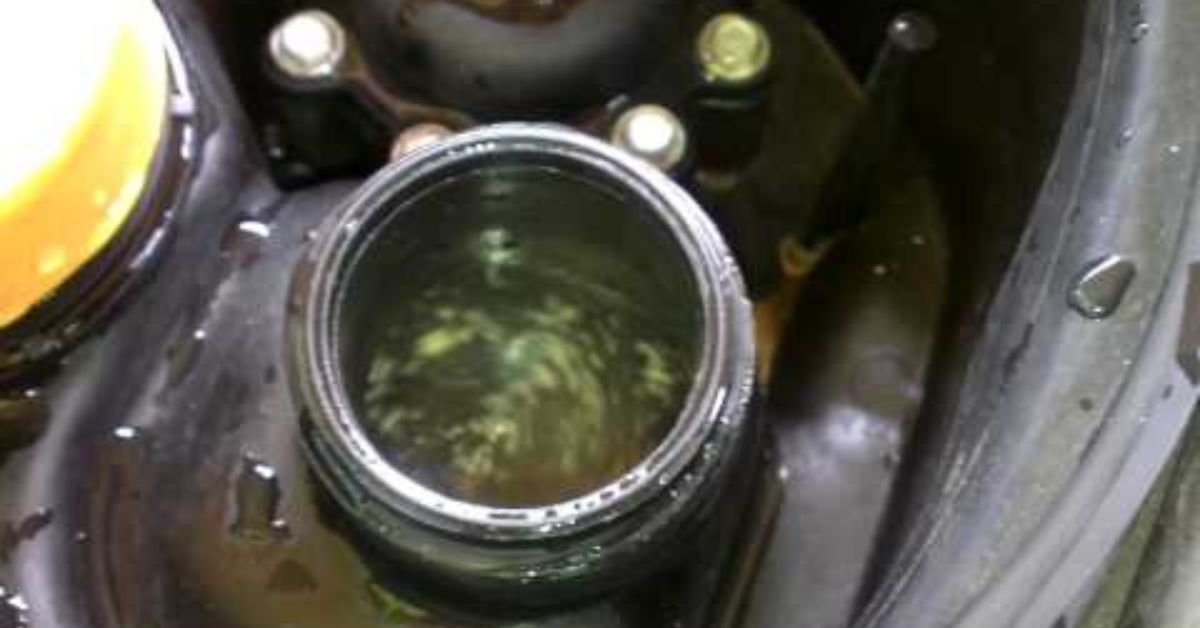
Coolant in oil color refers to the change in engine oil color when coolant mixes with it. A light brown or amber color is typical for engine oil.. But when coolant enters the oil system, the color often becomes milky, creamy, or similar to a chocolate milkshake. This color change is a warning sign that something is wrong inside the engine.
Many car owners first notice this problem when checking the oil dipstick or opening the oil cap. The strange color can look thick or foamy. This usually means coolant is leaking into the oil passages. If ignored, it can lead to serious engine damage.
Understanding coolant in oil color can help you detect engine problems early. It can be caused by issues like a blown head gasket, a cracked engine block, or a faulty oil cooler. In this guide, you will learn what the color means, the common causes, and how to fix the problem before it becomes expensive.
Coolant in Oil Color What Does It Mean?
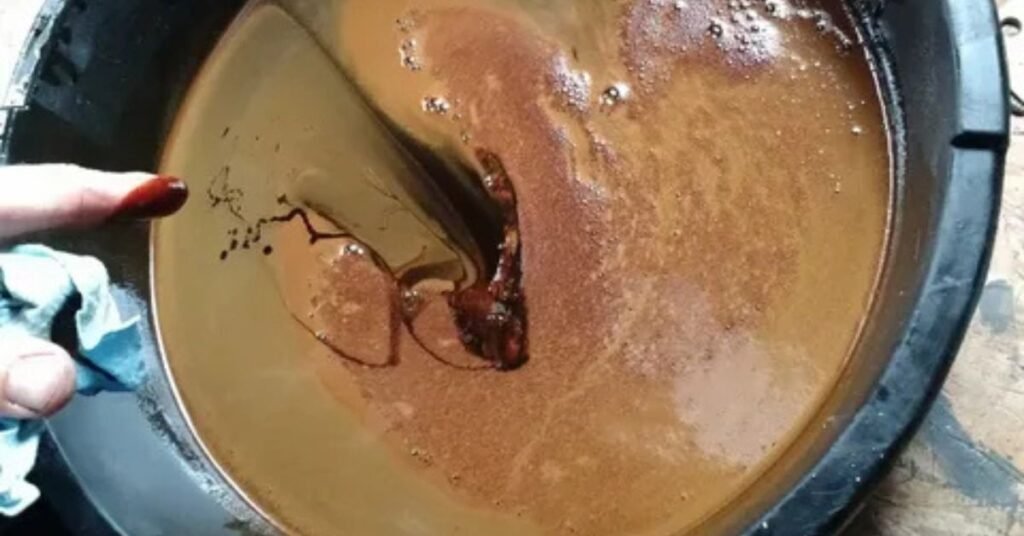
When you notice a strange change in your engine oil shade, it can be a serious warning. Coolant in oil color usually means the coolant has mixed with the engine oil. Normal oil looks amber or light brown. But when coolant enters the system, the oil may turn milky, creamy, or light tan. This happens because the two fluids blend together and create a thick, cloudy mixture.
This color change is not normal and should never be ignored. It often points to an internal engine problem, such as a leaking gasket or damaged engine part. When coolant mixes with oil, it reduces lubrication and increases engine wear. Over time, this can cause overheating and costly repairs. Checking the oil color regularly can help you catch the problem early and protect your engine.
Normal Engine Oil Color vs Coolant Contamination
Normal engine oil has a clean and smooth look. It is usually amber or light brown when fresh. As the engine runs, the oil becomes darker. This is normal because it collects dirt and heat particles. Dark brown or black oil does not always mean a serious problem. It often just means the oil needs to be changed.
Coolant contamination looks very different.The color of coolant when mixed with oil is milky, creamy, or light tan. It may look like a chocolate milkshake. The texture can also feel thick or foamy. This is not normal and usually means there is an internal engine leak. Immediate inspection is important to avoid engine damage.
Normal Oil vs Coolant Contaminated Oil
| Feature | Normal Engine Oil (Fresh) | Normal Engine Oil (Used) | Coolant Contaminated Oil |
| Color | Amber or golden | Dark brown or black | Milky white, creamy, or light tan |
| Texture | Smooth and slippery | Slightly thicker but smooth | Thick, frothy, or foamy |
| Smell | Neutral oil smell | Slight burnt smell | Sweet smell (from coolant) |
| Appearance on Dipstick | Clear and shiny | Dark but even | Cloudy and mixed |
| Oil Cap Residue | Clean surface | Slight dark coating | Creamy sludge under cap |
| Engine Performance | Normal operation | Slight performance drop if very old | Rough running or overheating |
| Oil Level | Stable | Slightly lower over time | May rise due to coolant mixing |
| Urgency Level | No concern | Change oil soon | Immediate repair required |
This table helps you quickly understand the difference. If your oil looks milky instead of dark brown, it is not just old oil. It may be coolant mixing inside the engine.
Why Oil Turns Milky or Creamy
Oil turns milky or creamy when coolant mixes with it inside the engine. Engine oil and coolant are two different fluids. They are not meant to mix. When a leak happens, coolant enters the oil passages. As the engine runs, both fluids blend together. This creates a light brown or milky color that looks thick and cloudy.
This problem usually happens because of a damaged head gasket, a cracked engine part, or a faulty oil cooler. The mixing process traps air and moisture in the oil. That is why it may look foamy or like a milkshake. Milky oil is a serious warning sign. It means your engine needs quick attention before major damage occurs.
What Color Is Oil When Coolant Leaks Into It?
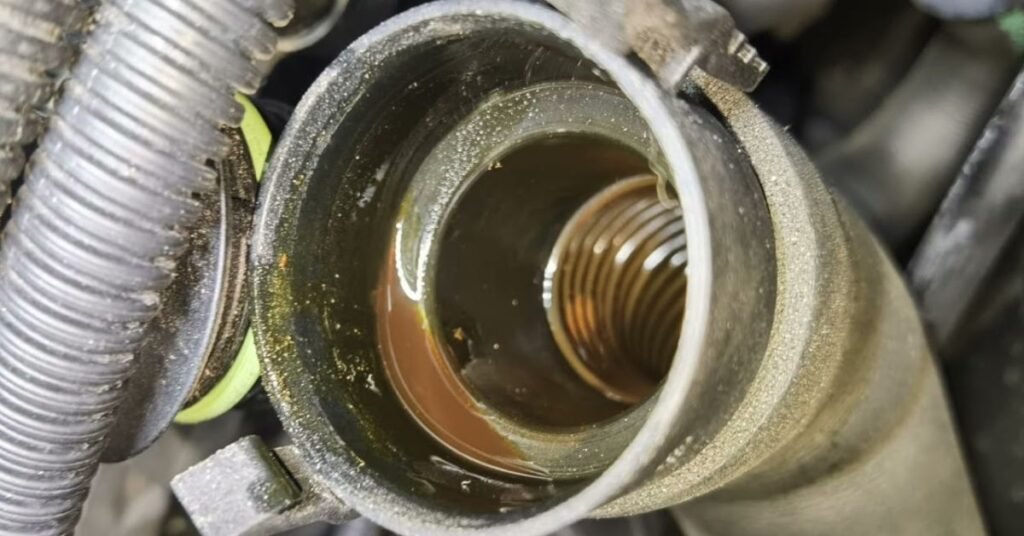
When coolant leaks into engine oil, the oil color changes in noticeable ways. The mixture creates unusual shades and textures that are easy to spot during an oil check. These colors appear because coolant and oil blend together and form a thick, cloudy substance inside the engine.
- Milky white oil may look pale and cloudy, almost like milk.
- Creamy beige shade A smooth, creamy color can appear when coolant mixes slowly with oil.
- Chocolate milkshake color A light brown, frothy mixture is a common sign of coolant contamination.
- Foamy or bubbly oil Small bubbles may appear because coolant and oil trap air together.
- Light tan or muddy color Sometimes the oil looks muddy instead of clear or dark.
These color changes usually show up on the oil dipstick or under the oil cap, making them an important early warning sign for engine problems.
Milky White or Chocolate Milkshake Appearance
When coolant mixes with oil, it can create a milky white or chocolate milkshake-like appearance. This is easy to notice on the dipstick or under the oil cap. The oil looks thick, cloudy, and very different from normal amber oil. Even a small leak can create this unusual color.
This appearance is a warning sign. It means the engine is not running normally. If ignored, it can cause serious engine damage, like overheating or loss of lubrication. Checking your oil regularly can help catch this problem early and save costly repairs.
Light Brown or Frothy Oil Texture
Sometimes, the oil may not look completely milky but instead light brown with a frothy texture. This happens when coolant slowly leaks and mixes with oil over time. The foam forms because air gets trapped in the mixture while the engine runs.
Frothy or bubbly oil is just as dangerous as milky oil. It reduces the oil’s ability to lubricate engine parts, leading to wear and tear. If you see this, it is important to inspect the engine and fix the leak immediately.
Common Symptoms of Coolant in Oil
When coolant mixes with engine oil, the engine shows clear warning signs. These symptoms help you detect the problem early before serious damage occurs. Checking the oil regularly can save you from costly repairs.
- Milky or creamy oil on the dipstick The oil looks cloudy instead of amber.
- The sweet smell from the oil or dipstick coolant has a distinct sweet scent.
- White smoke from the exhaust Steam or smoke comes out while the engine runs.
- Rising oil level on the dipstick Coolant entering oil increases the fluid level.
- Overheating engine The engine may run hotter than normal.
Recognizing these signs early is crucial. Ignoring them can lead to engine wear, overheating, and complete failure. Always inspect your oil color and texture if you notice any unusual changes.
Causes of Coolant in Oil Discoloration
- Blown Head Gasket Creates a direct path for coolant to enter the oil system.
- Cracked Cylinder Head or Engine Block Structural damage lets fluids mix inside the engine.
- Faulty Oil Cooler Malfunctioning oil cooler allows coolant to seep into the oil.
- Overheating Engine Excessive heat can warp parts, causing leaks between oil and coolant.
- Worn or Damaged Seals and Gaskets Old seals fail, opening a route for coolant contamination.
- Improper Engine Repairs Mistakes during maintenance can lead to fluid mixing.
- Corroded or Weak Engine Components Corrosion weakens walls, enabling coolant leaks.
- Excessive Pressure in Cooling System High pressure can force coolant into the oil passages.
Is Coolant in Oil Dangerous for Your Engine?
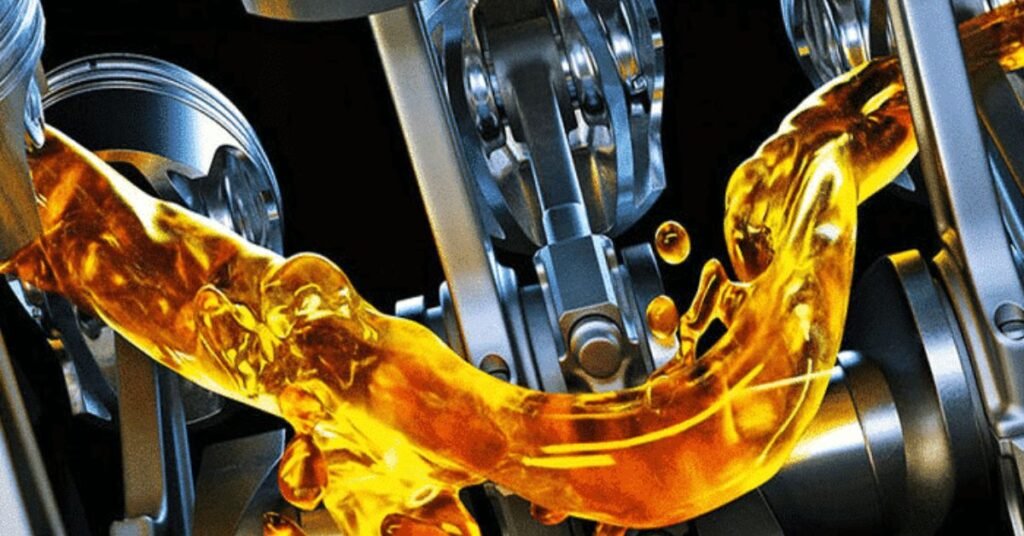
Yes, coolant in oil is very dangerous for your engine. When coolant mixes with oil, it reduces the oil’s ability to lubricate moving parts. This causes metal parts to rub together, increasing wear and tear. Over time, the engine can overheat and fail completely if the problem is ignored.
Even small leaks can lead to serious damage. Coolant in oil can cause corrosion inside the engine and create sludge that blocks oil passages. Driving with contaminated oil puts the engine at risk and can lead to costly repairs or even replacement. Early detection and fixing the problem quickly is key to protecting your engine.
Loss of Lubrication and Engine Wear
When coolant mixes with engine oil, the oil cannot lubricate the parts properly. Moving parts like pistons and bearings rub together more. This causes extra friction and faster wear. Over time, engine components can get damaged. Even small leaks can reduce oil efficiency and shorten engine life.
Risk of Engine Overheating
Contaminated oil cannot carry heat effectively. This makes the engine run hotter than normal. Overheating can warp parts, crack the cylinder head, or damage the engine block. If ignored, it can lead to complete engine failure. Regular oil checks help spot this problem early and protect the engine.
How to Diagnose Coolant in Oil by Color
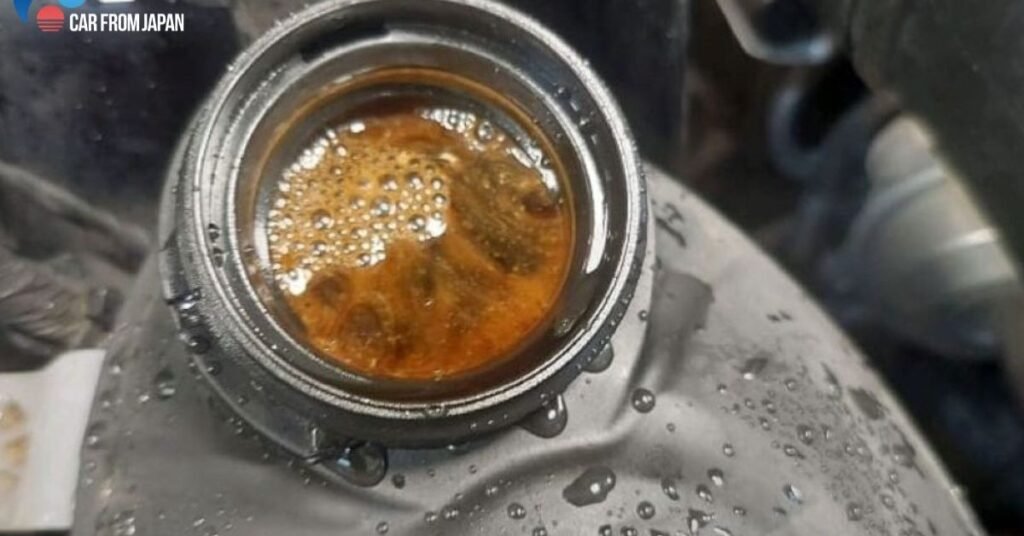
Checking the oil color is the first step to find if coolant has entered the engine oil. Normal oil is amber or light brown, but contaminated oil looks milky, creamy, or frothy. You can catch the problem early by observing the oil on the dipstick or under the oil cap.
- Check the dipstick. Look for milky, cloudy, or chocolate milkshake-like colors.
- Inspect the oil cap Remove the cap and check for creamy sludge or foam.
- Look for rising oil levels. Coolant entering oil can make the level higher than normal.
- Smelling the oil A sweet, coolant-like smell is a warning sign.
- Check for white smoke. Smoke from the exhaust can confirm coolant contamination.
Early diagnosis helps prevent serious engine damage and reduces repair costs. Regularly checking oil color can save your engine from long-term problems.
Checking Oil Dipstick for Milky Residue
The oil dipstick is a quick way to check for coolant contamination. Pull it out and wipe it clean first. Then reinsert it and remove it again to see the true oil color. If the oil looks milky, creamy, or frothy, it means coolant has mixed with the oil. This is an early warning sign of engine problems.
Inspecting Oil Filler Cap Sludge
The oil filler cap can also show signs of coolant mixing. Remove the cap and look underneath carefully. If you see thick, creamy sludge or foam, it is a sign of contamination. This sludge can block oil flow and reduce lubrication.The engine can be saved from serious damage if it is caught early.
How to Fix Coolant in Oil Problems
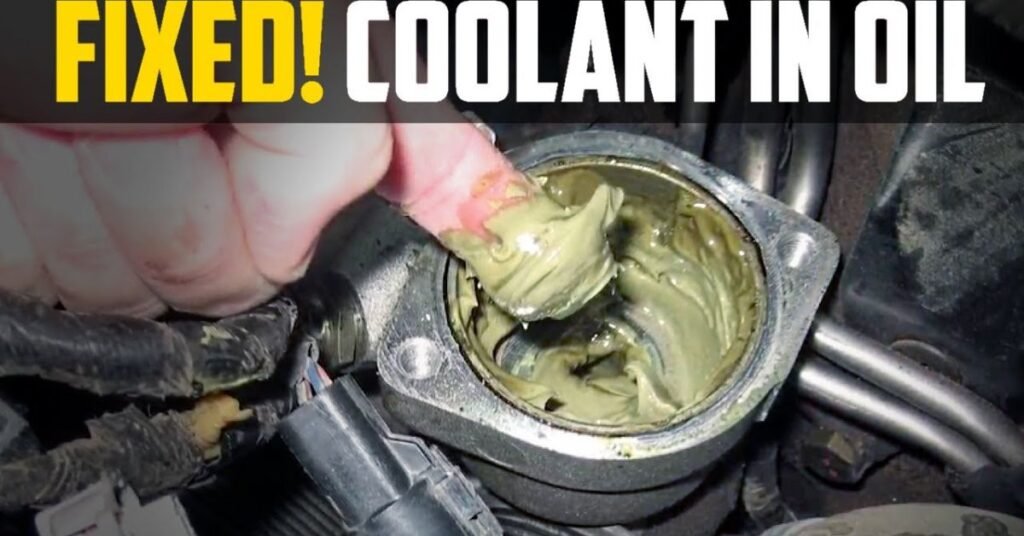
- Drain & Replace Oil Remove all contaminated oil and install a fresh filter.
- Flush Cooling System Clear out leftover coolant before refilling.
- Head Gasket Repair Fix leaks that allow coolant into the oil.
- Replace cracked parts in the engine block & cylinder head.
- Inspect & Fix Oil Cooler Prevent future coolant mixing.
- Refill with Correct Fluids Use proper oil and coolant for your car.
- Regular Monitoring: Keep an eye on oil and coolant levels after repair.
- Test Drive & Recheck Ensure the engine runs smoothly with no leaks.
- Preventive Maintenance Schedule regular inspections to avoid recurrence.
- Professional Help if Needed Seek a mechanic for complex repairs.
How to Prevent Coolant and Oil Mixing
- Check oil and coolant levels regularly. Catch leaks early.
- Inspect gaskets and seals Replace worn or damaged parts.
- Monitor engine temperature Prevent overheating.
- Use the correct oil and coolant. Follow manufacturer recommendations.
- Perform regular oil changes Keep oil clean and healthy.
- Flush cooling system periodically Remove old coolant and sludge.
- Watch for unusual oil color or smell and detect problems early.
- Schedule professional inspections Spot hidden leaks or issues.
- Avoid overfilling fluids Prevent pressure and leaks.
- Act immediately on warning signs Milky oil or white smoke signals trouble.
Regular Cooling System Maintenance
Regular cooling system maintenance keeps your engine healthy. Check the radiator, hoses, and coolant levels often. Look for cracks, leaks, or worn-out parts. Replacing damaged parts early prevents coolant from mixing with oil. Flushing the system periodically removes old coolant and dirt. This helps the engine run smoothly and avoid overheating.
Routine Oil and Coolant Checks
Checking oil and coolant regularly is very important. Inspect the dipstick and oil cap for unusual color or texture. Monitor coolant levels and look for leaks around the engine. Changing oil on time keeps it clean and protects the engine. Small checks done routinely prevent big problems later and save money on repairs.
Conclusion
Coolant mixing with engine oil is a serious problem. It changes the oil color and affects engine performance. Milky, creamy, or frothy oil is a warning sign that should not be ignored. Early detection can save your engine from costly damage. Regular checks of oil and coolant help you catch problems before they get worse.
Fixing leaks and maintaining your cooling system keeps the engine healthy. Replacing worn gaskets, flushing old coolant, and changing oil on time are simple but effective steps. Paying attention to oil color, texture, and smell protects your car. Following these steps ensures your engine runs smoothly and lasts longer.
FAQs
1. What does milky or creamy oil mean?
Milky or creamy oil usually means coolant has mixed with the engine oil.An engine part that has cracked or blown a head gasket can cause this.. It reduces lubrication and can lead to engine damage if not fixed quickly.
2. Can I drive if my oil is milky?
No, driving with milky oil is risky. The oil cannot lubricate engine parts properly, which increases wear and overheating. It’s best to stop driving and inspect the engine immediately.
3. What causes coolant to mix with oil?
Common causes include a blown head gasket, a cracked cylinder head or engine block, and a faulty oil cooler. Worn seals and overheating can also lead to this problem. Identifying the cause early prevents serious damage.
4. How do I check if coolant is in my oil?
Check the oil dipstick and oil cap for a milky, frothy, or chocolate milkshake-like color. A sweet smell from the oil or white smoke from the exhaust can also indicate contamination. Regular checks help spot the problem early.
5. How can I prevent coolant from mixing with oil?
Regularly inspect oil and coolant levels, monitor engine temperature, and replace worn gaskets or seals. Performing routine oil changes and flushing the cooling system can prevent leaks and keep your engine safe.
