

Introduction:
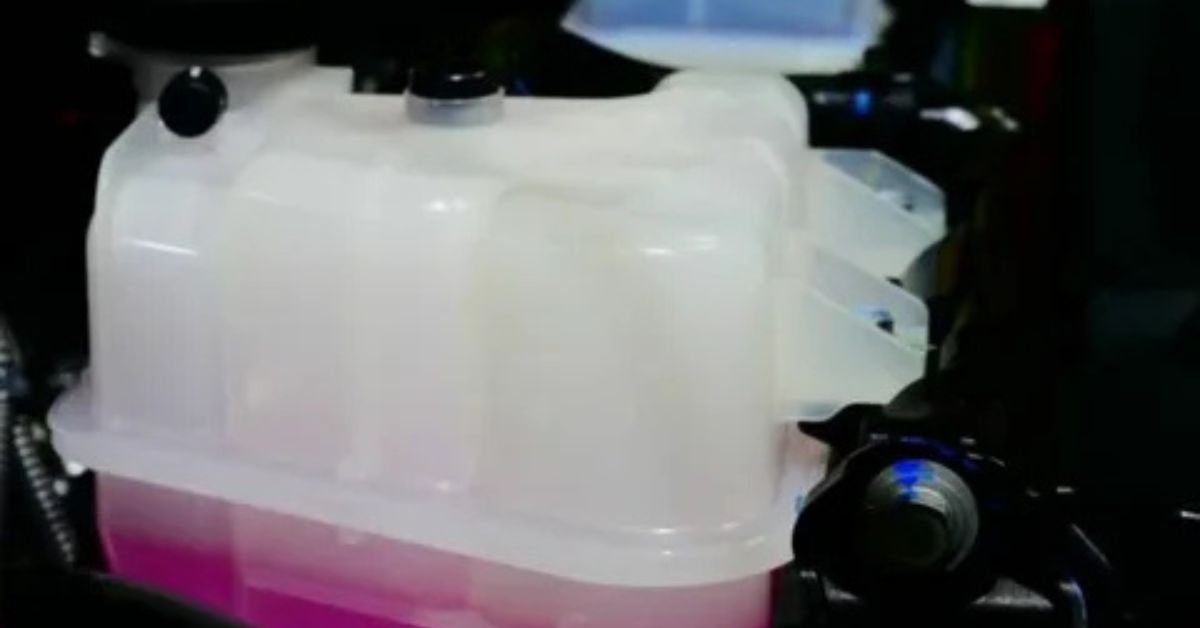
Coolant reserve tank bubbling happens when air or gas forms bubbles inside the overflow tank. This tank holds extra coolant when the engine gets hot. Some bubbling can be normal after a refill. But constant bubbling may mean there is a problem in the cooling system.
If you see bubbles in the reserve tank, do not ignore it. It could be a small issue like trapped air. It could also be a serious problem like a head gasket leak. Catching the issue early can save you from costly engine damage.
In this guide, you will learn the common causes of coolant reserve tank bubbling. You will also discover simple ways to diagnose and fix it. Understanding the signs can help you protect your engine and drive with confidence.
What Does Coolant Reserve Tank Bubbling Mean?
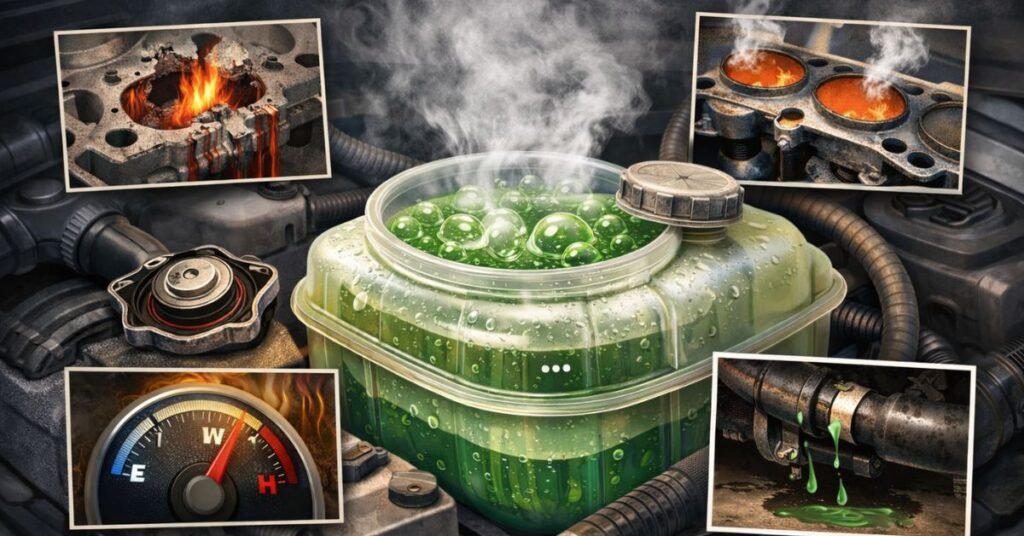
Coolant reserve tank bubbling means air or gas is moving through the cooling system. The reserve tank stores extra coolant when the engine heats up. A few bubbles after turning off the engine can be normal. But steady bubbling while the engine is running usually signals a problem.
In many cases, bubbling happens because of trapped air or low coolant levels. It can also mean the engine is overheating or losing pressure. Sometimes, combustion gases from a bad head gasket enter the system. If bubbling continues, it is important to check the cooling system before bigger damage occurs.
Is It Normal for a Coolant Reserve Tank to Bubble?
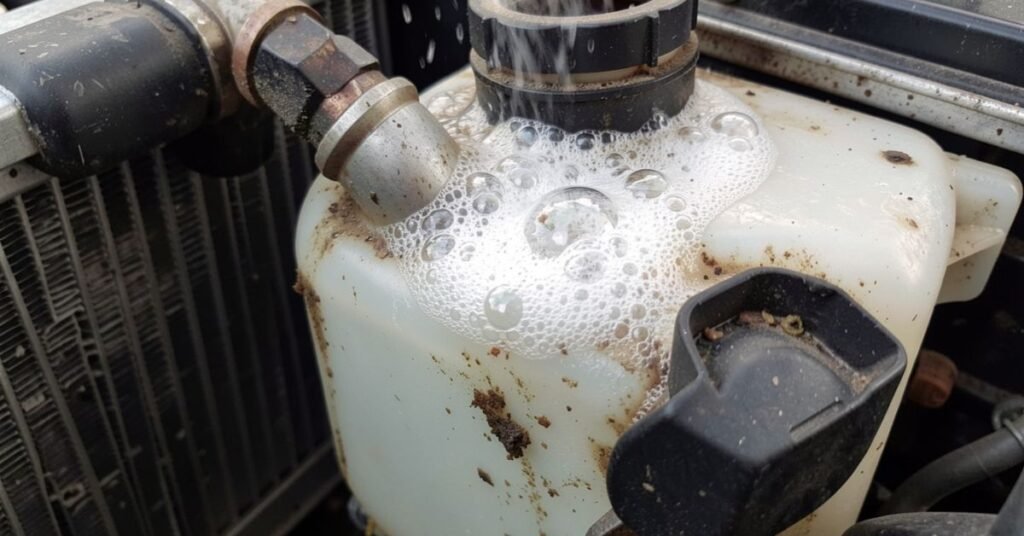
Yes, sometimes it is normal for a coolant reserve tank to bubble. Small bubbles can appear after you refill the coolant. They can also show up when you turn off a hot engine. This usually happens because trapped air is escaping from the system. In these cases, the bubbling should stop after a short time.
However, constant bubbling is not normal. It may point to a problem in the cooling system. You should be concerned if you notice:
- Bubbling while the engine is running
- Engine temperature rising quickly
- Coolant level dropping often
- White smoke from the exhaust
If these signs appear, the issue may be more serious and needs checking.
Top Causes of Coolant Reserve Tank Bubbling
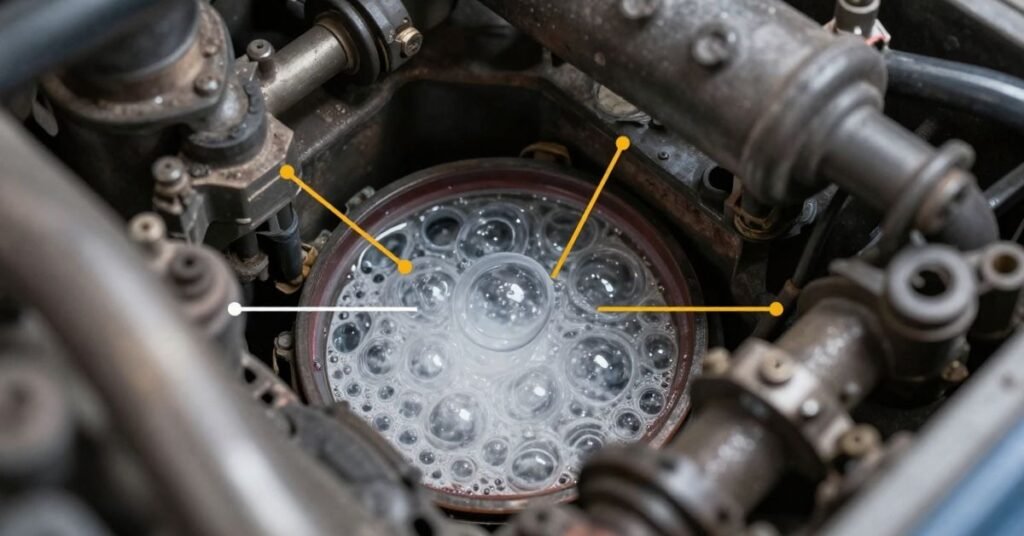
There are several reasons why your coolant reserve tank may start bubbling. One common cause is trapped air inside the cooling system. This often happens after a coolant refill. A bad radiator cap can also cause bubbling because it cannot hold proper pressure. When pressure drops, coolant may start to boil and form bubbles.
More serious causes include a faulty thermostat or a failing water pump. These parts control coolant flow through the engine. If they stop working, the engine may overheat and create bubbling. In some cases, a blown head gasket can push combustion gases into the coolant. This is a serious problem and should be checked quickly to avoid engine damage.
Air Pockets in the Cooling System
Air pockets form when trapped air stays inside the cooling system. This often happens after adding new coolant. If the system is not properly bled, air cannot escape. The trapped air blocks normal coolant flow. This can cause overheating and bubbling in the reserve tank.
Air pockets can create several warning signs. You may notice:
- Bubbling in the coolant reserve tank
- Engine temperature rising quickly
- Heater blowing cold air
- Gurgling sounds under the hood
Bleeding the cooling system usually removes the trapped air. Once the air is gone, the bubbling should stop and the engine can cool properly.
Blown Head Gasket or Combustion Gas Leak
The engine block and cylinder head are sealed by the head gasket.. When it fails, combustion gases can leak into the cooling system. These gases create constant bubbles in the coolant reserve tank. This type of bubbling does not stop on its own.
You may also notice other warning signs. The engine may overheat quickly. White smoke can come from the exhaust. The coolant level may drop without visible leaks. If ignored, a blown head gasket can cause severe engine damage and expensive repairs.
Faulty Radiator Cap Losing Pressure
The radiator cap keeps the cooling system under the right pressure. If it is faulty, pressure can escape. Low pressure can cause the coolant to boil and form bubbles in the reserve tank. This is a common reason for coolant bubbling that many people overlook.
Signs of a bad radiator cap include:
- Bubbling in the coolant reserve tank
- Coolant overflowing from the tank
- Engine overheating even with enough coolant
- Coolant leaks around the cap
Replacing a faulty radiator cap is simple. It restores pressure and stops bubbling, keeping the engine cool and safe.
Bad Thermostat Not Opening Properly
A bad thermostat can block coolant flow in the engine. If it stays closed, the coolant cannot circulate properly. This causes the engine to overheat. Bubbling may appear in the coolant reserve tank as pressure builds up.
You might notice other signs like:
- Engine temperature rising quickly
- Heater blowing cold air
- Coolant boiling in the tank
Replacing the thermostat usually fixes the problem. The engine can then maintain normal temperature and bubbling stops.
Failing Water Pump or Coolant Flow Issues
The water pump moves coolant through the engine. If it fails, coolant cannot flow efficiently. This can cause overheating and bubbles in the reserve tank. A failing pump may also make strange noises.
Watch for these warning signs:
- Coolant not circulating properly
- Engine overheating despite enough coolant
- Steam or bubbles from the tank
Fixing or replacing the water pump restores proper flow. This keeps the engine cool and stops bubbling in the reserve tank.
Can Low Coolant Cause the Reserve Tank to Bubble?
Yes, low coolant can make the reserve tank bubble. When the coolant level drops, air can enter the cooling system. This trapped air creates bubbles in the reserve tank. Low coolant also makes the engine overheat faster, which increases bubbling.
You may notice these signs of low coolant:
- Bubbling in the coolant reserve tank
- Engine temperature rising quickly
- Sweet smell from coolant leaks
- Frequent need to refill the tank
Refilling the coolant to the proper level usually stops bubbling. It also helps the engine run cooler and prevents further damage.
How to Diagnose Coolant Reserve Tank Bubbling at Home
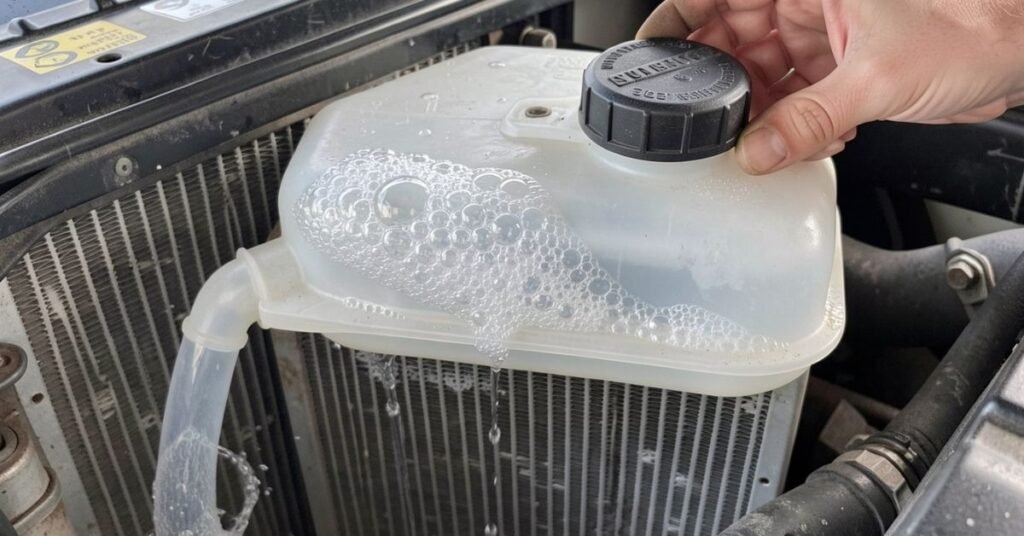
Diagnosing coolant reserve tank bubbling at home means checking why your coolant is forming bubbles. The reserve tank holds extra coolant when the engine heats up. Bubbling can happen due to trapped air, low coolant, or a problem in the cooling system. Understanding the cause helps prevent engine damage.
If you notice constant bubbling, it could be a small issue or a serious engine problem. You don’t always need a mechanic right away. Simple checks at home can save time and money. Early diagnosis can prevent overheating and costly repairs.
In this guide, you will learn easy ways to check the coolant system. We will cover checking levels, spotting air pockets, and identifying warning signs. Following these steps will help you understand the problem and take the right action.
Check Coolant Level and Condition
- Make sure the engine is cool before opening the reserve tank.
- Check if the coolant level is between the “Min” and “Max” marks.
- Look at the coolant color; it should be clear and bright.
- Dark, rusty, or oily coolant can indicate contamination.
- Refill with the correct type of coolant if the level is low.
- Avoid overfilling, as this can cause bubbling and overflow.
- Regularly checking the coolant helps prevent overheating and engine damage.
Inspect for White Smoke or Sweet Smell
White smoke from the exhaust can be a sign of coolant leaking into the engine. This often happens when a head gasket is blown or there is a crack in the engine.An immediate solution is needed to this serious issue.
A sweet smell inside or outside the car can also indicate coolant leaks. This usually comes from the coolant itself or evaporated steam. If you notice these signs along with bubbling in the reserve tank, it’s time to check the cooling system carefully. Early detection can prevent major engine damage.
Perform a Cooling System Pressure Test
| Step | What to Do | What It Shows | Possible Issue |
| 1 | Make sure engine is cool | Prevent burns | Safety first |
| 2 | Attach a pressure tester to the radiator or reserve tank | Measures system pressure | Detects leaks or weak pressure |
| 3 | Pump to recommended pressure | Check gauge reading | Should hold steady |
| 4 | Watch for pressure drop | Indicates leak | Leaking hose, radiator, or cap |
| 5 | Inspect all hoses and connections | Look for coolant drips | Find exact leak location |
| 6 | Check for bubbles in reserve tank during test | Shows air or combustion gases | Head gasket or air pocket |
| 7 | Release pressure carefully | Prevent sudden coolant spray | Safety precaution |
| 8 | Record results | Helps future diagnostics | Track system health |
This table helps you perform a cooling system pressure test step by step. It shows what to do, what to watch for, and possible issues to identify.
How to Fix Coolant Reserve Tank Bubbling
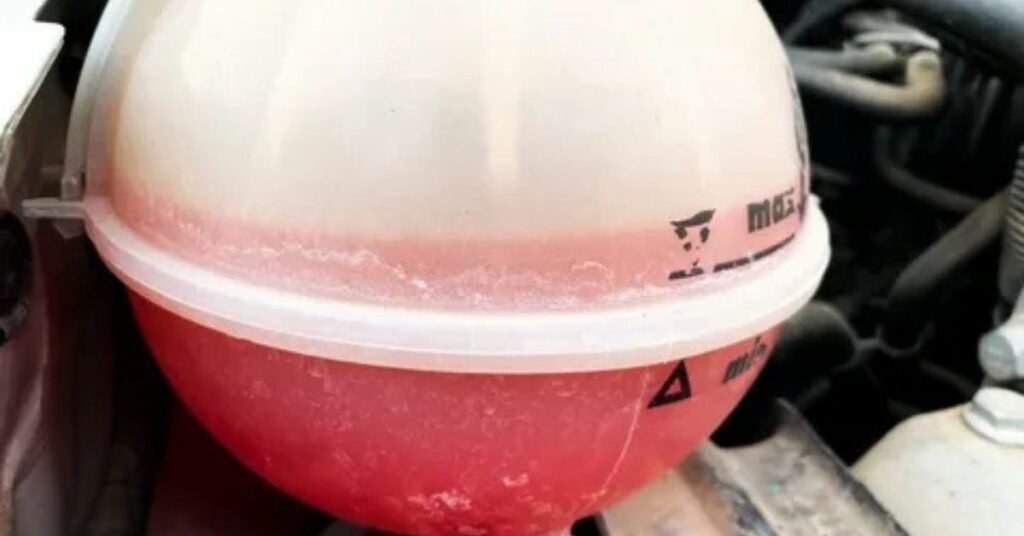
Fixing coolant reserve tank bubbling depends on the cause. Small air pockets can be removed by bleeding the cooling system. A faulty radiator cap or thermostat may need replacement. In serious cases, a blown head gasket or water pump issue requires professional repair.
You can try these steps to fix bubbling:
- Bleed the cooling system to remove trapped air
- Replace a faulty radiator cap
- Change a bad thermostat
- Repair or replace a leaking head gasket
- Fix or replace a failing water pump
- Flush and refill the coolant with the correct type
- Check hoses for leaks and tighten connections
Following these steps can help stop bubbling and keep your engine cool. Regular checks prevent future problems.
When Bubbling Means Serious Engine Damage
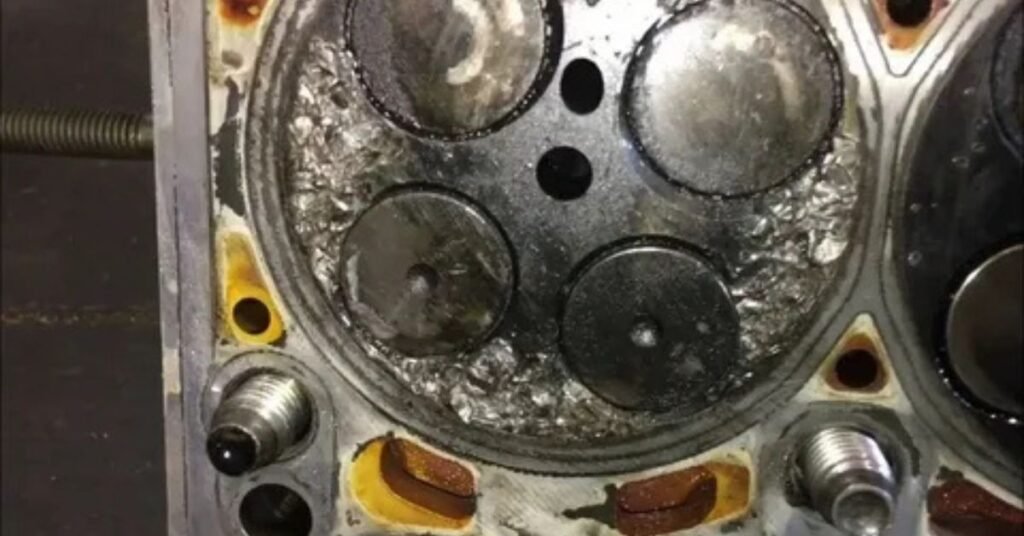
Bubbling in the coolant reserve tank can sometimes signal a serious engine problem. If the bubbling is constant, it may be caused by a blown head gasket or a cracked cylinder head. Combustion gases can enter the cooling system, creating bubbles and raising engine temperature.Major engine damage can result from ignoring these signs.
Other warning signs include white smoke from the exhaust, loss of coolant without visible leaks, and overheating even with enough coolant. If you notice these along with bubbling, it is important to act quickly. Getting the engine checked by a professional can prevent costly repairs and keep your car running safely.
How to Prevent Coolant Reserve Tank Bubbling in the Future
Preventing coolant reserve tank bubbling starts with regular maintenance. Check coolant levels often and refill when needed. Make sure you use the correct type of coolant for your car.. Inspect hoses, radiator, and the radiator cap for leaks or damage. Keeping the system clean and properly filled reduces the chance of bubbling.
You can also follow these simple tips:
- Flush the cooling system every 2–3 years
- Replace old or worn radiator caps
- Service the thermostat and water pump regularly
- Avoid overfilling or underfilling the coolant
- Monitor engine temperature and unusual smells
These steps help maintain a healthy cooling system. They prevent bubbling and protect the engine from overheating and damage.
Conclusion
Coolant reserve tank bubbling is a sign that your cooling system needs attention. Sometimes it is harmless, but constant bubbling can indicate serious problems. Checking the coolant level, radiator cap, thermostat, and water pump can help find the cause. Early action can save your engine from damage.
Regular maintenance and proper care are the best ways to prevent bubbling. Keep an eye on coolant levels, inspect the system, and fix small issues quickly. Following these simple steps keeps your engine safe, your car running smoothly, and gives you peace of mind on the road.
FAQs
Q1: Is it normal for my coolant reserve tank to bubble?
A small amount of bubbling after a coolant refill is normal.
It usually happens when trapped air escapes the system.
Constant bubbling while driving is not normal and should be checked.
Q2: Can a bad radiator cap cause coolant bubbling?
Yes, a faulty radiator cap can’t hold proper pressure.
This lets coolant boil and form bubbles in the tank.
Replacing the cap often fixes the problem quickly.
Q3: Could a blown head gasket make the coolant bubble?
Yes, combustion gases can leak into the cooling system.
This creates continuous bubbling in the reserve tank.
It’s a serious issue that needs immediate professional attention.
Q4: Will low coolant cause bubbling in the tank?
Low coolant lets air enter the system, forming bubbles.
It can also make the engine overheat faster.
Refilling to the correct level usually stops the bubbling.
Q5: How can I stop coolant bubbling at home?
Start by checking coolant level and system pressure.
Bleeding trapped air and replacing faulty parts often helps.
If bubbling continues, consult a mechanic to avoid engine damage.
