

Introduction:
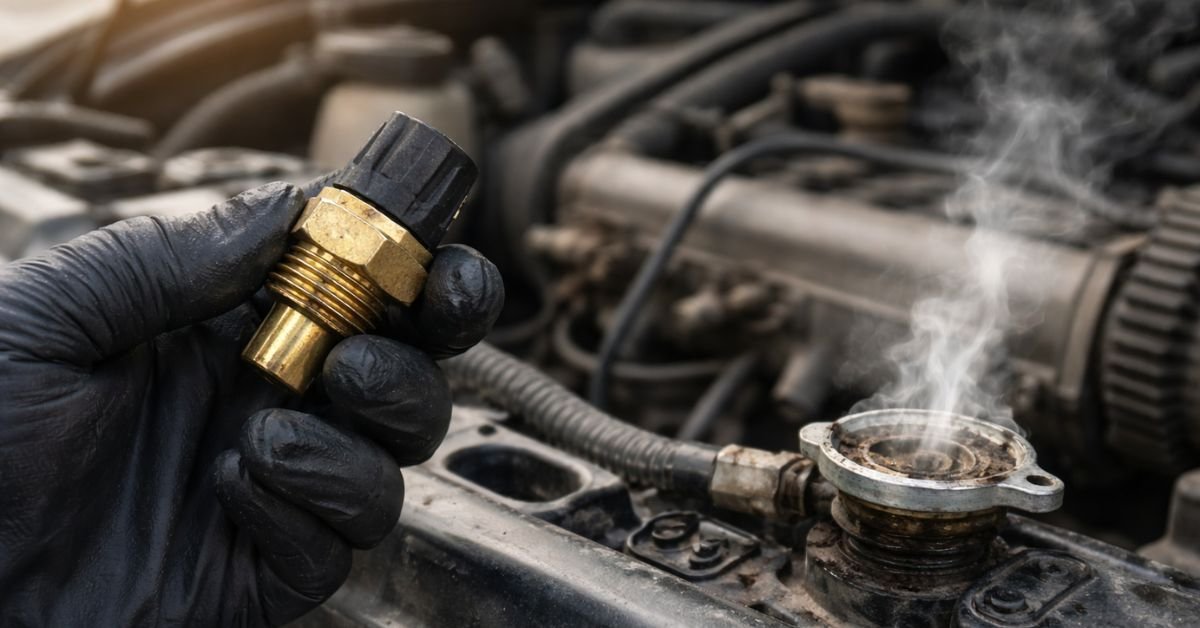
The coolant temperature switch is a small but important part of your car. It helps the engine know when it’s too hot or too cold and controls the flow of coolant to keep your engine running safely. If it fails, your engine can overheat or run poorly. Not many drivers notice when this switch starts having problems, but ignoring the early signs can lead to bigger, costly repairs. Imagine your engine overheating on a hot day or your car stalling unexpectedly. That’s why spotting the warning signs early is so important. In this article, we will cover the main signs of coolant temperature switch failure. You will learn how to identify problems before they get serious, and understanding these early signs can save you money and keep your car running smoothly.
What Is a Coolant Temperature Switch (Sensor)?
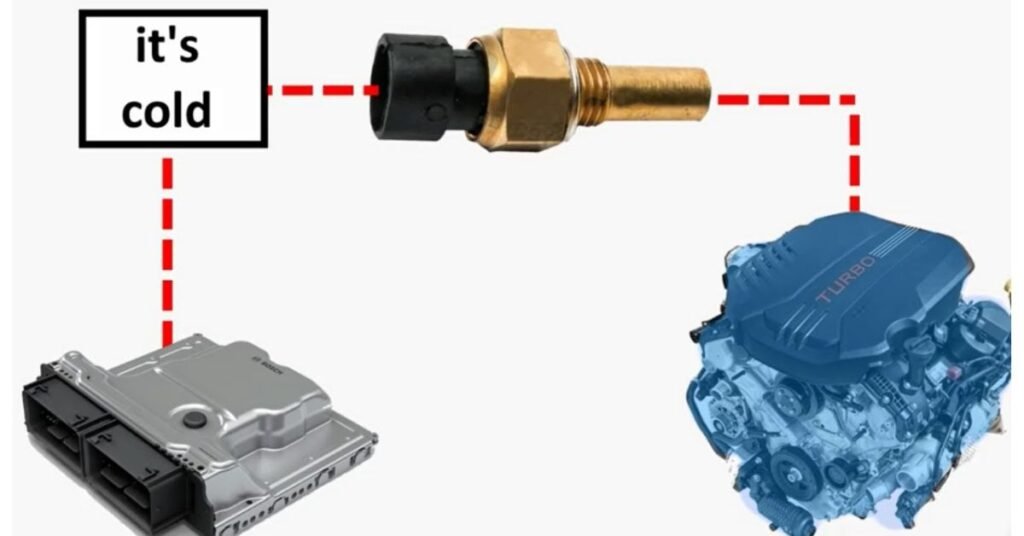
A coolant temperature switch, also called a sensor, is a small but important part of your car’s engine. It measures the temperature of the engine coolant and sends this information to the car’s computer. The computer uses it to control engine functions like fuel injection, ignition timing, and the radiator fan. This helps the engine run at the right temperature and prevents it from overheating or running too cold.
The switch is usually located near the thermostat or inside the engine block where it can read coolant temperature accurately. When it starts sending wrong signals, your engine may overheat, run poorly, or trigger the check engine light. Understanding this sensor can help you detect problems early and keep your car running smoothly.
Common Symptoms of a Faulty Coolant Temperature Switch
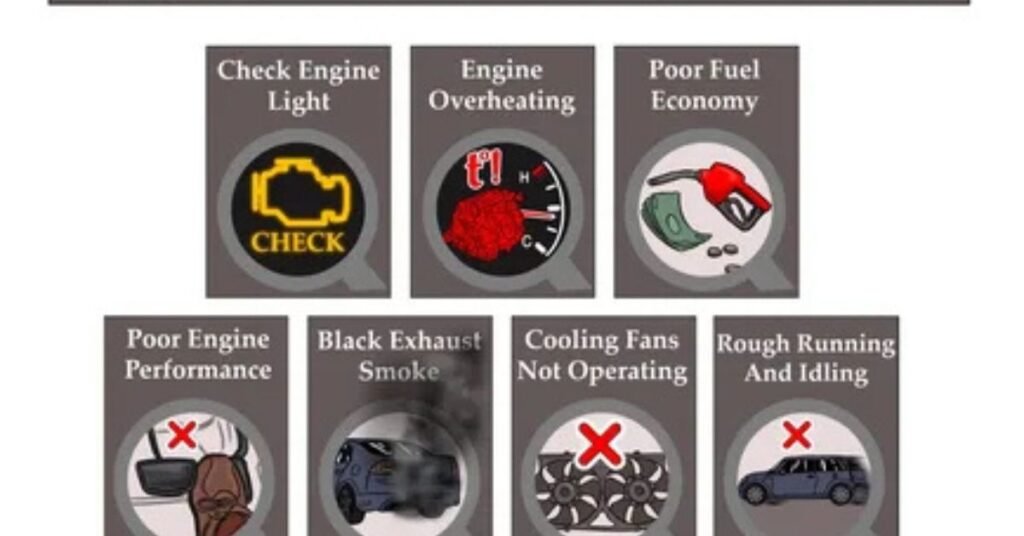
A faulty coolant temperature switch can cause several noticeable problems in your vehicle. One common sign is an engine that overheats or runs colder than normal. This happens because the switch sends wrong temperature signals. As a result, the cooling fan may not turn on at the right time. You may also see warning lights on the dashboard that come on without a clear reason.
Another symptom is poor engine performance and low fuel efficiency. When the engine temperature data is incorrect, the engine control unit cannot adjust properly. This can lead to rough idling or hard starting. In some cases, the heater may blow cold air even when the engine is warm.
Common signs include:
- Engine overheating or running too cool
- Cooling fan not working properly
- Temperature warning light turning on
- Poor fuel economy
- Heater not producing warm air
Poor Fuel Economy (Rich or Lean Running)
Poor fuel economy is a common problem when the engine runs too rich or too lean. A rich mixture means too much fuel and not enough air.Fuel and air are not mixed properly in a lean mixture.l. Both conditions make the engine work harder. This causes the car to use more fuel than normal.
When the air-fuel mixture is not balanced, engine performance also suffers. You may notice weak acceleration or rough driving. The engine may also produce unusual smells from the exhaust. Over time, this problem can damage engine parts and increase repair costs.
Signs of rich or lean running include:
- Increased fuel consumption
- Rough idling or hesitation
- Poor acceleration
- Strong fuel smell or unusual exhaust odor
- Engine warning light turning on
Engine Overheating or Cooling Fan Failure
The engine can suffer serious damage if it gets too hot.. A faulty coolant temperature switch may send wrong signals.A cooling fan may not turn on at the right time.. Heat builds up quickly inside the engine. Steam can sometimes come from under the hood.
Cooling fan failure often happens without warning.During traffic or when idling, the engine can overheat.. Even when the engine is hot, the fan may not run.. This puts extra stress on engine parts. Preventing costly repairs by addressing the issue early is key.
Common Signs and Effects
| Condition | What Happens |
| Cooling fan not turning on | Engine temperature rises quickly |
| Fan runs only sometimes | Engine overheats in slow traffic |
| Temperature warning light | Alerts driver of overheating risk |
| Steam from engine bay | Coolant may be boiling or leaking |
| Hot engine smell | Overheated parts or burning coolant odor |
This can be simplified or rewritten to match your blog tone for USA SEO if you’d like 🇺🇸
Check Engine Light Comes On
- The check engine light may turn on suddenly.
- It warns that the engine system has a problem.
- A faulty coolant temperature switch can trigger this light.
- The engine computer may receive wrong temperature data.
- This causes the system to detect an error.
- The light may stay on or blink in some cases.
- You may not notice any driving problems at first.
- The car may still run normally for some time.
- Fuel efficiency can slowly decrease.
- Engine performance may become unstable.
- Ignoring the light can lead to bigger issues.
- A diagnostic scan can help find the exact cause.
Hard Starts and Rough Idle
The engine may be hard to start, especially in cold weather. It may take longer to crank than usual. This happens when the engine does not get the right temperature signal. The fuel mixture may be incorrect at startup. The engine may stumble before running smoothly.
A rough idle is another common sign. The engine may shake or vibrate while stopped. Idle speed may go up and down. The engine can feel unstable at traffic lights. These issues can worsen if left unchecked. Fixing the cause helps restore smooth starts and idle.
Black Smoke from Exhaust or Increased Emissions
Dark smoke is emitted from the tailpipe as a result.
Increased emissions can cause inspection failures. The vehicle may smell strongly of fuel.It is beneficial to repair the engine early so that emissions can be reduced and the engine can be protected..
Common signs to notice:
- Black or dark gray smoke from the exhaust
- Strong fuel smell around the vehicle
- Failed emissions or smog test
- Poor fuel mileage
- Engine running too rich
Erratic or Incorrect Temperature Gauge Readings
The temperature gauge may behave strangely. It may jump up and down without reason. Sometimes it shows hot when the engine is cold. Other times it stays low even after long driving. This confuses the driver and hides real engine problems.
Incorrect readings can delay proper action. You may not know when the engine is truly overheating. This increases the risk of damage. Trusting a faulty gauge can lead to costly repairs. Fixing the root cause restores accurate temperature display.
Temperature Gauge Issues and Meanings
| Gauge Behavior | Possible Meaning |
| Needle jumps suddenly | Faulty temperature signal |
| Stays on cold | Sensor not sending data |
| Reads hot all the time | Incorrect electrical input |
| Slow response | Sensor or wiring issue |
| Fluctuates while driving | Inconsistent temperature readings |
What Causes Coolant Temperature Switch Failure?
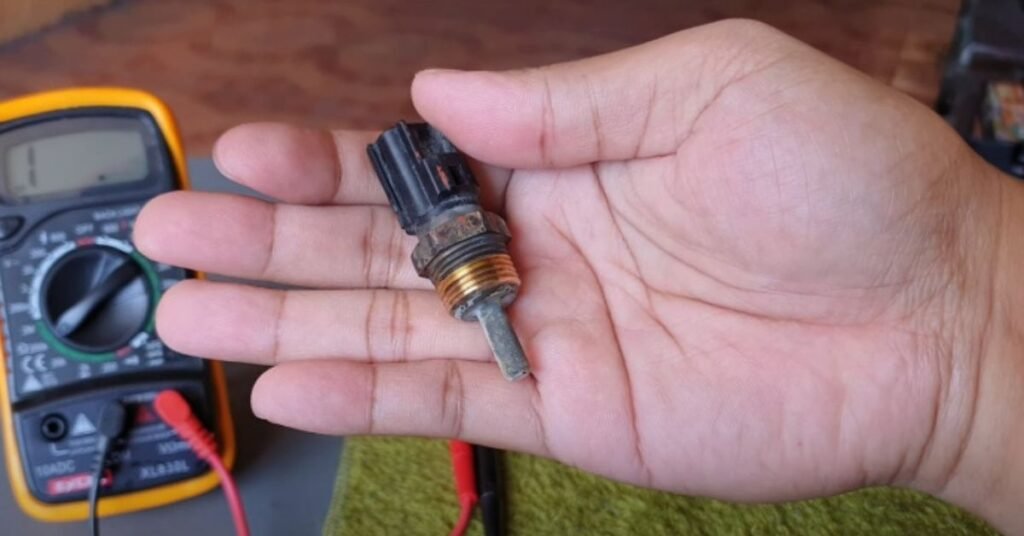
Coolant temperature switches can fail for many reasons. Constant heat and pressure can wear them out over time. Dirt and debris in the cooling system can damage the sensor. Corrosion from old or wrong coolant can also be a problem. Electrical issues like short circuits or loose wires may cause failure.
Some common causes include:
- Using old or contaminated coolant
- Corrosion inside the sensor or connector
- Overheating the engine frequently
- Faulty wiring or poor electrical connections
- Physical damage during maintenance or accidents
- Manufacturing defects in rare cases
These issues can stop the switch from sending correct temperature data. Early detection helps avoid engine problems and costly repairs.
How to Diagnose a Faulty Coolant Temperature Switch
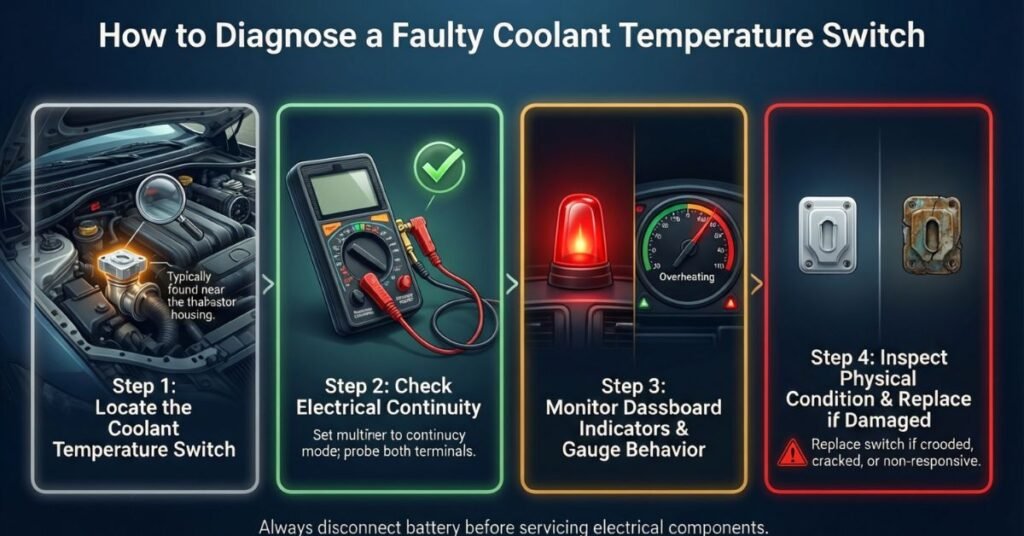
- Check for warning lights on the dashboard.
- Monitor the temperature gauge for unusual behavior.
- Inspect the sensor for corrosion or physical damage.
- A multimeter should be used to test the sensor’s resistance.
- Check wiring and connectors for looseness or wear.
- Observe engine performance for hard starts or rough idle.
- Look for black smoke or increased fuel consumption.
- Use a diagnostic scanner to read error codes from the ECU.
- Compare readings with a known working sensor if possible.
- Replace the sensor if it fails any of the above tests.
How to Diagnose a Faulty Coolant Temperature Switch
| Step | What to Check | How to Check | Possible Result |
| 1 | Coolant Temp Sensor Connector | Inspect for loose or corroded connections | Poor contact can cause wrong readings |
| 2 | Sensor Resistance | Use a multimeter to measure resistance at different temperatures | Resistance not matching specs = faulty sensor |
| 3 | Engine Temperature Reading | Compare dashboard temp gauge with actual engine temp | Large differences indicate sensor issue |
| 4 | Cooling Fan Operation | Check if fan turns on/off at correct temp | Fan not responding = sensor may be bad |
| 5 | Trouble Codes | Scan with OBD-II scanner | P0115, P0116, etc., may point to faulty sensor |
OBD‑II Live Data Scan
- Connect an OBDII scanner to the diagnostic port of the car.
- Start the engine, but leave the ignition off to perform some scans.
- The scanner includes a “real-time data” section.
- Monitor coolant temperature readings while the engine warms up.
- Compare the readings with the normal operating range.
- Look for sudden spikes or unusual drops in temperature.
- The live scan may reveal trouble codes.
- This data can be used to identify a faulty coolant temperature switch.
Resistance Testing with a Multimeter
| Step | What to Test | How to Test | Expected Result |
| 1 | Coolant Temperature Switch | Disconnect sensor from harness | Ensure no power or current |
| 2 | Sensor Resistance | Set multimeter to ohms (Ω) and measure across terminals | Compare reading with manufacturer specs |
| 3 | Cold Engine | Measure resistance when engine is cold | Should match cold temp spec |
| 4 | Warm Engine | Measure resistance after engine warms up | Should decrease or increase according to spec |
| 5 | Check Continuity | Ensure circuit continuity through the sensor | Broken continuity = faulty sensor |
‘Coolant Temperature Switch vs Coolant Temperature Sensor’:
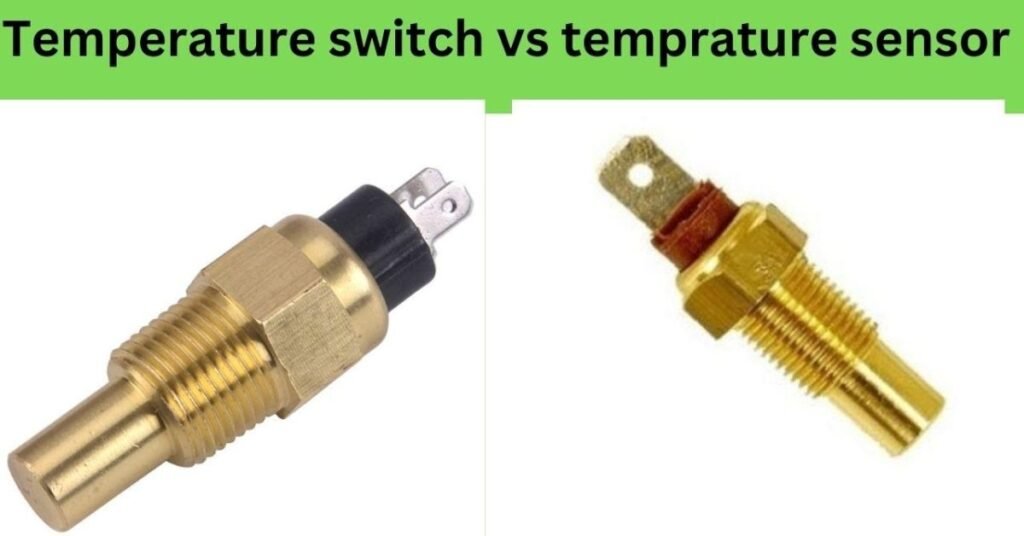
Coolant temperature sensor and switch are two separate components.. The switch is simple.Usually, it controls the radiator fan or the warning light.. The sensor is more advanced. It constantly measures the engine temperature. It sends the data to the engine control unit (ECU) for fuel and timing adjustments.
The switch reacts to temperature thresholds. The sensor gives precise temperature readings. The fan may stop working if the switch is faulty.. A faulty sensor may cause poor fuel economy or engine overheating. Both parts affect engine performance. But the sensor is used for digital monitoring, while the switch is for mechanical or on/off signals.
Can You Drive With a Faulty Coolant Temperature Switch?
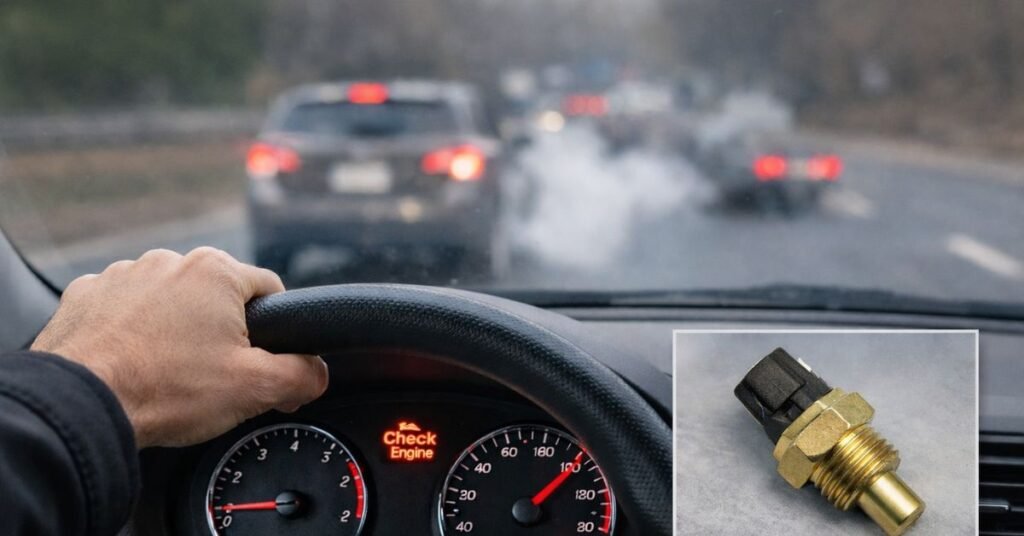
- You can drive, but it is not safe for long trips.
- The engine may overheat because the fan may not turn on.
- Fuel consumption can increase due to wrong temperature readings.
- Dashboard temperature gauge may show incorrect readings.
- Check engine warning light may come on.
- Driving with a faulty switch can damage the engine over time.
- It is best to replace the switch as soon as possible.
How to Fix or Replace a Faulty Coolant Temperature Switch
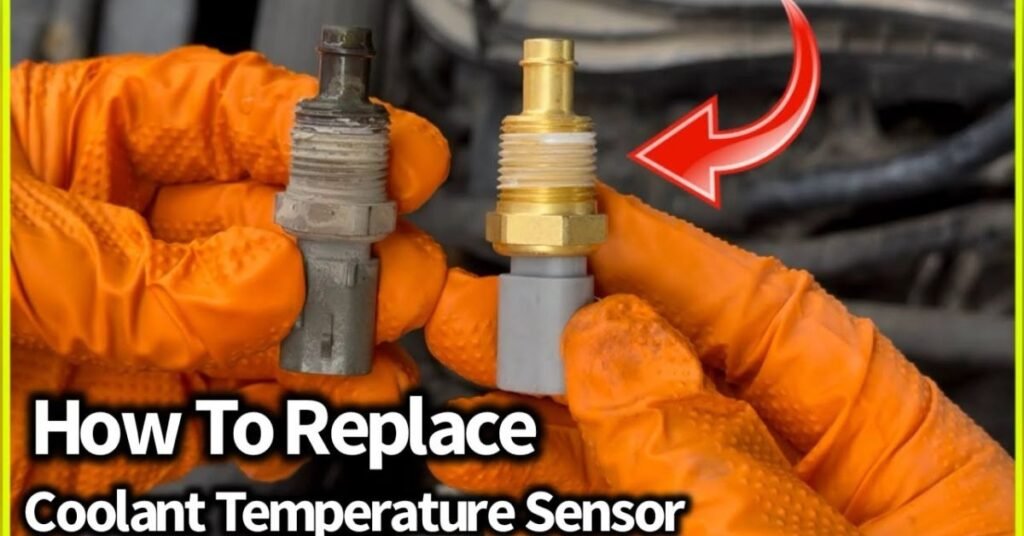
- Turn off the engine and let it cool completely.
- Locate the coolant temperature switch on the engine block or cylinder head.
- Disconnect the wiring connector carefully from the switch.
- Remove the old switch using a wrench or socket.
- Compare the old and new switch to make sure they match.
- Install the new switch and tighten it securely.
- Reconnect the wiring connector to the new switch.
- Refill coolant if any was lost during replacement.
- Start the engine and check for leaks or warning lights.
- Test drive to ensure the cooling fan and temperature gauge work correctly.
Conclusion:
In conclusion, understanding coolant temperature switch symptoms can help you avoid serious engine problems. When this switch fails, it may cause overheating, poor fuel economy, or warning lights to turn on. These signs should never be ignored. Early detection can protect your engine and keep your car running smoothly.
Paying attention to coolant temperature switch symptoms saves time and money. A small faulty switch can lead to bigger repairs if left untreated. Regular checks and quick fixes improve engine performance. This simple step helps ensure a safer and more reliable drive.
FAQs:
1. What are the common coolant temperature switch symptoms?
Common symptoms include engine overheating, cooling fan not turning on, and warning lights on the dashboard.
2. Can a faulty coolant temperature switch cause overheating?
Yes, a bad switch may fail to activate the cooling fan, which can cause the engine to overheat.
3. Does a bad coolant temperature switch affect fuel economy?
Yes, incorrect temperature readings can cause rich or lean fuel mixtures, reducing fuel efficiency.
4. Will the check engine light turn on due to coolant temperature switch symptoms?
Yes, a failing switch can send wrong signals to the ECU, triggering the check engine light.
5. Is it safe to drive with coolant temperature switch symptoms?
Driving with these symptoms is risky, as it can lead to engine overheating and costly damage.
